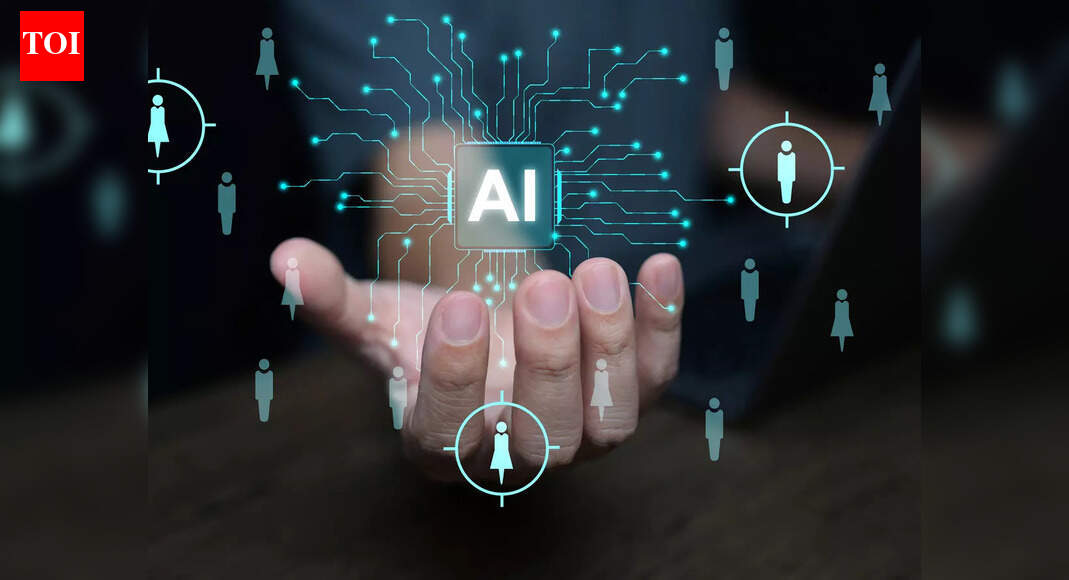
Artificial intelligence is no longer a far cry from the reality. It does not dwell in policy papers or tech conferences. It has begun seeping into everyday life. AI has now changed how offices analyse data, how government departments process information, and how citizens interact with public services. With that change, excitement has also come onboard, but apprehension is not far away. There is a constant fear among the individuals that machines may take their jobs. It surfaces in conversations, often louder than the evidence itself.The government’s recent year-ender note attempts to push back against this anxiety. The year-ender has drawn insights from NASSCOM’s Advancing India’s AI talent pool. It presents a comforting truth that AI is not shallowing or hollowing out employment but reshaping it. It notes that India’s AI talent pool is expected to grow from about 6-6.5 lakh professionals today to more than 12.5 lakhs by 2027. The figures are reassuring, but they invite tougher questions. Growth in numbers is one thing; readiness on the ground is another. Are workers actually prepared for this transition? Another question is, “And will the new roles bestow the same security and dignity that their predecessors did?
When data reflects ambition
By August 2025, around 8.65 lakh candidates had enrolled in courses focused on emerging technologies, including 3.20 lakh in AI and Big Data Analytics the government’s year-ender report says. These numbers suggest momentum. They also hint at the scale of the task ahead. Training hundreds of thousands is not the same as preparing an entire workforce for a digital economy that moves faster than traditional education systems.
Reskilling, beyond statistics
Government programmes like FutureSkills PRIME, launched by the Ministry of Electronics and Information Technology (MeitY), are central to this effort, according to the report. More than 18.56 lakh candidates have signed up on the platform, and over 3.37 lakh have completed their courses so far.Each completion figure represents someone trying to stay relevant, often mid-career, sometimes uncertain, learning new skills with the hope that adaptability will translate into opportunity.Yet access remains uneven. Participation is concentrated in cities with stronger digital infrastructure, while rural and semi-urban regions struggle to keep pace. If AI-led growth is to be truly national, can policy bridge this gap before it becomes structural?
Governance in the age of algorithms
AI’s influence is also visible in public administration. Tools built on Machine Learning, Optical Character Recognition, and Natural Language Processing are being used for translation, scheduling, predictive tasks, and citizen communication. Platforms like e-HCR and e-ILR now allow people to access court judgments in multiple regional languages, making justice systems more transparent and accessible.Efficiency, however, brings its own dilemmas. Who is accountable when decisions are shaped by algorithms? How do citizens question outcomes generated by systems they cannot see or fully understand? Speed cannot come at the cost of trust.What lies aheadIndia’s AI journey is not a saga of success, nor even a cautionary tale. It is a work in progress, brimming with promise, but demanding careful choices. The government’s data points to expansion, skill-building, and improved service delivery. What remains uncertain is whether this transformation will be inclusive enough to carry everyone forward.The larger question that takes center stage is: Will artificial intelligence widen existing divides, or can it be guided to narrow them? The answer does not lie latent in speculations alone but in how policy, education, and ethics coincide in the years down the line.(With inputs from ANI)
About the Author