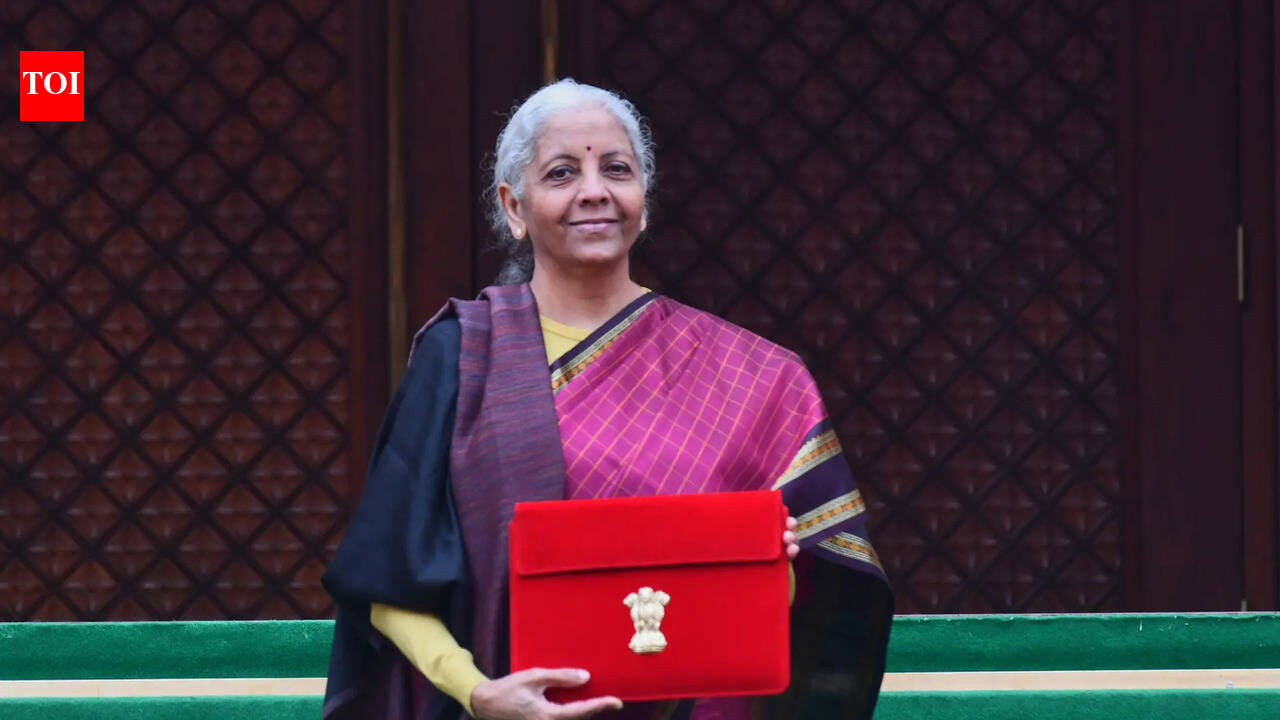
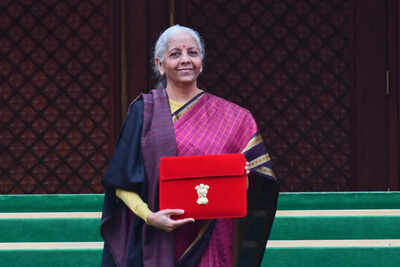
The Union Minister for Finance and Corporate Affairs, Nirmala Sitharaman, presented the Union Budget 2026-27 in Parliament today with education placed firmly inside the employment conversation. It was not framed around as a standalone social sector, but as a feeder system for services, health, tourism and technology.The Ministry of Education has been allocated ₹1,39,285.95 crore in 2026-27, an increase of 8.27% over the previous year. Within this, school education receives ₹83,561.41 crore, up from ₹70,567.14 crore at the revised estimate stage in 2025-26. The increase is visible in headline numbers. The design choices become clearer only when the allocations to centrally sponsored schemes are read closely.School education spending in Budget 2026-27
The jump between the revised estimate and the new budget shows both restoration and expansion. The question is where the additional money is being placed.
Centrally sponsored schemes: The main channel
Centrally sponsored schemes remain the primary route through which the Union government intervenes in school education. In 2026-27, allocations under this category rise to ₹63,010.02 crore, compared to ₹57,370.02 crore at the revised estimate stage last year.Centrally sponsored schemes, total allocation:
Samagra Shiksha remains the anchor
Samagra Shiksha is the government’s integrated school education programme covering pre-primary to senior secondary levels. It subsumes earlier schemes for elementary and secondary education and focuses on access, retention, teacher support and infrastructure.Samagra Shiksha Allocation (₹ crore):
The allocation in 2026–27 moves past last year’s revised estimate and slightly above the previous budget projection. This positions Samagra Shiksha as the system stabiliser, funding the everyday mechanics of schooling rather than targeted interventions.
PM POSHAN sees a steady rise
Pradhan Mantri Poshan Shakti Nirman, earlier known as the Mid-Day Meal Scheme, supports nutrition in government and government-aided schools. Its objective is to address classroom hunger and improve participation, especially at the primary level.PM POSHAN Allocation (₹ crore):
The allocation rises above both last year’s revised estimate and the earlier budget figure. Nutrition continues to be treated as a retention tool, not a peripheral add-on.
PM SHRI expands its footprint
PM Schools for Rising India aims to develop more than 14,500 government schools as model institutions aligned with the National Education Policy. These schools are expected to demonstrate quality infrastructure, pedagogy and governance.PM SHRI Allocation (₹ crore):
The allocation returns to the originally budgeted level after a lower revised estimate last year. The scheme continues to function as a signalling instrument rather than a mass coverage programme.
STARS and teacher support remain limited
Strengthening Teaching Learning and Results for States supports targeted interventions to improve learning outcomes, teacher capacity and assessment systems.STARS Allocation (₹ crore):
The allocation remains unchanged from the revised estimate stage, suggesting consolidation rather than expansion.
What the scheme mix shows
The 2026-27 school education budget restores momentum after compression at the revised estimate stage last year. The increase flows mainly into large, system-wide schemes rather than newer or narrower interventions.Samagra Shiksha absorbs the bulk of the rise, reinforcing its role as the backbone of public schooling. PM POSHAN receives a clear boost, reflecting continued reliance on nutrition as a participation lever. PM SHRI retains its position as a model-building exercise, not a scale solution. Outcome-focused and capacity-building schemes remain modest in size.The allocation pattern suggests a budget that prioritises stability and coverage over structural redesign. It strengthens existing pipelines without altering how students move through them.For families navigating school transitions, the numbers matter less as headlines and more as signals. They indicate where the state is choosing to hold the system together, and where it is willing to wait.
About the Author