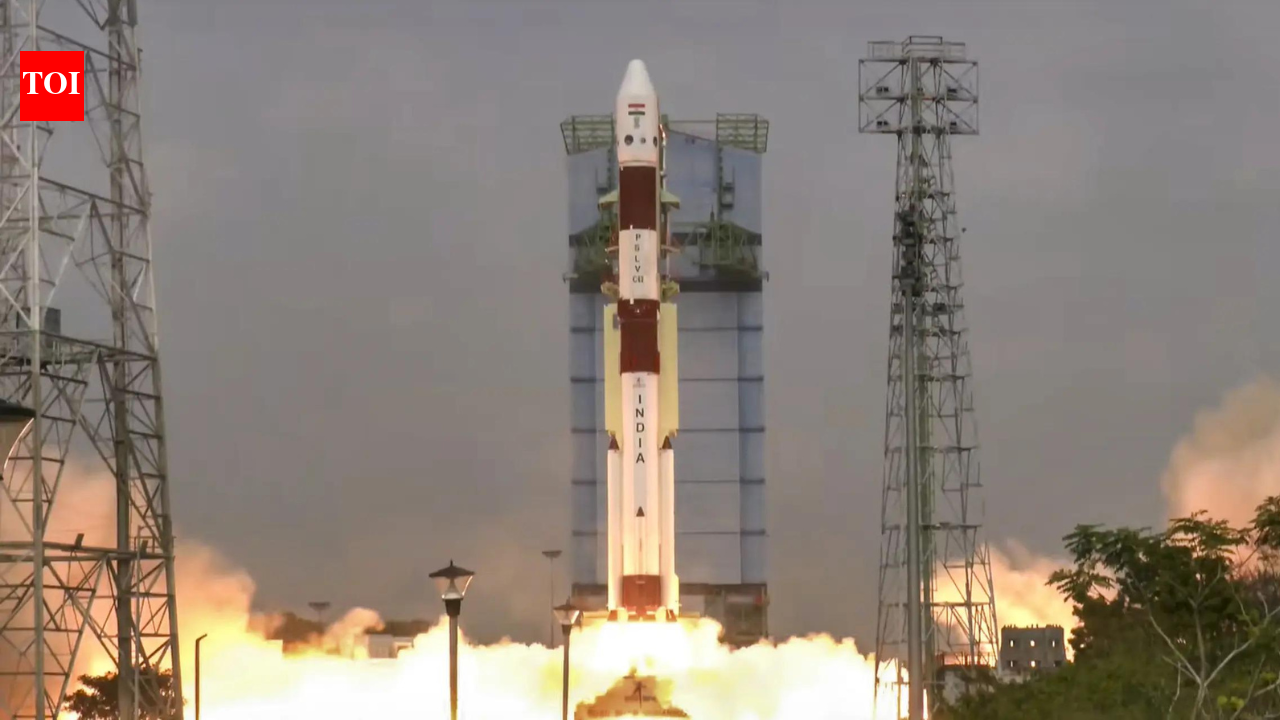
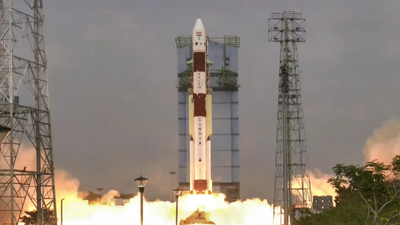
BENGALURU: The Department of Space (DoS) has been allocated Rs 13,705.6 crore for 2026-27, marking a steady rise over the revised estimate of Rs 12,448.6 crore in the current fiscal. The increase is driven largely by higher capital expenditure, signalling a push towards new launch vehicles, satellite infrastructure and upcoming exploration missions .Of the total outlay, Rs 7,329.7 crore is revenue expenditure while Rs 6,375.9 crore is capital spending, a jump of nearly Rs 1,066 crore over last year’s revised capital plan. Officials see this as an indication that the programme is moving from preparatory work to hardware realisation for projects tied to the Gaganyaan roadmap, next generation launch vehicles and high-throughput satellites.The largest share continues to be under the Space Technology head, which covers activities of major Isro centres such as VSSC, LPSC, URSC, SDSC and the Human Spaceflight Centre. This segment receives Rs 10,397.1 crore, up from Rs 9,602 crore in the revised estimate . The funds will support launch vehicle and satellite projects, ground infrastructure and schemes routed through IN-SPACe for private sector participation.Space applications programmes get Rs 1,725.1 crore, a moderate rise aimed at earth observation, disaster management and remote sensing services undertaken by SAC, NRSC and IIRS. The more striking increase is in Space Sciences, where the budget climbs to Rs 569.8 crore, nearly three times the revised allocation of Rs 184.6 crore. This head supports planetary missions, payload development and astronomy projects, suggesting fresh approvals beyond Aditya-L1 and Xposat follow-ons.The INSAT satellite systems programme sees a dip to Rs 130.9 crore from Rs 205.9 crore last year, reflecting completion of earlier satellite batches and a shift towards private leasing models.On the institutional side, establishment expenses for the Secretariat, Isro headquarters and IN-SPACe together amount to Rs 393.8 crore. Autonomous bodies including IIST, PRL, NARL and NE-SAC receive Rs 480.6 crore. The commercial arm NewSpace India Limited (Nsil) has been provided a token budgetary support of Rs 0.01 crore, while its internal and extra budgetary resources are projected to rise to Rs 1,403 crore, underlining the expectation that Nsil will drive production and market revenues.The structure of spending points to three priorities: readiness for human spaceflight, expansion of earth observation services for climate and security, and deeper engagement with industry through IN-SPACe and Nsil. With capital allocations now close to matching revenue outgo, the programme appears set for a build phase rather than routine operations.
About the Author