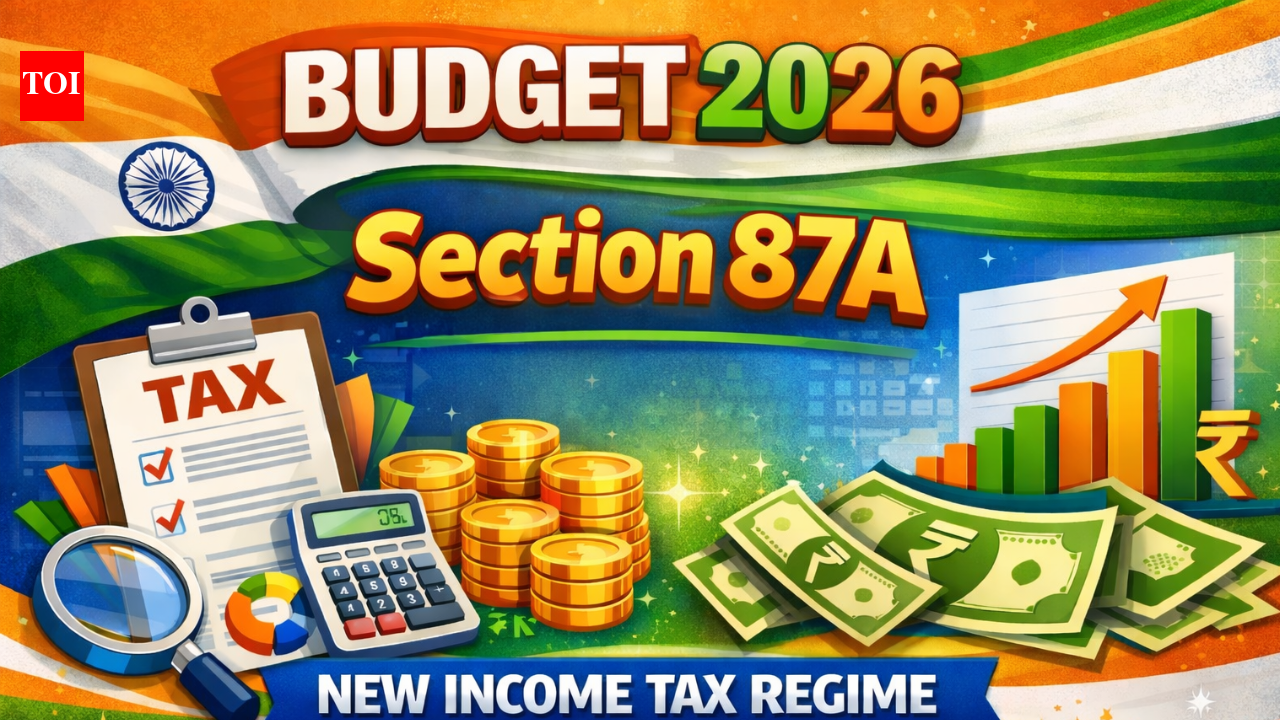
In the Union Budget 2026, the Section 87A tax rebate, given in Income Tax,remain unchanged, disappointing taxpayers who had hoped for an increase to boost consumption and ease the burden on middle-income individuals. Thus, like for FY 2025-26, under the new tax regime, resident individuals with net taxable income up to Rs 12 lakh can continue to claim a maximum rebate of Rs 60,000, effectively reducing their tax liability to zero on regular income up to that limit.
The rebate remains only available to resident individuals. Hindu Undivided Families (HUFs), Non-Resident Indians (NRIs), companies, and super senior citizens are not eligible to claim this benefit.
Rules remain unchanged
While the rebate continues at existing levels, specific income categories are excluded from its benefit. Long-term capital gains (LTCG) from listed equity shares and equity mutual funds do not qualify for the Section 87A rebate, though gains up to Rs 1.25 lakh on such assets remain tax-free under separate provisions.Under the new tax regime, short-term capital gains (STCG) are also treated differently compared to the old regime. Taxpayers will not be able to claim the Section 87A rebate on STCG from equity sales starting FY 2025-26, a shift from earlier practice under the old tax rules.Incomes from non-standard sources such as gambling, online gaming, and virtual digital assets are explicitly excluded from rebate eligibility and are taxed at flat rates with surcharge and cess.
Middle-Class relief focus remains limited to existing measures
The decision to stick with the current Section 87A rebate levels suggests the government is opting to keep its focus on other fiscal priorities rather than expanding tax relief for individual taxpayers in Budget 2026. While the rebate still offers meaningful relief for many middle-income earners under the new regime, the absence of an increase may temper expectations about near-term consumer spending support from the budget.
How much taxpayers pay?
Since, the income tax rules, remain as put forward in last year’s Budget, here’s how much taxpayers will have to shell out as per Income Tax
| Total Income | Tax as per existing rates [as per Finance (No.2) Act, 2024] | Tax as per proposed rates | Benefit of Rate/Slab | Rebate Benefit | Total Benefit [computed when compared to current slab rates] | Tax Payable under new regime |
|---|---|---|---|---|---|---|
| Rs 8 lac | Rs 30,000 | Rs 20,000 | Rs 10,000 | Rs 20,000 | Rs 30,000 | Rs 0 |
| Rs 9 lac | Rs 40,000 | Rs 30,000 | Rs 10,000 | Rs 30,000 | Rs 40,000 | Rs 0 |
| Rs 10 lac | Rs 50,000 | Rs 40,000 | Rs 10,000 | Rs 40,000 | Rs 50,000 | Rs 0 |
| Rs 11 lac | Rs 65,000 | Rs 50,000 | Rs 15,000 | Rs 50,000 | Rs 65,000 | Rs 0 |
| Rs 12 lac | Rs 80,000 | Rs 60,000 | Rs 20,000 | Rs 60,000 | Rs 80,000 | Rs 0 |
| Rs 13 lac | Rs 1,00,000 | Rs 75,000 | Rs 25,000 | Rs 0 | Rs 25,000 | Rs 75,000 |
| Rs 14 lac | Rs 1,20,000 | Rs 90,000 | Rs 30,000 | Rs 0 | Rs 30,000 | Rs 90,000 |
| Rs 15 lac | Rs 1,40,000 | Rs 1,05,000 | Rs 35,000 | Rs 0 | Rs 35,000 | Rs 1,05,000 |
| Rs 16 lac | Rs 1,70,000 | Rs 1,20,000 | Rs 50,000 | Rs 0 | Rs 50,000 | Rs 1,20,000 |
| Rs 17 lac | Rs 2,00,000 | Rs 1,40,000 | Rs 60,000 | Rs 0 | Rs 60,000 | Rs 1,40,000 |
| Rs 18 lac | Rs 2,30,000 | Rs 1,60,000 | Rs 70,000 | Rs 0 | Rs 70,000 | Rs 1,60,000 |
| Rs 19 lac | Rs 2,60,000 | Rs 1,80,000 | Rs 80,000 | Rs 0 | Rs 80,000 | Rs 1,80,000 |
| Rs 20 lac | Rs 2,90,000 | Rs 2,00,000 | Rs 90,000 | Rs 0 | Rs 90,000 | Rs 2,00,000 |
| Rs 21 lac | Rs 3,20,000 | Rs 2,25,000 | Rs 95,000 | Rs 0 | Rs 95,000 | Rs 2,25,000 |
| Rs 22 lac | Rs 3,50,000 | Rs 2,50,000 | Rs 1,00,000 | Rs 0 | Rs 1,00,000 | Rs 2,50,000 |
| Rs 23 lac | Rs 3,80,000 | Rs 2,75,000 | Rs 1,05,000 | Rs 0 | Rs 1,05,000 | Rs 2,75,000 |
| Rs 24 lac | Rs 4,10,000 | Rs 3,00,000 | Rs 1,10,000 | Rs 0 | Rs 1,10,000 | Rs 3,00,000 |
| Rs 25 lac | Rs 4,40,000 | Rs 3,30,000 | Rs 1,10,000 | Rs 0 | Rs 1,10,000 | Rs 3,30,000 |
| Rs 50 lac | Rs 11,90,000 | Rs 10,80,000 | Rs 1,10,000 | Rs 0 | Rs 1,10,000 | Rs 10,80,000 |
About the Author