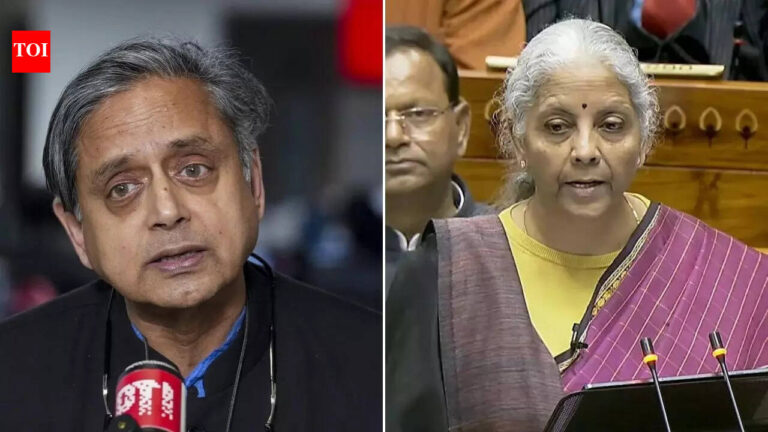

Finance minister Nirmala Sitharaman, while presenting the Union Budget 2026, launched the “India Semiconductor Mission 2.0” to “capitalise on the momentum of the semiconductor mission,” announcing an outlay of Rs 40,000 crore for the initiative.She said India’s Semiconductor Mission 1.0 had expanded the country’s semiconductor sector capabilities. Building on this, the government will launch ISM 2.0 to produce equipment and materials, enable full-stack design, develop Indian intellectual property, and strengthen supply chains. The initiative will also focus on industry-led research and training centres to develop technology and a skilled workforce.Sitharaman also announced the Shakti initiative with an outlay of Rs 10,000 crore over the next five years to build the semiconductor ecosystem.The finance minister said the Electronics Components Manufacturing Scheme launched in April 2025 with an outlay of Rs 22,999 crore has already received investment commitments at double the target. To build on this momentum, the government proposes to increase the outlay to Rs 40,000 crore.In the pharmaceuticals sector, Sitharaman said the strategy for domestic production of biologics and biosimilars will include a biopharma-focused network with three new National Institutes of Pharmaceutical Education and Research (NIPERs) and the upgrading of seven existing ones. The government will also create a network of 1,000 accredited clinical trial sites across the country.She added that the Central Drug Standard Control Organisation will be strengthened to meet global standards and ensure faster approvals through a dedicated scientific review system and specialists.The finance minister also announced support for rare earth manufacturing. A scheme for rare earth permanent magnets was launched in November 2025, and the government now proposes to support mineral-rich states including Odisha, Kerala, Andhra Pradesh and Tamil Nadu to establish dedicated rare earth corridors.
About the Author