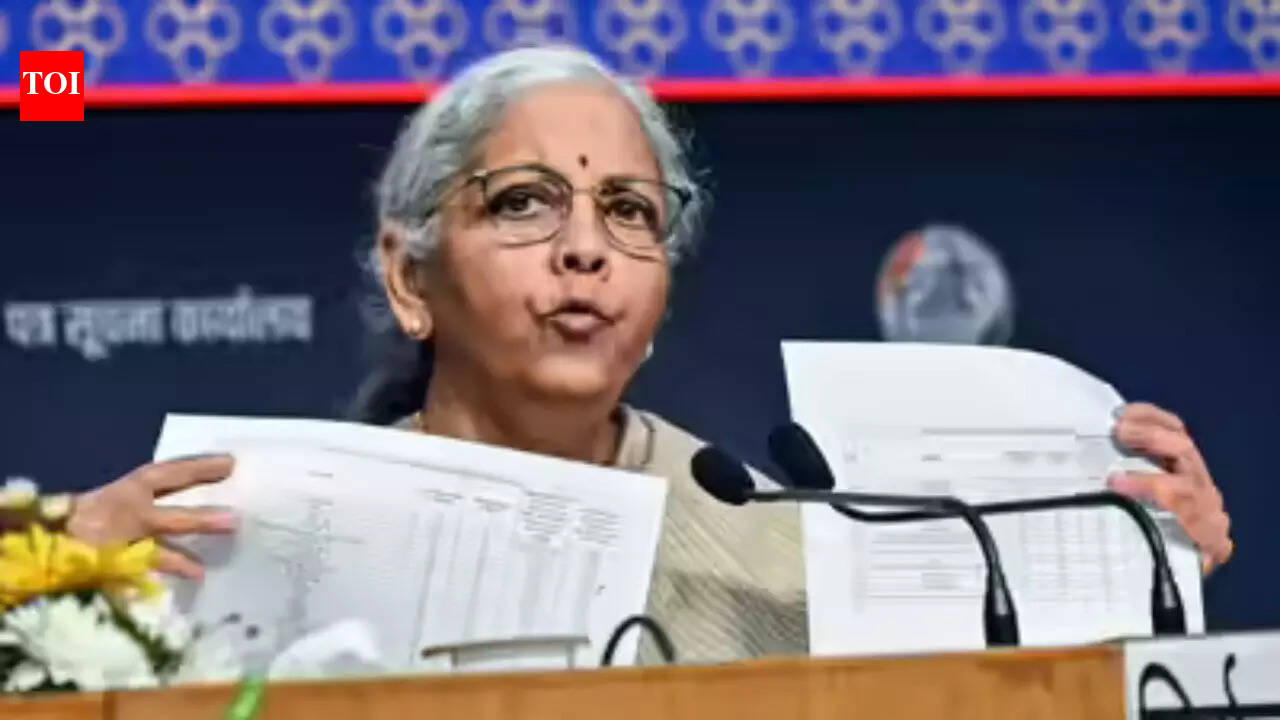
On Union Budget Day, the Finance Minister’s saree is never a casual choice. It functions as a visual cue often the first signal of the tone the Budget is about to take. Colour, pattern, and restraint matter because they subconsciously prepare the audience for what lies ahead. Nirmala Sitharaman’s saree communicates seriousness, discipline, and controlled authority as key theme of Budget.
Panchang and Planetary Mood of the Day
The Budget is going to be presented on Sunday, February 1, 2026, under Magha Purnima, with Ravi Pushya Yoga active. Sunday carries solar authority and command. Magha is associated with legitimacy, lineage, and rightful power. Ravi Pushya Yoga supports decisions meant to endure rather than impress. Planetarily, the day is dominated by a strong Capricorn stellium, an exalted Mars, Rahu in Aquarius, and Saturn in Pisces a combination that favours structure, restraint, and system-building over emotional appeasement. This background is essential to decoding the saree.
Purple blended Magenta Saree: Controlled Power, Not Emotional Comfort
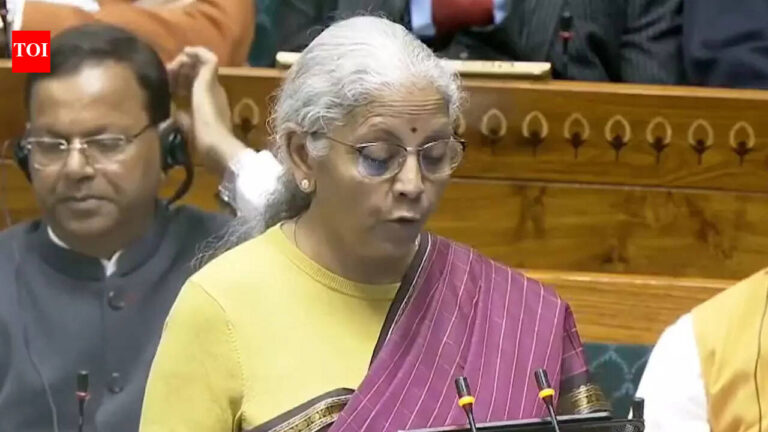
Purple blended Magenta is not a soft colour, and that is precisely why it matters. Astrologically, Purple blended Magenta carries Mars energy, but without the raw aggression of red. Mars is exalted in Capricorn. The Purple blended Magenta body of the saree visually reflects this combination: strength under control, decisiveness without emotional reflection. It signals that action will be taken, but not in a way that seeks sympathy or applause. This immediately lowers expectations of a comfort-driven or populist Budget.
Yellow–Golden Border: Jupiter Present, But Contained
Yellow and gold are colours associated with Jupiter growth, wisdom, welfare, and guidance. The key detail here is placement. Gold appears only as a border, not as the main fabric. This mirrors the Jupiter’s role in the day’s horoscope. Growth and welfare are being acknowledged, but they are not the central driving force for decisions. Visually, this suggests that while development and support will be discussed, they will be framed carefully, structured tightly, and kept within fiscal and systemic limits.
Fixed Grid Pattern: Saturn, Capricorn, and System Thinking
The most powerful visual element of the saree is its fixed pattern of horizontal and vertical lines. Straight lines, repetition, symmetry with no curves or organic motifs are classic Saturnian symbolism. This directly reflects the Capricorn stellium dominating the chart. It signifies systems, frameworks, compliance, and governance that does not bend under social and emotional pressure. It also aligns with the Rahu (North Node) in Aquarius, which favours architecture, networks, platforms, and design-led control. This pattern indicates clearly that the Union Budget will prioritise the policy structure over sentiment.
Absence of Soft Motifs: Emotion Is Deliberately Restrained
Equally important is what the saree does not show. There are no florals, no flowing designs, no Venusian softness. Emotion, comfort, and aesthetic warmth are intentionally minimised. The visual language matches a day where compassion exists but is regulated, and where emotional persuasion is not the chosen tool of governance.
What the Saree Choice Signals About Budget Expectations
Read together, the colour, border, and pattern set very clear expectations. This is not a Budget meant to feel generous or soothing. Relief, where it appears, will be conditional and structured. Growth will be long-term, not immediate. Welfare will be refined rather than expanded emotionally. Execution, compliance, and institutional strength will take precedence in the Union Budget today. The saree prepares the audience for discipline before the numbers do.
Alignment Between Saree, Panchang, and Planets
The choice of saree is well curated and aligned with the subconscious thoughts pattern as well as planetary energy of the day. The saree visually reinforces the same message controlled power, framed growth, and restraint without apology. Nothing contradicts. Everything supports the same narrative.
About the Author