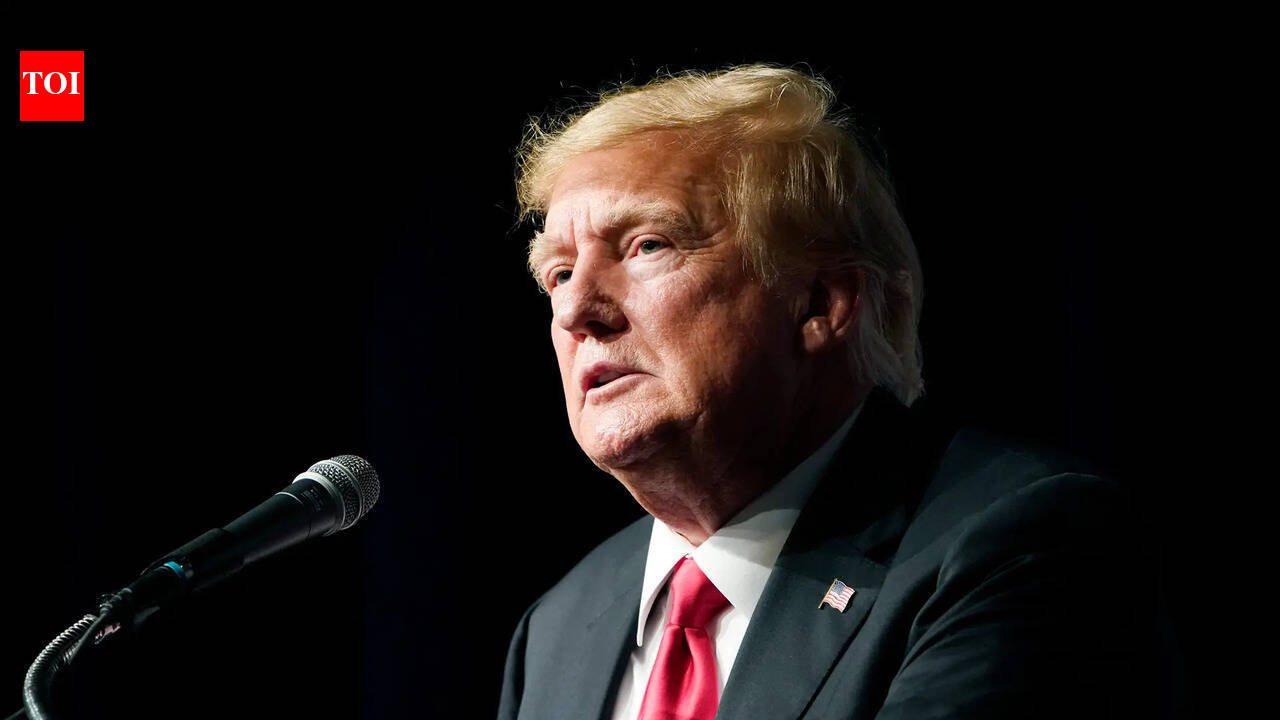
FILE – President Donald Trump speaks during an event, July 8, 2022, in Las Vegas. (AP Photo/John Locher, File)
TOI correspondent from Washington: In a long-anticipated disclosure that has reignited scrutiny of the late paedophile-financier Jeffrey Epstein and his influential circles, the US Justice Department on Friday released more than three million pages of documents, some containing lurid and unsubstantiated references to political and business elites, including President Trump and Bill Gates. Among the most sensational items are draft emails apparently written by Epstein in 2013 that describe alleged sexual encounters between Gates and women Epstein referred to as “Russian girls” on his private Caribbean island, Little Saint James. One note claims Gates contracted a sexually transmitted disease and required antibiotics, framing the episode as evidence of infidelity. The emails appear to have been drafted for Epstein’s own records or potentially on behalf of third parties; they are not corroborated by independent evidence.Gates’ representatives moved quickly to deny the allegations, calling the claims “absolutely absurd and completely false,” and adding that they originated from a “proven, disgruntled liar.” Gates has previously acknowledged meeting Epstein multiple times in the early 2010s to discuss philanthropy, a decision he has since said he regrets, but he has consistently denied any illicit behavior or knowledge of Epstein’s crimes.References to President Trump appear hundreds of times across emails, FBI memoranda, and media clippings included in the release. A 2025 FBI email chain summarizes more than a dozen anonymous tips accusing Trump of sexual abuse connected to Epstein with sordid parties and activities too graphic to describe. Trump has long denied any involvement in Epstein’s abuses and has said his social relationship with Epstein ended in the mid-2000s after a falling out.The document dump also has brief references to India, including Epstein’s claims that PM Modi “danced and sang in Israel for the benefit of the US President.” The ministry of external affairs dismissed the claims as “trashy ruminations by a convicted criminal, which deserve to be dismissed with the utmost contempt.” There are some sketchy exchanges between Epstein and Anil Ambani, and the mention of filmmaker Mira Nair attending a 2009 social event, with no wrongdoing alleged. The material—made public under the Epstein Files Transparency Act signed by President Donald Trump—constitutes the largest tranche of records connected to the case. The documents do not announce new criminal charges or identify a definitive “client list,” but they provide a granular look at Epstein’s efforts to cultivate, document, and sometimes exaggerate relationships with elite figures, often in ways that appear designed to increase his own leverage.The lurid nature of some of the claims in the documents was revolting enough for California Democratic lawmaker Ro Khanna, whose bill co-authored with anti-Trump Republican lawmaker Thomas Massie forced the Justice Department to release the latest trove, to say he was “absolutely sickened by the many rich, powerful & famous men whose names are being outed in these files as having gone to Epstein’s island.”“@RepThomasMassie & I always said this would be a moral reckoning for our nation. Looks like that reckoning begins today,” Khanna said.But there was little sign of any moral reckoning as Washington went into the weekend with other developments — from Minneapolis protests to the new Fed Chair, dominating the headlines. The Justice Department emphasized that investigators assessed many of Epstein claims as unverified, sensational, or politically motivated. None resulted in charges or findings of wrongdoing against Trump, Gates, or others. In an accompanying statement, the Department described the tips as “untrue and sensationalist” and said they lacked credibility.Trump’s political allies have framed the disclosures as evidence of transparency rather than wrongdoing, while critics argue that the volume of references ensures Epstein will remain a complicating factor in Trump’s second term. The documents also spotlight other prominent figures, including Tesla and SpaceX chief executive Elon Musk and Commerce Secretary Howard Lutnick.Emails from 2012 and 2013 show Musk corresponding with Epstein about potential visits to Little Saint James, including questions about helicopter logistics and the timing of a “wildest party.” It remains unclear whether any visit occurred, and the files do not accuse Musk of criminal behavior. Responding on X, Musk said he had “very little correspondence” with Epstein, declined repeated invitations, and warned that the emails could be “misinterpreted” to smear him. “What matters is not release of some subset of the Epstein files, but rather the prosecution of those who committed heinous crimes with Epstein. When there is at least one arrest, some justice will have been done. If not, this is all performative. Nothing but a distraction,” he wrote. For Lutnick, the documents appear to complicate earlier public statements that he severed ties with Epstein around 2005. Emails indicate that in 2012 Lutnick planned a lunch with Epstein on the island involving his family.The political impact of the release has been immediate and polarized. Supporters of those named in the files argue that the documents demonstrate how Epstein inflated or fabricated relationships to enhance his own influence, while critics say the material underscores the depth of his access to elite circles and warrants further investigation.Democrats have seized on the timing and handling of the disclosure, noting that it came more than a month after a congressional deadline. Some have accused the administration of selective redactions or delays, particularly given references to Trump and Lutnick within the files. Victim advocates have raised separate concerns, criticizing the Justice Department for failing in some cases to fully redact survivor names, potentially retraumatizing those involved, despite assurances that protections were in place.At the same time, the release has disappointed those who expected dramatic legal consequences. The files confirm Epstein’s wide-ranging network—spanning tech executives, politicians, and international figures such as Britain’s Prince Andrew—but they do not introduce new indictments or conclusively identify criminal accomplices. Extensive redactions, justified by the Department on grounds including privacy and national security, have fueled speculation about what remains hidden.Deputy Attorney General Todd Blanche said the disclosure fulfills the government’s legal obligations under the Transparency Act, noting that hundreds of lawyers worked to prepare the material. Yet the absence of prosecutions has led critics to argue that transparency without accountability risks becoming a symbolic exercise.As journalists, lawyers, and the public begin the slow task of digesting millions of pages, the Epstein files appear less likely to deliver definitive answers than to deepen existing cynicism about elite accountability. The documents offer a disturbing portrait of how Epstein operated at the margins of power—and how allegations, denials, and politics continue to collide years after his death.
About the Author