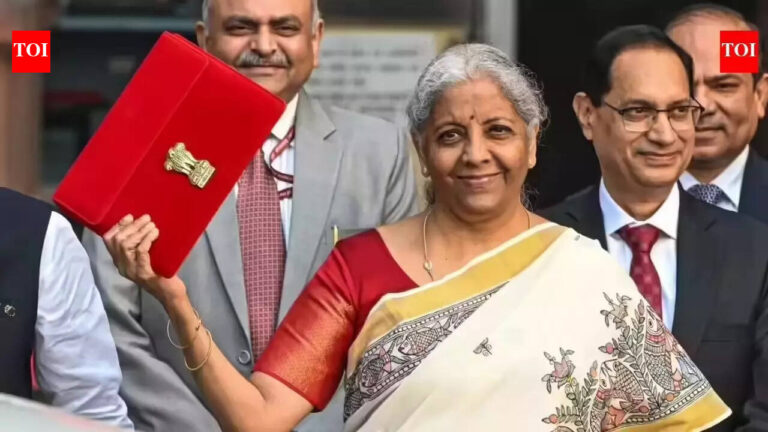


As the Union Budget 2026–27 approaches, education stakeholders across schools, higher education, skilling, and edtech are calling for focused policy measures and financial support to strengthen learning outcomes, employability, and workforce readiness. These expectations come amid a steady rise in education allocations over the past few years and an increased emphasis on execution and infrastructure.The allocation for the department of school education and literacy and the department of higher education has grown from Rs 84,219 crore in FY21 to Rs 1,28,650 crore in FY26 (Budget Estimates).In FY25 (Revised Estimates), the allocation stood at Rs 1,14,054 crore, compared to Rs 1,23,365 crore in FY24 and Rs 97,196 crore in FY23. This will be the ninth consecutive Budget presented by finance minister Nirmala Sitharaman and the second full-fledged Budget of the third term of the Narendra Modi-led government. With Rs 1.28 lakh crore allocated to the ministry of education last year, stakeholders expect Budget 2026–27 to sharpen its focus on AI-led learning, climate education infrastructure, skill-based education, teacher capacity-building, and stronger industry–academia collaboration.Education leaders and edtech executives also called for higher and better-targeted allocations to strengthen skilling, digital learning infrastructure, and higher-education financing, noting that education spending will be critical to India’s ambition of becoming a global talent and education hub.Ravin Nair, managing director of QS I-GAUGE, said, “The National Education Policy’s target of raising education spending to 6 per cent of GDP would play a decisive role in achieving this goal.”The Economic Survey 2025–26 described education as a core pillar of human capital and central to shaping the nation’s growth path towards Viksit Bharat @2047. It highlights achievements such as enhanced literacy rates, rising enrolment across school and higher education, and expanded vocational education avenues. According to the survey, the Gross Enrolment Ratio (GER) has reached 90.9 at the primary stage and 90.3 at the upper primary stage.India now has 23 IITs, 21 IIMs, and 20 AIIMS, along with two international IIT campuses in Zanzibar and Abu Dhabi. The Academic Bank of Credit currently covers 2,660 institutions, with over 4.6 crore IDs issued. Flexible entry-exit pathways and biannual admissions have been introduced by 153 universities to support the NEP target of achieving a 50 per cent GER by 2035.As expectations build ahead of Union Budget 2026–27, education stakeholders are looking for allocations that translate policy intent into measurable outcomes across learning, skills, and employability.
About the Author