

Health officials have reported a number of cases of Nipah virus infection in India’s West Bengal, leading to stepped-up surveillance at airports and border crossings in parts of Asia. At the time of reporting, five cases have been confirmed and about 100 close contacts are in quarantine as part of containment measures. Several of the cases have been tied to hospital transmission, and it has raised concerns about exposure in healthcare environments.Although Nipah virus has a high case fatality rate, estimated at between 40 to 75 percent, much higher than Covid-19’s, it is currently not considered to be highly transmissible. Unlike Covid-19, Nipah is not believed to be transmitted by air. Transmission generally occurs through close contact with an infected fruit bat, consumption of contaminated food, or human-to-human transmission through respiratory droplets and body fluid exchange. This type of transmission has been reported largely in households and healthcare institutions with long-term contacts.

The virus has an incubation period which normally lasts between five and 14 days, but in some rare cases stretches to 21, a timeline that is generally similar to Covid-19. Though the low transmissibility has so far inhibited the type of outbreak that would precipitate modern measures aimed at containing diseases — like quarantining entire cities — reports have begun to emerge from countries around China about new cases, raising concern among officials who must also try to get ahead of a virus that could rapidly spread, especially with international travel for the Lunar New Year.Read more: Which is the world’s largest flower and where does it grow?
Travel screenings resurface as alert widens
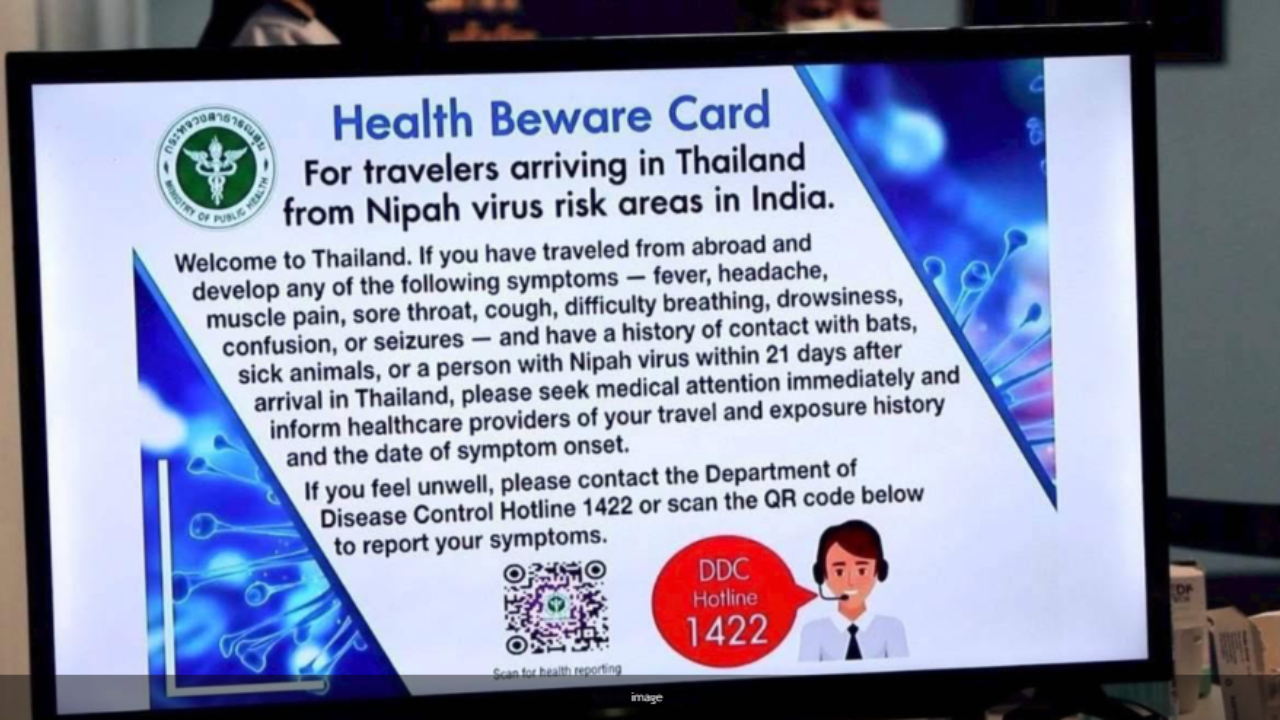
Throughout Asia, measures such as tightened health sifting and monitoring are returning to the fore as part early responses. Thailand has begun health screenings at major airports, such as Suvarnabhumi Airport and Don Mueang International Airport and Phuket International Airport for those who are travelling from West Bengal and neighbouring areas.
On 25 January 2026, Thailand’s international health control checkpoints at Suvarnabhumi and Don Mueang airports started taking disease control procedures, including temperature checks and health-related documents scanning for travellers arriving from West Bengal. The screenings have gone well, the country’s Department of Disease Control said, with cooperation from passengers and the Airports of Thailand, as well as immigration authorities and other agencies.
Measures across borders
Other countries in the region are also acting on the same. Nepal has tightened entry screening at Tribhuvan International Airport and land border crossings with India to control cross-border movement, BBC reported. Also, as per a report in The Independent, Nepal, and Taiwan are among those who have taken steps like thermal screenings and health checks for passengers arriving from affected areas.
What is the Nipah virus?
The Nipah virus is spread from animals, especially fruit bats and pigs, to humans. It can also be transmitted by unsafe food and, in some cases, from person to person. Nipah as been placed by the World Health Organization on their list of priority diseases likely to cause outbreaks with serious public health impact.Read more: Snowfall in Kashmir disrupts air travel; all incoming and outgoing Srinagar flights cancelledThe incubation period is usually four to 14 days. Symptoms can range widely, and some people who are infected may not show symptoms. Early symptoms can include fever, headache, muscle pain, vomiting and a sore throat. In more serious cases, patients can experience diminished consciousness, drowsiness, pneumonia or encephalitis — a dangerous inflammation of the brain that can cause death. Currently, there are no approved drugs or vaccines for treatment or prophylaxis.As of last week, at least five confirmed cases had been reported in West Bengal, all traced to a private hospital in Barasat. Two of the nurses are in an intensive coronary care unit and one is still “very very” critical, local media reported, citing the state health department. So far, no cases have emerged elsewhere in the world, though precautions are spreading.
About the Author