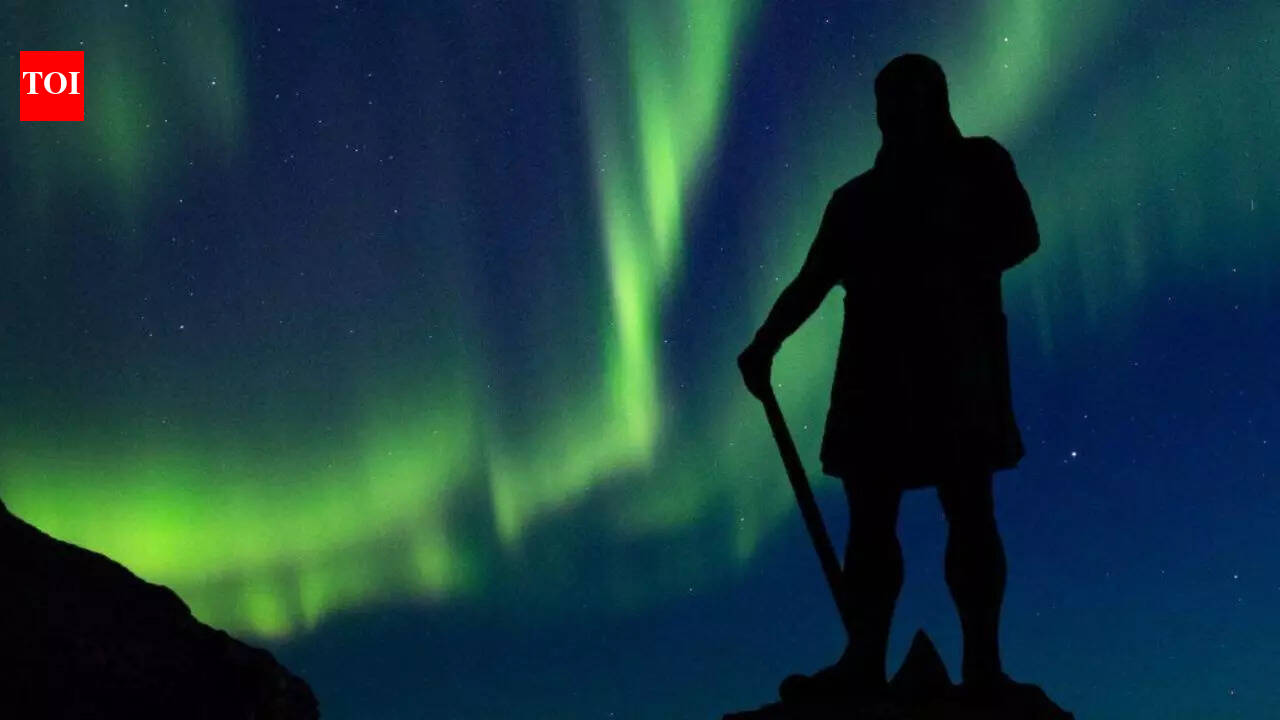
Erik the Red, whose real name was Erik Thorvaldsson, was a Viking explorer who turned a remote Arctic island into a Norse settlement that lasted for hundreds of years. Erik was born in Norway around 950 AD. He got his nickname because of his bright red hair and beard, and his fiery personality. He got into violent fights early on in life, which got him kicked out of Norway and then Iceland.Erik sailed west from Iceland in 982 AD after being exiled for murder. He found an uninhabited land of fjords, rocky coastlines, and fertile valleys. This land would later become Greenland. He spent a few years looking for good places to live in this new area.
Greenland’s early history shaped by Erik the Red’s vision
One of Erik’s most lasting gifts is the name he gave to the land: Greenland. He chose a name that was friendly and welcoming on purpose to get settlers to join him. He thought that calling it “green land” would make it sound better than a cold, remote frontier, which worked because it drew Icelandic settlers.The southern coastal areas where Erik lived were pretty fertile, especially in the summer. This made the name seem more real. People could live in these places even though Greenland’s climate was harsh because they had grasslands and mild summers that made farming and grazing livestock possible. In 985 AD, Erik went back to Iceland to find people to live there after his first trip. His convincing stories made a group of families move west with their animals and supplies to start a new life. It was only 14 of the 25 ships that left that made it to Greenland safely.When Erik got there, he built two big settlements in southern Greenland: the Eastern Settlement, which is now near Qaqortoq, and the Western Settlement, which is now near Nuuk. He made Brattahlid (now Qassiarsuk) his chief’s seat, which became the political and social center of Norse Greenland.
How Norse settlers survived and thrived in Greenland
The Norse settlers needed to farm, hunt, and trade to stay alive. They raised cows, sheep, and goats on the southern coast, hunted local animals, and traded things like walrus ivory and furs with Europe. Even though Greenland was cut off from the rest of the world, these settlements stayed in touch with Iceland and Norway.There were a few thousand people living in the communities at their peak, and they were spread out over farms along the coast. They were able to survive for hundreds of years in a harsh place by being smart and flexible. The Norse Greenlandic society eventually died out, probably because of a mix of climate change, economic problems, and being cut off from the rest of the world. Some of the most important Norse settlements in the North Atlantic were Erik the Red’s in Greenland. Greenland was a center for trade, exploration, and colonization. Erik’s son Leif Eriksson sailed west to North America around the year 1000 AD, which was a long time before other Europeans did.Greenland was an important part of the Viking network because it connected Scandinavia to faraway places and let Norse culture and knowledge spread across the Atlantic.
What Erik the Red left behind in Greenland
People remember Erik the Red as a brave explorer and the man who built the first permanent European settlements in Greenland. His choice of name, whether he meant to or not, helped bring in settlers and start a new Norse society.The name Greenland is a tribute to Erik today. This shows how Viking exploration had a lasting effect and how one person’s actions can change the identity of a whole country.
About the Author