
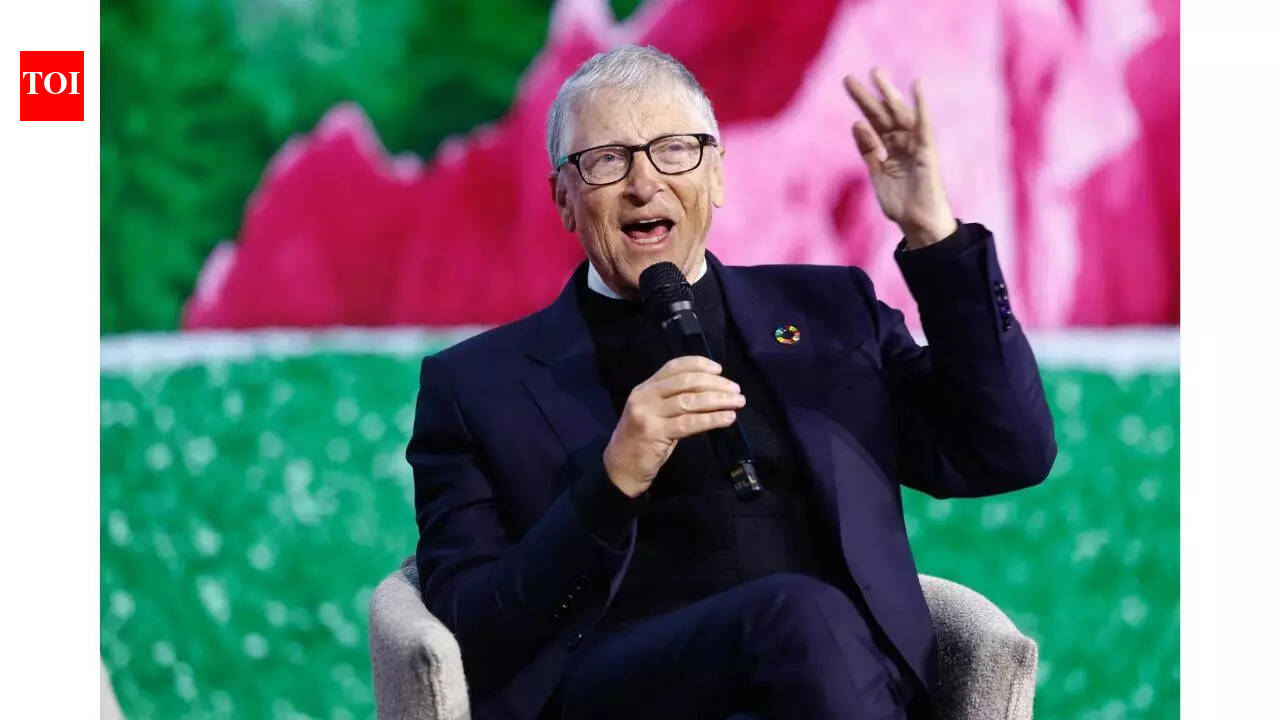

Bill Gates has warned investors that not every company riding the artificial intelligence (AI) wave will succeed. Speaking at the World Economic Forum in Davos, the Microsoft co-founder said some AI-focused firms may struggle to justify their high valuations and could see their stock prices fall. His comments come at a time when global investors are pouring billions of dollars into AI infrastructure and related businesses, pushing several companies to record market values. Gates also cautioned that the effects of AI on jobs will arrive sooner than many governments expect, adding to economic and social pressure.
Bill Gates flags risks for AI investors
As quoted in a report by Investopedia, Bill Gates said that AI will have a visible impact on both white-collar and blue-collar jobs within the next four to five years. He warned that governments are not fully prepared for the scale and speed of these changes and will need to take steps to address rising inequality.
Gates has made similar comments in a recent interview with CNBC, where he said that a “reasonable percentage” of current AI stock valuations may not hold up. He noted that the sector is becoming highly competitive and that some companies will lose ground as competition increases.His remarks come as major technology companies, including Microsoft, Alphabet, Amazon, Meta Platforms and Oracle, spent about $400 billion on AI-related infrastructure in 2025.
Market concerns grow amid heavy spending
AI has been a major driver of stock market gains over the past three years, but concerns have grown about high valuations and heavy spending by large technology firms. Some AI-linked stocks trade at high price-to-earnings ratios, while several private startups with no near-term profits are valued at tens or hundreds of billions of dollars.At the same time, companies with strong AI-driven revenue growth, such as Nvidia, Microsoft, Alphabet and Amazon, continue to post steady earnings, helping support their valuations.Despite the risks, Gates said he remains confident about AI’s long-term role in areas such as healthcare, education and agriculture. At Davos, he announced a $50 million partnership between the Gates Foundation and OpenAI to deploy AI healthcare tools across 1,000 clinics in Africa by 2028.
About the Author