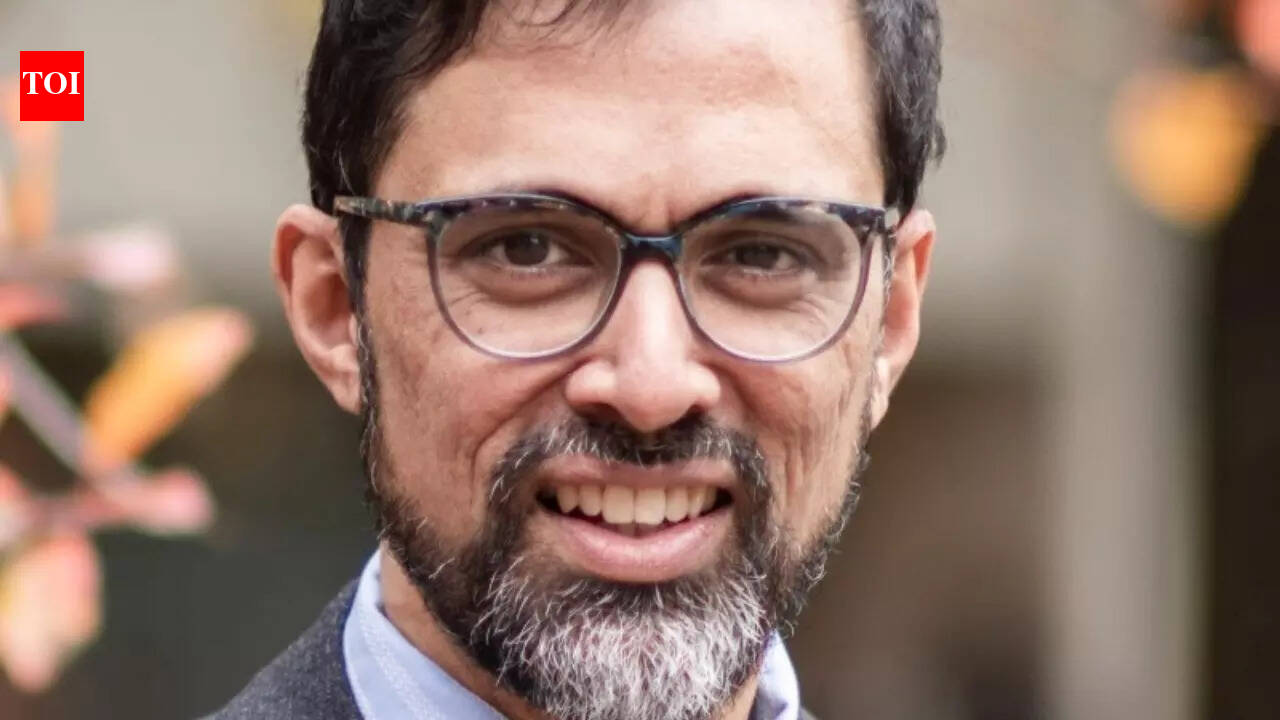
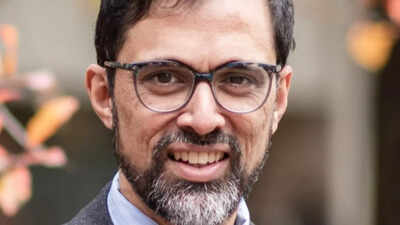
Indian American constitutional scholar Saikrishna Prakash said recent immigration restrictions in the United States stemmed from President Donald Trump’s hostility towards immigration itself rather than any targeted stance against India, and warned that executive power now dominated policy in ways Congress struggled to counter.Prakash, a Miller Center senior fellow and James Monroe Distinguished Professor of Law at the University of Virginia, spoke in an exclusive interview with New India Abroad on the sidelines of the Kerala Literature Festival in Kozhikode, Kerala.Discussing employment-based visas, including the H-1B programme, Prakash said the impact on Indians reflected broader immigration scepticism. “It’s not really about India per se. It’s about his distaste for immigration,” he said, adding that India benefited disproportionately from the programme and would therefore feel adverse effects more sharply.Prakash said the result could be a geographic redistribution of Indian talent. He noted that Indians might increasingly go to Europe, Australia, Singapore and Japan for education and jobs, and argued that India benefited from a strong and globally dispersed diaspora.The conversation also turned to Prakash’s new book, ‘The Presidential Pardon: The Short Clause with a Long, Troubled History’, which examined one of the least constrained powers in the US Constitution. He described the pardon clause as “about 20 words” long but said its impact extended far beyond its brevity, allowing presidents to forgive crimes entirely or reduce sentences. He said presidents now exercised “rather sweeping control” over the criminal process.Prakash said reactions to pardons were once less partisan but hardened as presidents commanded stronger loyalty within their parties. He argued that actions once seen as deeply controversial drew automatic approval from large segments of the electorate based on who issued them.On executive power more broadly, Prakash said US presidents steadily encroached on congressional authority, particularly through delegated powers in areas such as immigration. Congress, he said, became a bystander, divided internally while presidents acted decisively as party leaders.For Indian professionals in the United States, Prakash said constitutional law offered limited protection against sudden policy shifts. Courts could intervene when laws were violated, he said, but much immigration policy remained discretionary, leaving immigrants vulnerable to executive decisions.
About the Author