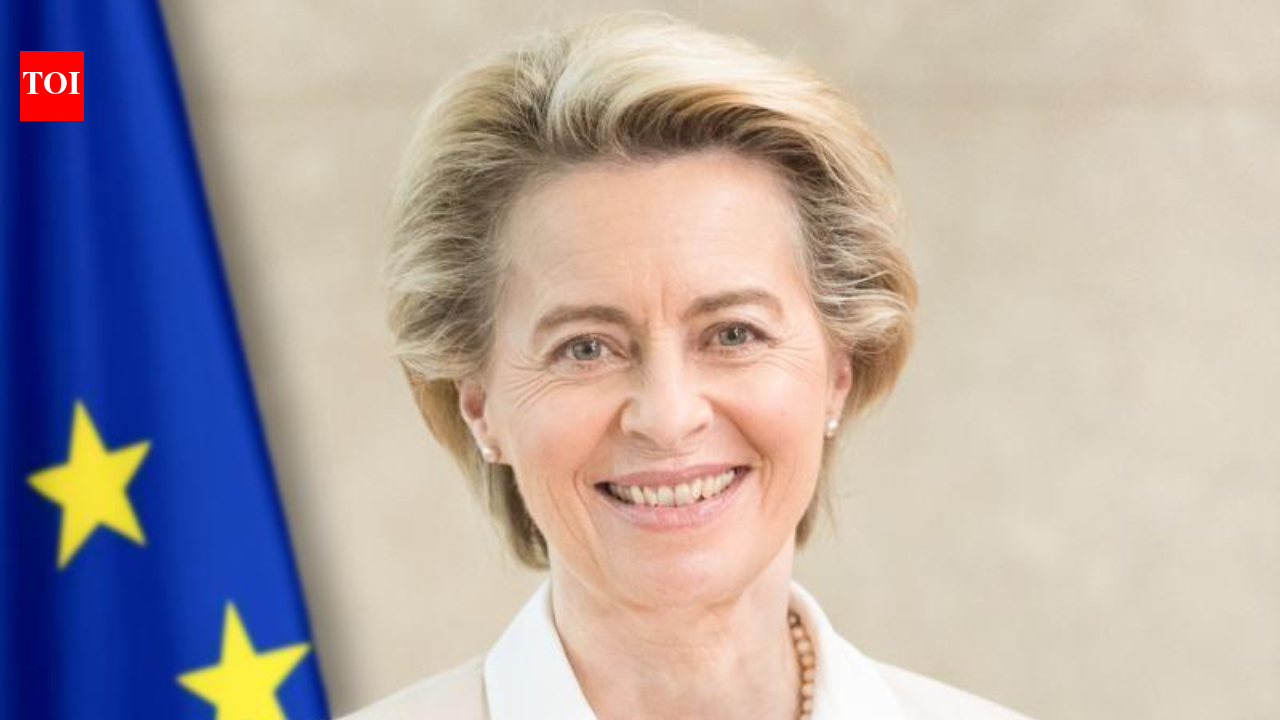
As EU-India ties enter a watershed moment on the back of a free trade agreement (FTA) that’s still being negotiated, European Commission President Ursula von der Leyen told TOI’s Sachin Parashar in an exclusive interview that while the last mile is always the hardest, it will be more than worth it. The conclusion of the trade talks and a new defence and security partnership, which the EU chief said can help both sides diversify military supply chains and improve access to new capabilities, are expected to be the 2 major outcomes from the EU-India summit on January 27. “Both sides are working intensively to address the remaining challenges and bring the agreement (FTA) over the line,” said von der Leyen, adding that the EU is committed to finding a workable solution to sticking points like CBAM. She also said the FTA would knock off 4 billion Euros in tariff for exporters. Without directly referring to the transatlantic strife, von der Leyen, who arrives Saturday for the summit, said the importance of EU-India cooperation when values like multilateralism, international law and democracy are being challenged is greater than before. She said India and the EU can help preserve the rules-based order and shape a secure and resilient world. On India’s ties with Russia, she said the EU is offering India reliability and long-term partnership that’s anchored in respective security concerns, “not alignment by pressure, but cooperation by choice”.Asked about the Greenland issue, von der Leyen said the EU remained committed to upholding Denmark and Greenland sovereignty and will face any challenge with resolve, while working on an investment surge in Greenland. The president, who will be the chief guest at the Republic Day parade along with European Council President Antonio Costa, also said the new EU-India defence partnership can be a game-changer – vital for EU-India shared security in an increasingly volatile world, from Ukraine to the Indo-Pacific. Excerpts:With a new EU-India strategic agenda, the relationship seems to have acquired greater strategic salience. What are the big likely deliverables you are looking at from the upcoming summit and how can the 2 sides work together to ensure that the rules-based international order isn’t undermined at a time the world is in a flux?Europe and India are the two largest democracies in the world. We have always been natural partners. We share a deep commitment to democracy, human rights, international law, and multilateralism. At a time when these values are increasingly being challenged, the importance of our friendship and cooperation is greater than ever. With Prime Minister Modi, we share the same ambition to take our partnership to the next level, and the 16th EU–India Summit in New Delhi is the perfect occasion to do so. First, we are working ambitiously to finalise our ambitious EU–India Free Trade Agreement. It would be one of the largest agreements of its kind globally, creating a market of two billion people. Our trade relationship is already thriving, but its full potential is far from realised. So let us seize this moment, and seal the “mother of all trade deals”. Both sides will gain enormously, and it will send a strong signal to the rest of the world.Second, we must work together to make our two billion citizens safer in an increasingly dangerous world. We are in the final stretch towards agreeing a Security and Defence Partnership. This could truly be a game changer, with stronger cooperation on defence industries, maritime security – especially in the Indian ocean – and secure communications. Europe and India are trusted and like-minded partners. Together, we can help to preserve a cooperative, rules-based order while working together to shape a more secure, open, and resilient world.Specifically on the FTA, have both sides been able to resolve differences over contentious issues like CBAM, cars and steel? Have you reached any understanding on the carbon border tax issue? Will the agreement be signed at the summit and how are you looking to reconcile your climate agenda with India’s focus on industrial growth?Let’s first recall how huge this deal would be. And what a tremendous impact it would have on our economies. Trade in goods between Europe and India has nearly doubled over the past decade, reaching more than €120 billion annually, The FTA would unlock an extraordinary opportunity to expand trade and investment even further, by eliminating € 4 billion in tariffs for exporters of all sizes. This agreement will support good, sustainable jobs for millions of workers, in both India and Europe. Both sides are working intensively to address the remaining challenges and bring the agreement over the line. We are committed to investing every effort to find workable, mutually beneficial solutions on issues such as CBAM, automobiles, and steel. The final mile is always the hardest, but it will be more than worth it. India and the EU are also looking at a new defence and security partnership to facilitate defence industrial collaboration. Will this include high-end defence technology transfers to India?Europe and India are strategic partners with a long history of cooperation, which has progressively expanded over time in terms of economy, connectivity, and more recently in security and defence. Our Security and Defence Partnership will provide a clear framework and stronger structure for this cooperation. Together, we will deepen work on new security threats like cyber and hybrid, as well as diversifying military supply chains and improving access to new capabilities. This will strengthen resilience on both sides, helping to keep our people safe.In an increasingly volatile world, from the battlefields of Ukraine to the troubled waters of the Indo-Pacific, this cooperation is not only valuable; it is vital to our shared security. At the same time, it is important to be clear about roles and responsibilities. EU Member States retain their decisive authority in this domain. The export of high-end defence technology is, and will remain, a national competence. India’s ties with Russia remain strong as the war in Ukraine continues. How do you plan to navigate differences over that issue as you seek a deeper and more impactful strategic partnership with India?We are coming all the way to India to strengthen our unique and trusted relationship in a time of systemic rivalry and growing global fragmentation. Our cooperation holds immense potential. By deepening it, we can create countless new opportunities, as well as credible alternatives.Europe’s offer is clear and consistent: we offer reliability. We offer stability. We offer genuine partnership built for the long term. We do not seek dependency, but mutual resilience; not alignment by pressure, but cooperation by choice. Our relationship is anchored in shared values and in mutual respect vis-à-vis our respective security concerns. We share the objective of a just and lasting peace for Ukraine, in line with the principles of the UN Charter. We are bound by a common conviction that democracy, openness, and respect for international law are the strongest foundations for lasting prosperity and security. You have said that Greenland can count on the EU politically and economically. What is your assessment of the US military takeover threat and how would the EU respond to any violation of Denmark’s sovereignty?I can wholeheartedly confirm that Greenland, and Denmark can always count on us. We are working on a massive European investment surge in Greenland, to see how we can further support the local economy and infrastructure, in close cooperation with Denmark and Greenland. We’re ready to step up our diplomatic and political engagement on the ground, via our newly opened EU office in Nuuk, the capital. We stand firm in our commitment to uphold the sovereignty and territorial integrity of Greenland and the Kingdom of Denmark. We will face these challenges with steadiness and resolve. Beyond this, Europe intends to take a more strategic approach to Arctic security. We will step up European investments in Arctic security and presence. And we will deepen cooperation with our partners and NATO allies, including the US, to reinforce our collective security in the High North. Can we expect any new announcement at the summit to revitalize the IMEC initiative?The India–Middle East–Europe Economic Corridor (IMEC) is set to connect our regions as never before. It will boost trade, improve access to goods, energy, and data, and take our economic ties to a new strategic level. Through our Global Gateway programme, we are already supporting key projects that support IMEC.These include the EU–Africa–India Digital Corridor, which is building a trusted, secure, and high-capacity data link Blue Raman between continents, and the Global Gateway Green Shipping Corridors, connecting ports, including Mundra and Mumbai, to enable the supply of renewable maritime fuels. Last year, we held two highly successful IMEC Steering Committee meetings, in New Delhi and in Brussels. We will continue to work hard to turn this great project into reality, including during the upcoming EU-India Summit.
About the Author