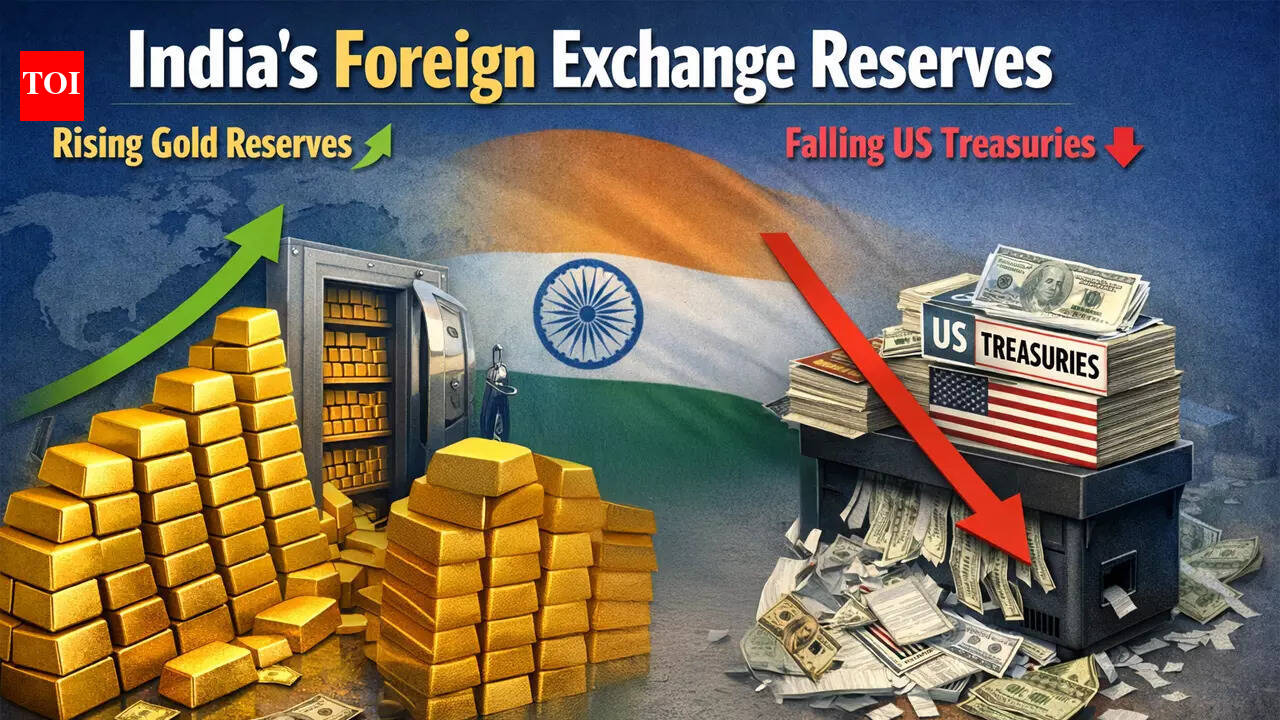
With gold and other assets accounting for a growing share of reserves, India’s strategy echoes steps taken by bigger holders such as China. (AI image)
In a big shift for one of the top five largest economies, India’s holdings of US Treasuries have seen a drop, sliding to the lowest level in five years. The reason for the fall is both need based and strategic: rupee has been depreciating, making it one of the worst performing Asian countries last year. The second reason is to strategically change the composition of foreign exchange reserves, reducing dependence on US assets. In fact, most economies around the world are reducing reliance on the world’s largest bond market.US government data released last week shows that India’s holdings of long-term American debt have fallen to about $174 billion. This marks a drastic 26% drop from the peak which was recorded in 2023. According to the Reserve Bank of India, Treasuries now make up roughly one-third of the country’s forex reserves, down from around 40% a year ago.
India, China & The World Move Away From US Treasuries
With gold and other assets accounting for a growing share of reserves, India’s strategy echoes steps taken by bigger holders such as China, according to a Bloomberg report.This has reignited debate over US financial dominance and the status of its debt as a preferred reserve instrument. Fresh trade threats by US President Donald Trump related to Greenland have added to global uncertainty, fuelling speculation that European nations could also pare back their exposure to US Treasuries.
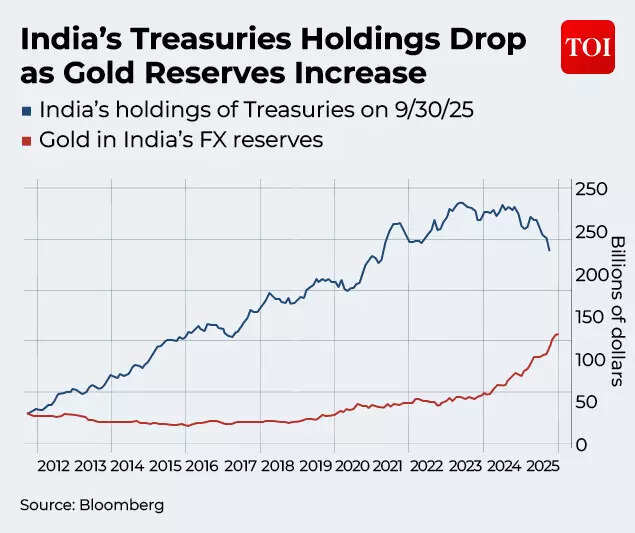
India’s Treasuries Holdings Drop as Gold Reserves Increase
Win Thin, chief economist at Bank of Nassau 1982 Ltd., said the trend likely reflects an effort to cut dependence on dollar-denominated assets to reduce sanction-related risks. “There is still room for India to lighten up its Treasuries holdings,” he said.In September, Finance Minister Nirmala Sitharaman had said the RBI was making a “very considered decision” to diversify the country’s reserves.
Why Dependence on Dollar-denominated Assets Is Being Reduced
For India and other countries, these lessons have been shaped by the US decision to freeze Russia’s foreign exchange reserves after its war with Ukraine which started in February 2022. India’s decision to continue importing Russian oil has subsequently become a flashpoint with US President Donald Trump. It’s even led to 25% additional penal tariffs being imposed.“The speed at which relations between the US and India deteriorated last year would have taken many by surprise and jolted policymakers to reduce their vulnerabilities,” said Shilan Shah of Capital Economics, who topped Bloomberg’s rupee forecasting rankings last quarter.Yet another factor influencing the shift is the Reserve Bank of India’s effort to shore up the rupee, which has slipped to record lows amid delays in finalising a US-India trade agreement following the Trump administration’s move to impose 50% tariffs on Indian exports, a tariff rate which is the highest in Asia. By cutting back on US Treasury holdings, the central bank can deploy those funds to buy rupees and support the currency.In financial markets, President Trump’s trade tariffs and the increasing use of the dollar as a sanctions tool have prompted renewed debate over the safety of US Treasuries as a reserve asset, with recent action against Venezuela also reinforcing those concerns.
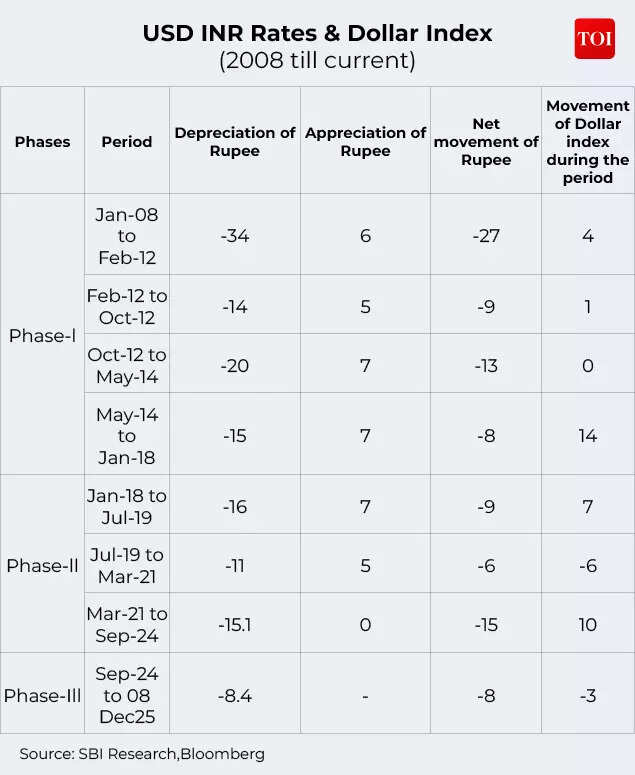
USD INR Rates & Dollar Index
While the RBI is not among the largest holders of US government debt, with its exposure at about a quarter of China’s nearly $683 billion holdings and Japan’s $1.2 trillion portfolio as of November, overseas ownership of Treasuries remains close to record highs. Even so, India’s selling has added fresh momentum to discussions about the place of US sovereign bonds in global investment portfolios.According to the Bloomberg report, central banks around the world are increasingly grappling with a more complicated policy environment that is putting added strain on how reserves are allocated. Although the US dollar and Treasuries continue to dominate as global reserve assets, momentum is clearly building toward diversifying into other options.Against this backdrop, the Reserve Bank of India’s reduction in Treasury holdings has come at the same time as a step in gold purchases. In fact, India currently holds the world’s 7th largest gold reserves. Other countries are making similar moves. China and Brazil have lowered their long-term Treasury holdings in October to the weakest levels seen since at least 2011, with China simultaneously stepping up gold purchases. The shift toward gold has gathered pace elsewhere as well. Earlier this week, the National Bank of Poland, currently the world’s largest reported buyer of gold, cleared plans to add another 150 tonnes of the metal to its reserves.There are factors that could slow India’s pace of selling, including a more stable rupee that reduces the need for currency intervention, or an easing of geopolitical stress if the delayed trade agreement is eventually concluded. “If the trade deal materializes, the need for aggressive currency defense could diminish,” said Krishna Bhimavarapu, Asia Pacific economist at State Street Investment Management. Even so, many analysts believe the broader reallocation toward alternative assets is likely to persist. A survey conducted in November by think tank OMFIF showed that while most central banks still hold the dollar, nearly 60% intend to explore substitutes over the next one to two years. “The trend is very much embedded at this point,” Michael Brown, senior research strategist at Pepperstone in London, said of India’s Treasury sales, adding that a trade agreement “will simply see holdings stabilize, rather than India go on some sort of mass buying spree.”
About the Author