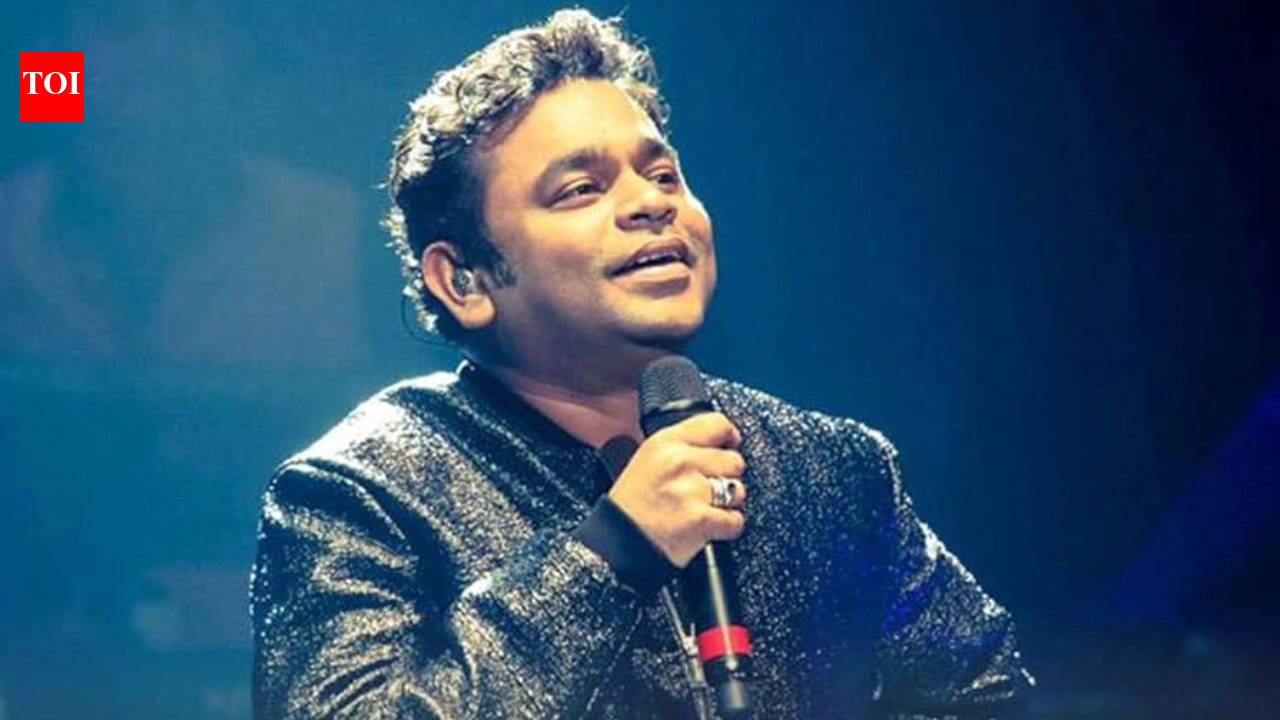
Based on the biography Oru Kanavin Isai, Chapter 7 delves into one of the most defining phases of AR Rahman’s life — his path to faith, spiritual transformation, and his family’s eventual conversion to Islam. The chapter details the miraculous healing of Rahman’s sister, an event that deeply influenced the composer’s belief system.
1988: A rising career and a sudden crisis at home
The year was 1988. Then known as Dileep, a 21-year-old Rahman was at the peak of his early career, juggling film music, advertising jingles, and international tours with popular bands. Amid this professional momentum, tragedy struck at home when his sister began suffering from severe stomach pain.The fear was overwhelming, as the family had earlier witnessed similar symptoms in Rahman’s father, RK Shekar, whose illness eventually led to his death. Despite consulting multiple doctors and shifting hospitals — from Vellore CMC to Vijaya Hospital in Chennai — her condition continued to worsen.
Haunted by his father’s death and questions of faith
Recalling those painful days, Rahman said, “The visions of my dad’s suffering kept torturing me! We had shifted nine different hospitals… Many Christian Fathers would come and visit him and pray for him. Several Hindu priests would also visit him and bless him. Those didn’t help. Towards the end, some Islam pirs also came… But, dad left us forever.”The loss pushed Rahman into a phase of disbelief. Watching his father die young left him questioning the existence of God. When his sister fell ill with similar symptoms, his confusion deepened. He wondered whether everything was coincidence or part of a larger design by an unknown power.
‘It was like a miracle’: The turning point
Rahman admitted that for a period, he identified as an atheist. “Some days during my teenage, I believed that there was no God… Though I denied that God existed, I felt that there was a vacuum,” he recalled.He continued, “At one stage, I realized that the world can’t function without a power controlling us. That was when that disease attacked my sister… But, someone cured my sister. It was like a miracle.”That person, according to the family, was Sheikh Abdul Qadir Gilani Sahib, also known as Pir Qadri. After Pir Qadri prayed for Rahman’s sister, she recovered unexpectedly. The incident left a deep impact on the young composer, who saw it as divine grace.
Pir Qadri’s influence and a gradual spiritual shift
Following the incident, Pir Qadri became a close family guide and well-wisher. During this period, Rahman remained deeply immersed in music, studying everything from Carnatic and Hindustani traditions to Western classical music. He later graduated in Western classical music from Trinity College, London.While religion was not his immediate focus, Rahman occasionally listened to Pir Qadri’s discourses. One teaching stayed with him: “There’s only one God. All prayers to Him cleanse your soul.” Rahman found peace in this thought, though he had not yet considered conversion.
A recurring dream and a life-changing decision
Another incident, however, proved decisive. Rahman recalled, “I was in Malaysia for a recording. One day, an old man appeared in my dream. He asked me to convert to Islam.” Initially dismissing it as a dream, Rahman grew unsettled as it kept recurring.After discussing it with his mother, who felt divine messages should not be ignored, the family began visiting mosques and interacting with Imams. “Within a few days, all of us in our family converted to Islam,” Rahman said.
From Dileep to AR Rahman
Pir Qadri became Rahman’s first Islamic guru and even selected the site for Panchathan Studio at their home. Following Pir Qadri’s demise, Rahman continued his spiritual journey under guides such as Mehboob Alam, Muhammad Yusuf Bhai, and later Cuddappa Malik.Breaking from industry norms of the time, Rahman chose not to retain a Hindu or Christian screen name. Initially named Abdul Rahman after conversion, veteran composer Naushad suggested the name ‘Alla Rakha Rahman,’ meaning one blessed by Allah. Eventually, he became known as AR Rahman — a name that soon echoed across the country after the massive success of Roja.
‘Prayer feels like rebirth’: Rahman on faith
Despite early skepticism in the industry over his family’s conversion, Rahman’s work spoke louder than words. Reflecting on his faith, he once said, “Each of the prayers is like death. I feel as if I pass away during the prayer, and am born fresh again. My mind and body become totally fresh.”
About the Author