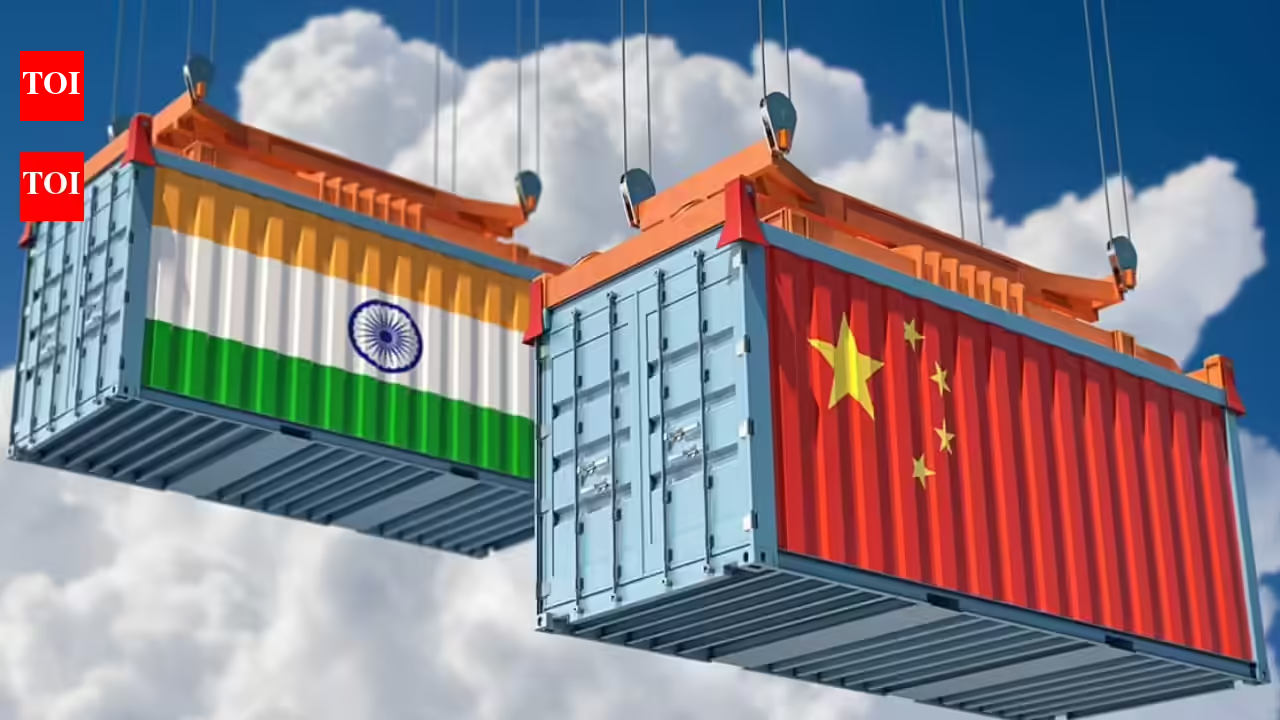
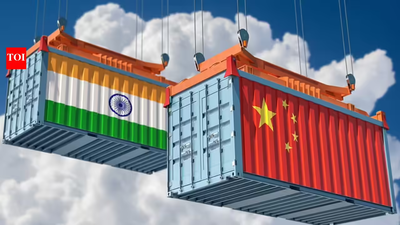
China has moved to escalate its trade dispute with India by asking the World Trade Organisation to set up a dispute settlement panel against New Delhi’s incentive schemes for automobiles, batteries and electric vehicles, after bilateral consultations failed to resolve the matter.In a communication to the World Trade Organisation, China said consultations held on November 25, 2025, and January 6, 2026, did not lead to a mutually agreed solution, prompting it to seek the establishment of a panel, PTI reported.“China therefore requests the Dispute Settlement Body to establish a panel to examine this matter,” the communication dated January 16 said, adding that the request should be placed on the agenda of the next Dispute Settlement Body meeting scheduled for January 27 in Geneva.The dispute relates to China’s complaint filed in October last year, alleging that certain conditions under India’s Production Linked Incentive (PLI) schemes for advanced chemistry cell batteries, automobiles and electric vehicles violate global trade rules by discriminating against Chinese goods.Beijing has argued that the measures adopted by India are contingent on the use of domestic goods over imported products and discriminate against goods of Chinese origin. According to China, these measures appear to be inconsistent with India’s obligations under the Subsidies and Countervailing Measures (SCM) Agreement, the General Agreement on Tariffs and Trade (GATT) 1994 and the Trade-Related Investment Measures (TRIMs) Agreement.In its complaint, China has cited three programmes: the Production Linked Incentive scheme, the National Programme on Advanced Chemistry Cell (ACC) Battery Storage, the PLI Scheme for the Automobile and Auto Component Industry, and the Scheme to Promote Manufacturing of Electric Passenger Cars in India.Seeking consultations is the first step under WTO dispute settlement rules. If consultations fail, the complainant is entitled to request the setting up of a panel to rule on the matter.Both India and China are members of the WTO. China is India’s second-largest trading partner, though the trade relationship remains heavily skewed. In 2024-25, India’s exports to China fell 14.5 per cent to USD 14.25 billion, while imports rose 11.52 per cent to USD 113.45 billion, widening the trade deficit to USD 99.2 billion.China’s move comes amid its push to expand overseas sales of electric vehicles as domestic overcapacity and price wars weigh on profits. Chinese EV makers such as BYD have been looking at markets in Asia and Europe, even as the European Union has imposed a 27 per cent tariff on Chinese EV imports.India, meanwhile, has rolled out a series of policy measures to boost domestic manufacturing. The government approved the PLI ACC Battery Storage scheme in May 2021 with an outlay of Rs 18,100 crore, followed by the PLI scheme for automobiles and auto components in September 2021 with a budgetary allocation of Rs 25,938 crore. In March 2024, it also cleared a policy to attract global EV manufacturers to set up production in the country.The WTO panel process, if initiated, could take several months and would mark a significant escalation in trade tensions between the two Asian economies.
About the Author