NEW DELHI: “I was in school when I came to know about cycling. One day, I was riding on the road in my hometown, Rourkela, Odisha. I saw a cyclist. It was amazing. His cycle was different with all those gears, helmet, and goggles, I thought, ‘Who is this foreigner?’” recalls Indian National Team cyclist Dinesh Kumar. He takes a pause before completing the tale: “I was on a normal cycle. But somehow, I managed to catch him. I asked him where he was from. He asked me if I wanted to go cycling. I said yes. He introduced me to the coach. And that is how it began for me.”As the sun sets on Sunday, the Indian cycling stands on the edge of its most ambitious leap yet, the inaugural Pune Grand Tour, country’s first-ever UCI 2.2 category multi-stage continental road race.
Scheduled from January 19 to 23, the five-day event puts India on the global professional cycling map.Go Beyond The Boundary with our YouTube channel. SUBSCRIBE NOW!For the first time, international teams will race through Indian cities, villages, ghats, and highways in a UCI-accredited tour that offers crucial ranking points, which will eventually help them qualify for the Olympics.
A peloton like never before
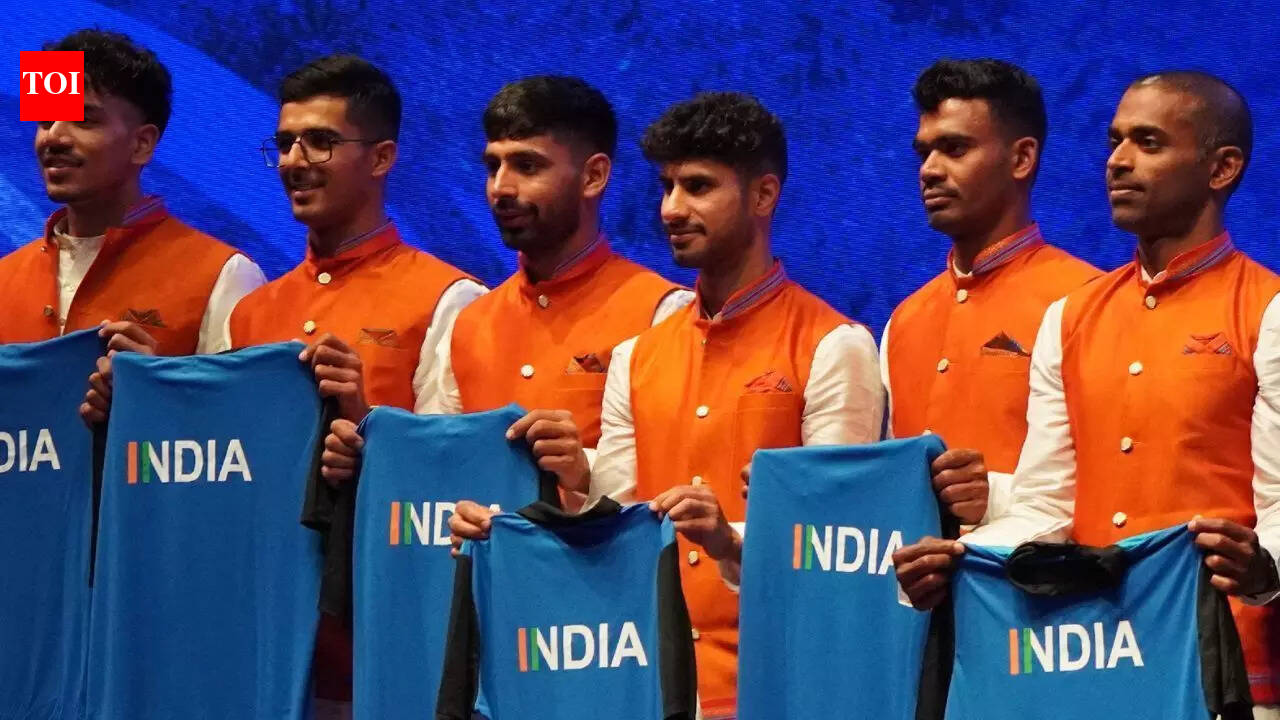
A total of 171 riders from 29 teams, representing 35 countries, will line up across 437 kilometres of racing. The route cuts across the Deccan Plateau, the Sahyadri ranges and the urban sprawl of Pune.From a short 7.5 km prologue at Goodluck Chowk, the race rolls into village roads at Mulsi–Maval, climbs through the Maratha Heritage Circuit, opens up on the fast Western Ghats Gateway stage, before concluding with the technical Pune Pride Loop inside the city.For the first time, India will field 12 riders in a UCI road race. The contingent is divided into two squads: Indian National Team and Indian Development Team. That said, it is the country’s largest-ever presence at this level.
‘This is very big for us’
For Indian National Team member Surya Thathu of Maharashtra, racing at home holds something significant.“First of all, this thing is very big for us because it’s happening in Pune, in India, for the first time, this level of competition,” he told TimesofIndia.com.“We try to find this outside of India. We travel every year for such competition, and this is happening in India. This is a very big stage for us.”Until now, exposure came at a cost.“If I want racing in a year, I’ll travel to Belgium, Dubai, some other countries,” Surya explained. “In Belgium, you’ll see almost every week they have races. When you race in such environment, where no one is worried about losing, you instantly grow.“Here, in India, we have only one race, like National Championship. Everyone wants to win a medal there.”Pune Grand Tour aspires to change that equation by bringing aggressive, international racing to Indian roads. And the players are completely behind the proposition.
Holding onto family legacies
For another member of the team, Vishavjeet Singh of Punjab, cycling is an inheritance. “Actually, cycling is my family game,” he told this website.“My father was a cyclist, my uncle also was cyclist. My big brother was also cyclist. My sister has also done cycling. And I am the third generation in my family who is doing cycling.”And it has borne fruits for him, too.“I got a bronze medal in Asian Championship 2022,” Vishavjeet added. “First time for India… first Indian endurance rider who bring the medal for India in Asian Championships,” said Vishavjeet.But road racing presents a new challenge.“This is my first of this kind of multi-day road race,” admitted the track specialist. “I will go for a good ranking. But also for my team. I will help as much as I can,” he said.
The unseen costs of speed
Behind the glamour of the peloton, though, lies a financial reality few outside the sport can fully grasp.“It is true that cycling is very expensive,” said Dinesh Kumar. “There are cycles for Rs 8 lakhs, 10 lakhs, 12 lakhs. The price of the cycle that I am going to use here is around Rs 10 lakhs.”“The international players will also be using the same kind of cycles. The equipment is the same.”Recalling the cost of speed, Surya added, “It’s all our family’s support.“My brother stopped playing. He was a footballer. He decided to stop and start working because both the brothers can’t do sport. He sacrificed that stuff for me.”
A coach’s perspective
For the Indian Development Team, Pune Grand Tour will be less about podiums and more about process. Coach Amit Jangra, who has represented India in the Commonwealth Games, sees it as a milestone.“It’s not about the pressure, it’s about the exposure,” he said. “This will be a milestone for their future.”Preparation for both teams has been thorough with camps in Patiala. From adapting to near-freezing temperatures a few weeks back to Pune’s mild winter now, the coach feels that the players are now in good shape to showcase their mettle. He feels results will come with discipline.
Poll
What do you think is the biggest advantage of hosting the Pune Grand Tour in India?
“We focus on the training process,” Jangra added. “If we follow the process quietly and consistently and with discipline, definitely the result will come.”The aim is to finish well and give our best,” said Dinesh. “So that this tour continues, and we get a chance to play events in the future.”As the peloton rolls out of Goodluck Chowk on Monday, children in villages and city streets will watch riders on machines worth more than cars.Years ago, a schoolboy in Rourkela thought a cyclist looked like a foreigner. This week, foreign riders will look at Indian cyclists as equals.
About the Author