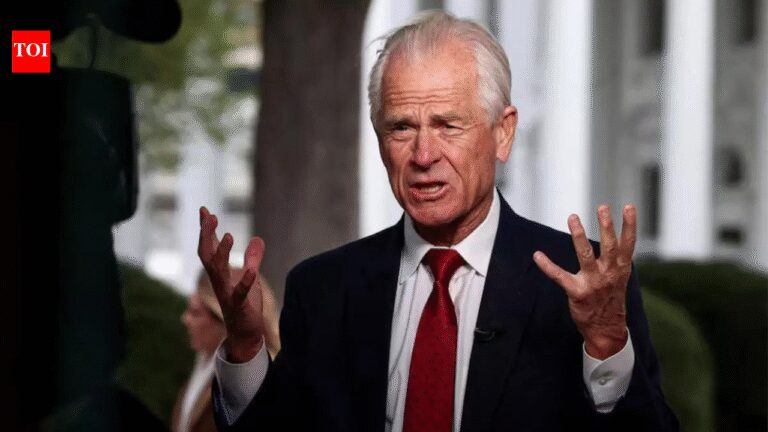
President Donald Trump’s decision to approve the sale of Nvidia’s powerful H200 artificial intelligence (AI) chips to China has received criticism from lawmakers and former officers who warned that the move may “supercharge” Beijing’s military capabilities. Matt Pottinger, who served as a senior White House Asia advisor during Trump’s first term, criticised the move during a congressional hearing, arguing that the administration is on the “wrong track” and is actively undermining the US goal of winning the AI race.Selling H200s to China “will supercharge Beijing’s military modernization, enhancing capabilities in everything from nuclear weapons to cyber warfare, autonomous drones, biological warfare and intelligence and influence operations,” Pottinger said. “Congress needs to put guardrails in place so that this mistake can’t be repeated,” he added, as per news agency Reuters.
Trump administration defends move
The Trump administration has defended the move, suggesting that by allowing the sale of American chips will discourage Chinese competitors like Huawei from developing their own advanced designs.Pottinger, however, dismissed this logic as a “fantasy”, warning that the H200 would enhance China’s capabilities in “nuclear weapons, cyber warfare, autonomous drones, biological warfare, and intelligence operations.”Congressman Michael McCaul said, “They steal so much intellectual property from this country but we don’t have to sell it to them.”Meanwhile, a spokesperson for Nvidia noted, “America should always want its industry to compete for vetted and approved commercial business, supporting real jobs for real Americans.”
New China regulations for import of Nvidia chips
Reuters reported earlier this week that Chinese customs agents have been told that Nvidia’s H200 AI chips are not permitted to enter the country. As per the new regulation, there are several restrictive measures aimed at mitigating security risks. The first is that every chip must be reviewed by a third-party lab to confirm its technical capabilities. Second, China cannot receive more than 50% of the total volume of chips sold to American customers. The third measure is that Nvidia must certify that domestic supply is sufficient before any units are shipped abroad; And finally, Chinese customers must demonstrate “sufficient security procedures” and pledge not to use the hardware for military purposes.
About the Author