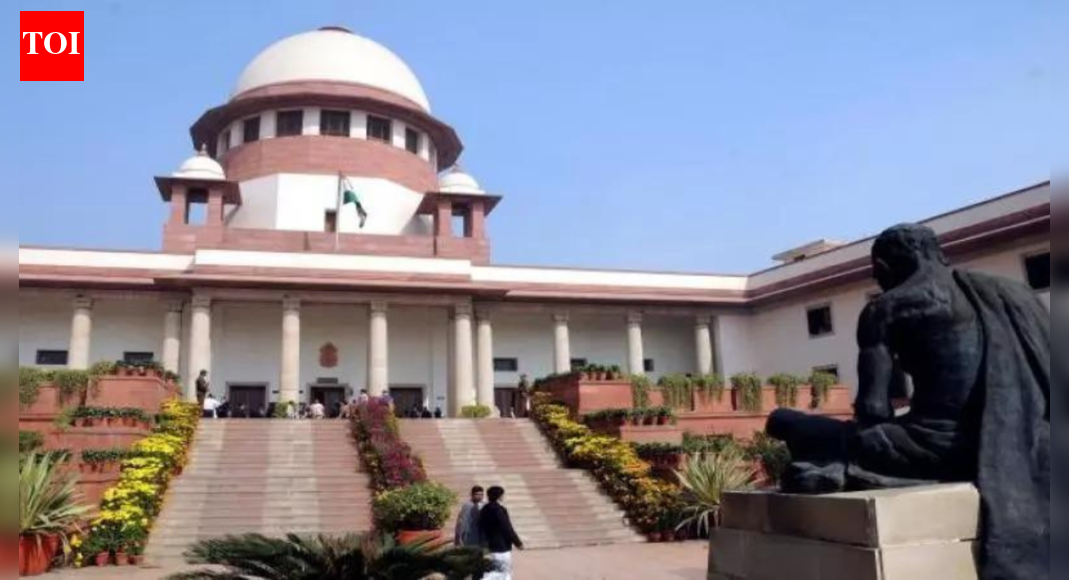
NEW DELHI: A 43-year-old widow from Assam, who was deported recently to Bangladesh, has approached the Supreme Court alleging she was wrongly declared an illegal migrant even though all 16 members of her family are in National Register of Citizens. The court has ordered officials to verify the documents submitted by her brother.Aheda Khatun was taken to detention centre on Sept 30 after Gauhati high court rejected her plea in Aug. Her lawyer Adeel Ahmed said she was deported to Bangladesh from Matila transit camp on Dec 19 while her case was pending in SC. Khatun said she was born in India in 1981 to parents who were already enrolled as voters for decades and she is an Indian by birth under Section 3(1)(a) of the Citizenship Act. The NRC family list shows that every member of the petitioner’s family, including her father, mother, and fourteen siblings, has been categorised as accepted in the final NRC. The petitioner alone was marked DV (doubtful voter) solely due to the pendency of the case (before a Foreigners Tribunal). This creates an overwhelming prima facie case of Indian citizenship,” she said in her petition.The tribunal declared her a foreigner in September 2019 on the premise that she had failed to conclusively provide proof of lineage. She moved the high court after a delay of more than five years. She was detained after her plea was dismissed.Challenging the HC order, she submitted that her plea was rejected for delay without going into the merit of the case. As her brother has filed the affidavit on her behalf, the court issued notice on the plea and said, “Let notice be issued for the limited purpose of enquiring into the genuineness of the documents relied upon by the petitioner’s brother, who has filed affidavit on her behalf.”The petition said, “The Foreigners Tribunal fundamentally erred in placing an insurmountable and legally impermissible burden upon her under Section 9 of the Foreigners Act, 1946, by rejecting even statutory and certified public documents produced by her, without any rebuttal or contradictory evidence by the State.” “The petitioner had produced nine documents – including four consecutive voter lists (1965, 1970, 1985, 1997), Jamabandi, mutation order, registered gift deed, school certificate, and Gaonburah certificate – all of which are primary evidence of lineage and citizenship. The tribunal was not entitled to discard these documents on surmises and conjectures, particularly when no contrary evidence was led by the State,” it said.
About the Author