
In various cultural settings, mythologies, and modern psychological frameworks, daughters often function as significant karmic figures within a family’s story. This viewpoint, stemming from spiritual teachings and observational evidence, suggests that daughters, particularly the firstborn, are not simply born into families by chance, but rather to address emotional, ethical, and generational debts accrued over numerous lifetimes.Across many Eastern philosophies, karma is understood as the cumulative impact of past actions and unresolved lessons that endure through time. Daughters are seen as entering families where personal growth, emotional healing, or responsibility is crucial. Their presence often mirrors unspoken familial dynamics, emotional deficits, and unmet obligations.Unlike sons, who are often seen as the carriers of family heritage, daughters are frequently perceived as the keepers of emotional truth, often representing the very matters families tend to overlook.
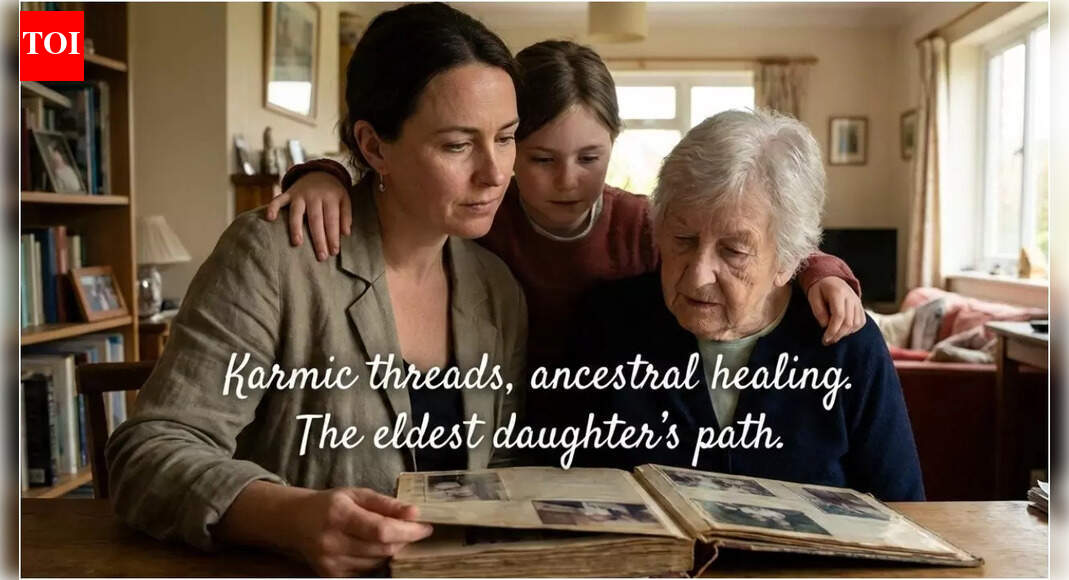
The eldest daughter, in particular, is often viewed as the most karmically important.
As the firstborn, she becomes part of a family dynamic still in flux as the parents navigate their roles. She internalises the most fundamental expressions of parental expectations, anxieties, aspirations, and vulnerabilities. Older daughters often carry burdens that exceed their developmental capacity; they are the emotional glue people to hold together, the second caregivers, and the most unacknowledged problem solvers in the family.In spiritual terms, the older daughter carries a huge karmic burden. She questions the status quo, rejects unjust systems, and initiates change, sometimes at her own expense. Her existence is rarely straightforward; instead, it is marked by early maturity, emotional resilience, and a heightened sense of duty.Numerous spiritual viewpoints suggest that her role is to dismantle cyclical patterns, including those inherent in patriarchal systems, emotional neglect, and unaddressed trauma.Psychologically, empirical research consistently demonstrates that elder daughters often display heightened empathy, leadership qualities, and emotional intelligence.Conversely, these characteristics often stem from external demands rather than intrinsic tendencies. The pressure to “take responsibility” and “act as a role model” creates a unique emotional burden, thus reinforcing the idea that her role is not merely incidental but rather karmically determined.In mythological and folkloric narratives, daughters frequently function as agents of balance and justice. From divine figures who restore cosmic equilibrium to mortal women who sacrifice personal happiness for familial harmony, the central theme persists: daughters exist to rectify, not simply to continue.This symbolic structure further substantiates the idea that daughters, especially those who are firstborn, embody karmic reflections of their family’s past and present.Current discussions on gender roles bring increasing attention to the often disregarded responsibilities of daughters. The concept of Karmic perspective, though inherently spiritual, manifests in tangible behaviours on the ground. Elder daughters are often the emotional poles of their families, a role they continue to play well after they have moved on to their own families.Basically, the concept of daughters as karmic agents does not mean that they were born to have unsuccessful suffering lives. Instead, it recognizes their ability to bring about change. The life of the elder daughter is often defined not by an absence of difficulty, but by a strong sense of obligation. She is there to teach, to comfort, and sometimes to endure, thus contributing to a less challenging life for those who come after.
About the Author