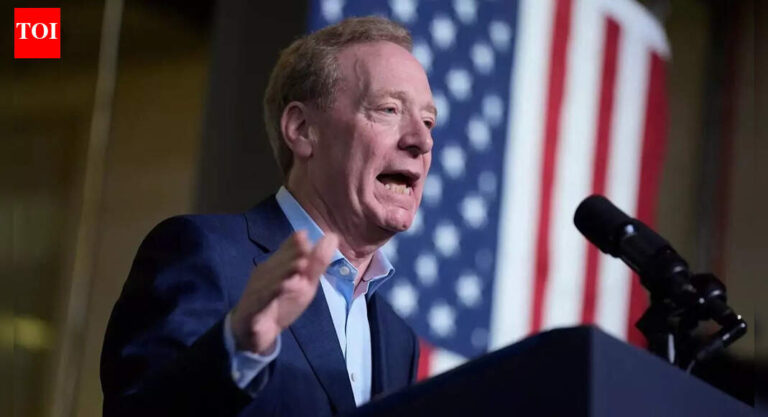

US President Donald Trump recently proposed to cap credit card interest rates at 10% for one year, to ease affordability concerns for Americans. However the move has sparked a debate as supporters are arguing that it could save Americans billions of dollars, while critics have flagged that it may restrict access to credit for people with lower credit scores. The idea received bipartisan backing on Monday.Trump, announced the move on Truth Social last week, saying that the cap would stop Americans from being ripped off” by credit card companies. The banking industry, however, has pushed back strongly against the plan, CBS news reported.Speaking after JPMorgan Chase released its fourth-quarter results on Tuesday, chief financial officer Jeremy Barnum said the proposed cap would harm both consumers and the wider economy.“Specifically, people will lose access to credit, like on a very, very extensive and broad basis, especially the people who need it the most, ironically,” Barnum was quoted by CBS News as saying. “And so, that’s a pretty severely negative consequence for consumers, and frankly, probably also a negative consequence for the economy as a whole right now.”Credit card interest rates are currently near historic highs. According to LendingTree, the average credit card rate is close to 24%, while borrowers with poor credit scores can face rates as high as 36%.
How would the 10% cap impact US consumers?
Researchers at Vanderbilt University estimated in a September 2025 analysis that a 10% cap on credit card rates could save consumers around $100 billion a year in interest payments. At a 10% rate, a cardholder carrying a $5,000 balance would pay roughly $42 a month in interest, compared with about $100 a month at the current average rate, CBS reported.Despite those potential savings, some analysts and banking industry representatives argue that the cap could have unintended consequences. They say lenders may respond by limiting access to credit for low-income consumers and borrowers with weaker credit histories.“They would find it dramatically more difficult to access credit,” Ted Rossman, senior industry analyst at Bankrate, told CBS News.Such restrictions could also weigh on the broader economy. Analysts at Morgan Stanley note that credit card spending accounts for between 30% and 40% of total annual consumer spending. If subprime borrowers reduce spending due to tighter credit, overall consumer spending could fall by around 5%, potentially offsetting any boost from lower interest rates.The American Bankers Association said that a 10% cap “would only drive consumers toward less regulated, more costly alternatives,” including payday loans or “buy now pay later” products.Tiffany Funk, co-founder and president of point.me, said that a rate cap could also reshape credit card reward programmes.“Absent that lever and potential revenue source, we would likely see banks raise annual fees dramatically, or drastically reduce the value of their points and transfer programs,” she told CBS News.However, not all experts agree that a cap would lead to widespread credit cut-offs. Shearer disputed claims that card issuers would shut out higher-risk borrowers, arguing instead that banks would likely adjust other aspects of their offerings.“The credit card business is massively profitable, so it could absorb a significant cut,” he said, adding that issuers have multiple revenue streams beyond interest charges.Companies such as Visa, Mastercard and Capital One also earn income through annual fees and interchange fees paid by merchants, which would not be affected by the proposed cap.“Claims from bank lobbyists that this would lead to account closures are greatly overstated, if not completely false,” Shearer told CBS news.High credit card rates, experts say, are driven largely by risk. Annual percentage rates on credit cards are significantly higher than those on mortgages or car loans because the debt is unsecured.“There is no underlying asset like a car or a home,” Rossman told CBS News. “The risk to lenders is they aren’t going to be paid back.”Card issuers are also reluctant to cut rates because doing so would reduce profits. While the Credit Card Accountability Responsibility and Disclosure Act of 2009 limits how and when issuers can raise rates and curbs certain fees, it does not impose an upper limit on interest rates.Questions also remain about whether Trump has the authority to impose such a cap.
About the Author