Canada updated its international travel advisory recently, issuing its most severe advisories for a set of countries where conditions are deemed too dangerous for Canadian travellers. The advisory was updated on its official website travel.gc.ca . These advisories reflect a careful assessment of political instability, armed conflict, civil unrest, threats to personal security, limited flight access, and the inability of Canadian consular officials to assist effectively.
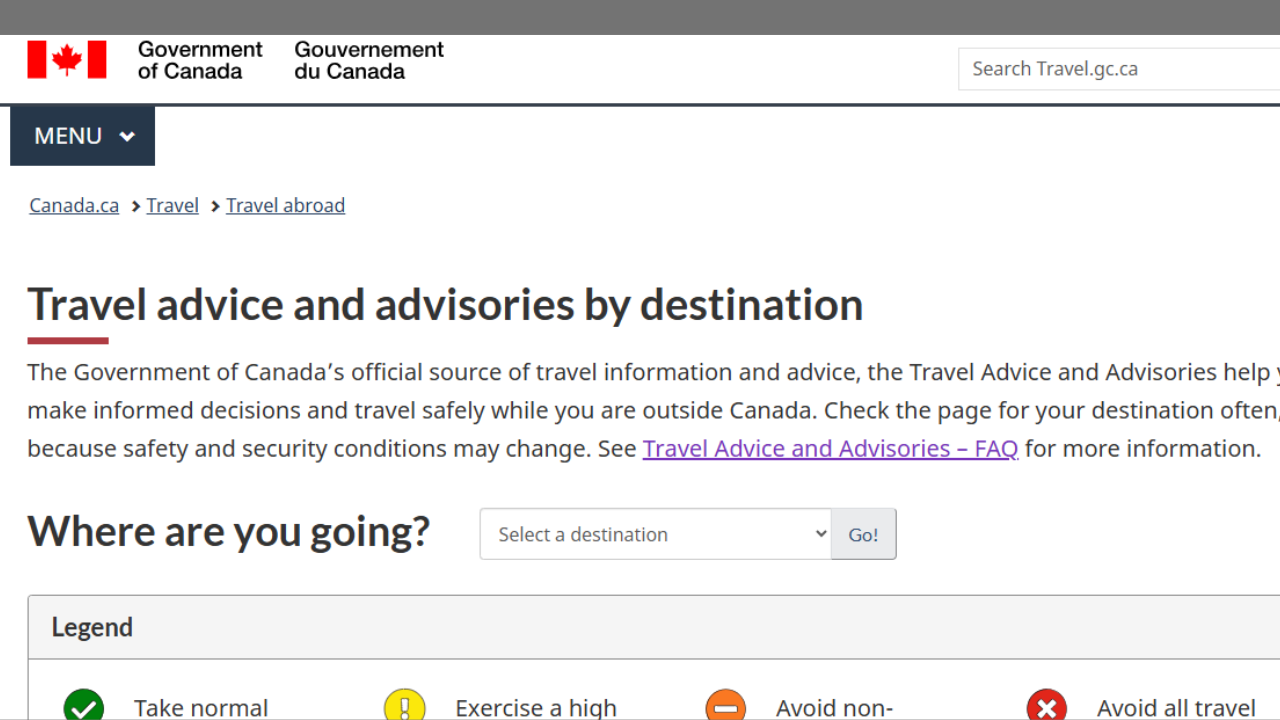
Canada’s travel advisory system uses multiple categories:
- Take normal security precautions
- Exercise a high degree of caution
- Avoid non-essential travel
- Avoid all travel (most serious)
Countries listed under ‘Avoid All Travel’ to Iran — Canadians are urged to avoid all travel due to ongoing nationwide demonstrations, regional tensions, high risk of arbitrary detention, and unpredictable enforcement of local laws. The advisory also notes that Iranian authorities have arrested or detained foreign and dual nationals to exert political or diplomatic leverage. Flight options are limited as many airlines have suspended service, and Canadian consular support on the ground is extremely constrained. Venezuela — Canadians are warned against all travel due to heightened security risks, severe political and economic instability, pervasive violent crime, risks of arbitrary detention, and deteriorating basic services such as access to medication, gasoline and potable water.Central African Republic — The advisory highlights persistent insecurity, frequent military operations, and violence by armed groups. While the capital Bangui is comparatively more stable, the situation can deteriorate rapidly. South Sudan – Canada advises against all travel to South Sudan due to persistent security instability, armed conflict, inter-ethnic violence and widespread violent crime. Canadians in the country are encouraged to depart by commercial means if possible. Should the situation deteriorate further, exit options may be disrupted and consular support could be limited.

Yemen — Continued armed conflict, terrorism, kidnapping risks and regional tensions place Yemen on the highest warning level. Canadians in the country are urged to leave if safe. Other countries on Canada’s ‘Avoid All Travel’ list—reflecting extreme danger—include Afghanistan, Belarus, Burkina Faso, Iraq, Libya, Mali, Myanmar, Niger, North Korea, Russia, Somalia, Sudan, Syria, Ukraine and Haiti.Read more: Germany scraps transit visa requirement for Indian travellers — what changes Destinations with less severe but significant warnings Alongside the strictest ‘Avoid All Travel’ advisories, Canada’s updated guidance includes categories advising travellers to avoid non-essential travel or exercise a high degree of caution:Avoid non-essential travel This advisory applies where safety risks such as crime, political unrest, or limited infrastructure may make travel unpredictable but not necessarily life-threatening. Countries currently in this category include:
- Nepal
- Ethiopia
- Burundi
- Chad
- Democratic Republic of Congo
- Eritrea
- Lebanon
- Mauritania
- Nigeria
- Papua New Guinea
Exercise a high degree of cautionA large number of destinations globally are designated as requiring heightened vigilance due to risks such as terrorism, civil protests, crime or sporadic violence. One notable country in this group is: India — Canada’s advisory for India urges citizens to exercise a high degree of caution against the threat of terrorist attacks throughout the country. The advisory includes region-specific warnings too like Assam, Manipur, Rajasthan, Punjab, Gujarat and more.Read more: B1/B2 visa approved in just 3 minutes: Inside a remarkably smooth US visa interviewWhy these advisories matter Canada’s travel advisories are not travel bans but authoritative safety recommendations based on:Real-time global security assessmentsPolitical developments and internal movementsCrime data and threat analysisRegional conflicts and armed aggressionConsular reach and support limitations for Canadians abroad Travellers should always consult official sources like travel.gc.ca before making or adjusting travel plans, as conditions can change rapidly.
About the Author