
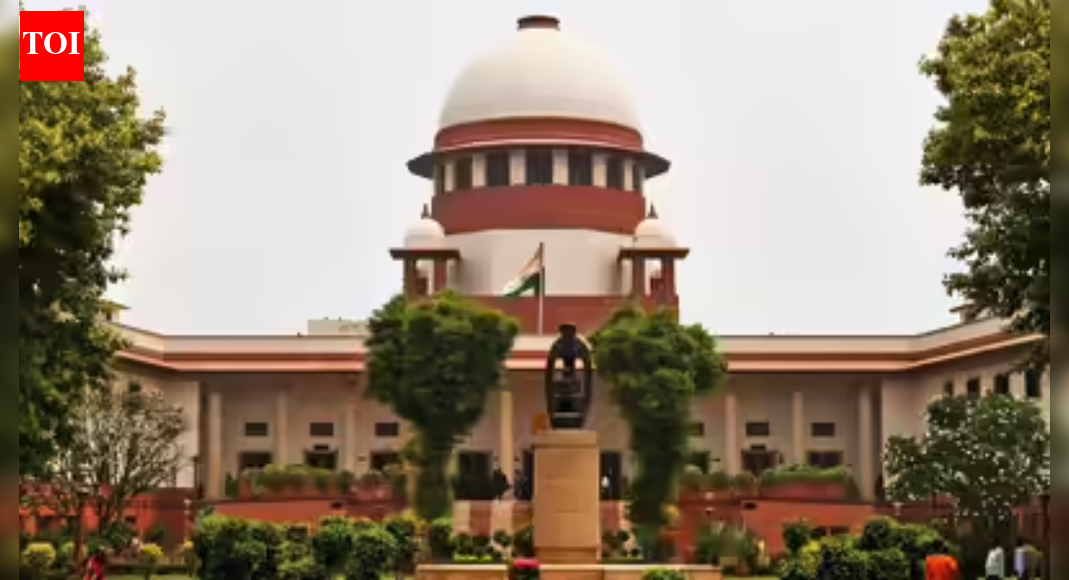
NEW DELHI: While sympathising with a young man from UP who will lose his govt job because of its adverse order over his not declaring a pending criminal case against him at the time of recruitment, Supreme Court on Monday emphasised that sympathy cannot supplant the law as such disclosure is not a simple procedural formality but a basic requirement for public service. “There is a maxim in law to the effect that ‘ dura lex, sed lex’, which means the law may be harsh, but the law is law,” a bench of Justices Sanjay Karol and N K Singh said while quashing the order of Allahabad HC which had held that the non-disclosure was of “trivial nature” and his appointment could not be set aside on that ground. “It is also a settled position in law that sympathy cannot supplant law. As such, while we acknowledge that loss of a govt job is not an easy loss to come to terms with, at the same time awareness of consequences is a necessary component of actions,” the bench said. “Proper and complete disclosure in applications for govt employment is not a simple procedural formality, but a basic requirement rooted in fairness, integrity and public trust. Govt posts attract hundreds, and often thousands, of applicants for a single vacancy, each competing under the same stated conditions; scrupulous vetting of every candidate becomes imperative and essential to ensure a level playing field and to protect the credibility of the selection process. When an applicant withholds information about criminal antecedents, it undermines this process by depriving the appointing authority of the opportunity to make a fully informed assessment of suitability,” the bench said. While the law recognises that non-disclosure, depending on the nature of the offence and accompanying circumstances, may not invariably be fatal to a candidature, it nevertheless remains a serious lapse. “The gravity is significantly compounded when the non-disclosure is repeated, as it ceases to be accidental or inadvertent and instead reflects deliberate concealment. Such strikes at the core of trust reposed in candidates for public service, where honesty and transparency are indispensable attributes, and justify a far stricter view by the authorities,” it said. In the case before it, the person was appointed as Sahayak Samiksha Adhikari, but his services were terminated after it was found there were two pending criminal cases against him, which were not disclosed by him in the form. He approached Allahabad HC, whose single as well as division bench quashed his termination, following which state govt moved SC.
About the Author