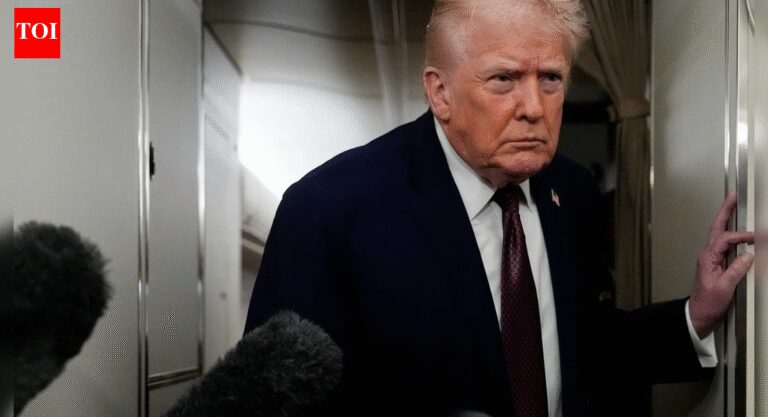
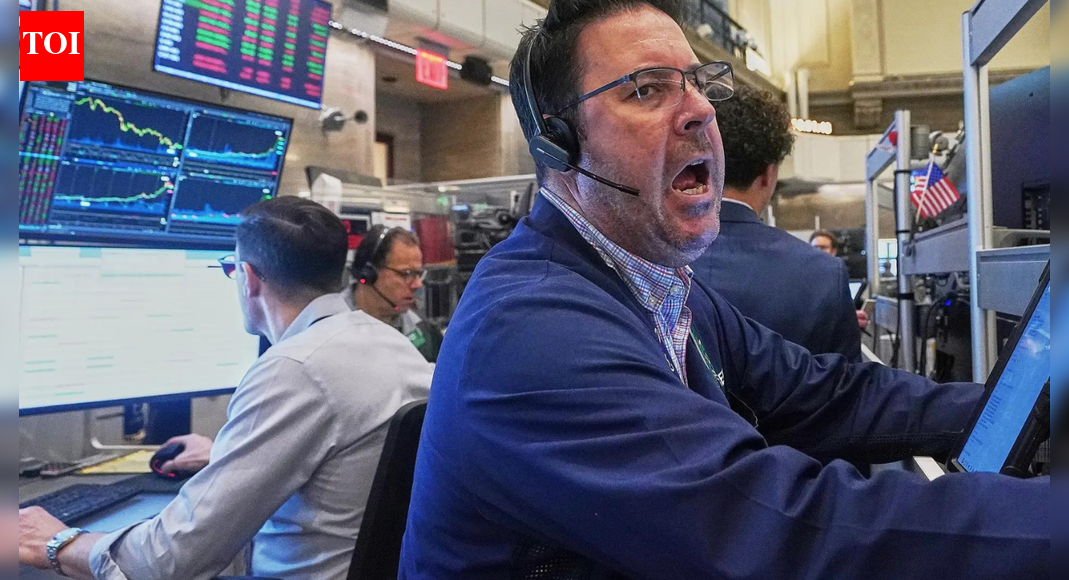
US stocks edged lower on Monday as investors showed signs of unease over a sharp escalation in tensions between the White House and the Federal Reserve, two Washington institutions whose independence markets have traditionally taken for granted. The S&P 500 slipped 0.3 per cent from its record high, while assets that typically benefit during periods of uncertainty, including gold, moved higher, AP reported. The US dollar weakened against major currencies such as the euro and Swiss franc amid concerns that the Federal Reserve’s independence in setting interest rates to control inflation could be under pressure. The Dow Jones Industrial Average was down 432 points, or 0.9 per cent, as of 9:35 am Eastern time, while the Nasdaq composite was nearly flat. The market reaction followed developments over the weekend in which the US Department of Justice subpoenaed the Federal Reserve and threatened a criminal indictment over Fed Chair Jerome Powell’s testimony regarding renovations at the central bank’s headquarters. In an unusual video statement released on Sunday, Powell said his testimony and the renovations were being used as “pretexts” for the threat of criminal charges, which he described as “a consequence of the Federal Reserve setting interest rates based on our best assessment of what will serve the public, rather than following the preferences of the President.” President Donald Trump, in a brief interview with NBC News on Sunday, said he was unaware of the investigation into Powell. Asked whether the probe was intended to pressure the Fed chair on interest rates, Trump said, “No. I wouldn’t even think of doing it that way.” Powell’s term as chair ends in May, and Trump administration officials have indicated that a potential successor could be named as early as this month. Trump has also sought to remove Fed Governor Lisa Cook. The Federal Reserve and the White House have been locked in a public feud over interest rates, with Trump repeatedly calling for deeper rate cuts to stimulate borrowing and economic growth. While the Fed cut its benchmark rate three times last year and has signalled the possibility of further reductions this year, it has moved cautiously — prompting Trump to label Powell “Too Late.” The Fed has long operated independently of political influence, a structure designed to allow it to take difficult and sometimes unpopular decisions, such as keeping rates high to rein in inflation, even at the cost of slower growth. On Wall Street, financial stocks were among the biggest losers after Trump separately proposed a one-year cap of 10 per cent on credit card interest rates, a move that could dent profitability for card issuers. Capital One Financial fell 6 per cent, while American Express dropped 4 per cent. In the bond market, the yield on the 10-year US Treasury edged up to 4.19 per cent from 4.18 per cent late Friday. Overseas, stock markets were mostly higher. European equities rose broadly, while Asian markets advanced sharply, with Hong Kong gaining 1.4 per cent and Shanghai climbing 1.1 per cent after reports that Chinese leaders were preparing additional measures to support economic growth.
About the Author