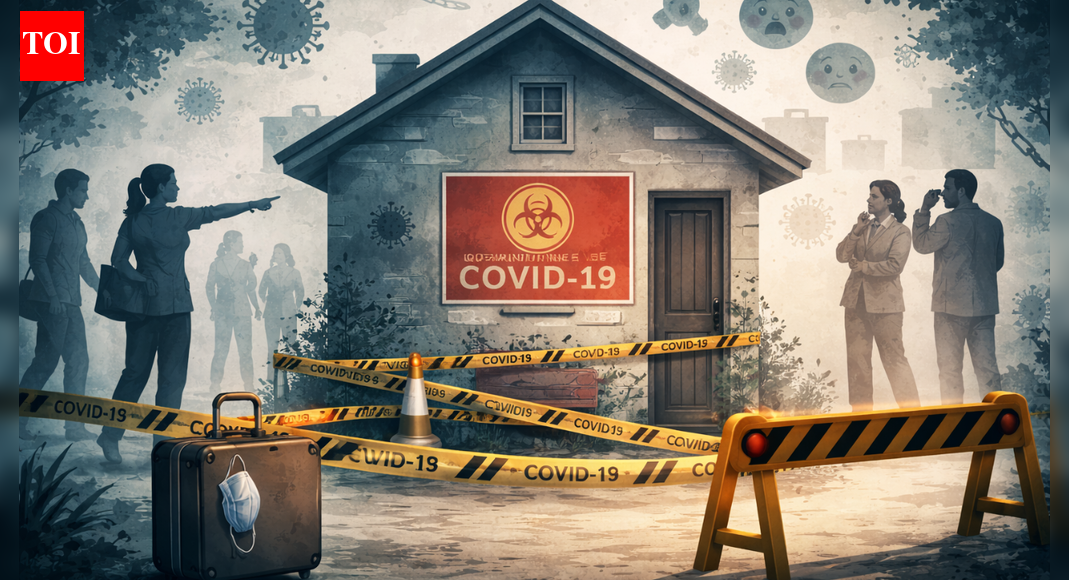
NEW DELHI: For many Indians who recovered from COVID-19 during the first wave, the pandemic did not end with a negative test report. A nationwide study has found that fear and stigma followed survivors long after recovery, leading to social exclusion, job loss and psychological distress, while also discouraging people from seeking testing or disclosing illness.The multicentric study, conducted by researchers from the Indian Council of Medical Research (ICMR) and collaborating institutes and published in Discover Public Health on December 31, 2025, shows how fear of contagion quickly turned into moral judgement. People who tested positive were often seen not just as a health risk, but as responsible for bringing the disease into neighbourhoods. In many cases, this stigma extended to entire families, informally labelled as “corona households” even after recovery.Dr Rajesh Sagar, Professor of Psychiatry, AIIMS, said stigma was a major issue in the early phase of the pandemic and directly affected testing and disclosure. “I was part of the DGHS committee that framed national guidelines, and stigma was specifically addressed in them. Public labelling of houses and colonies intensified fear and led many people to hide symptoms or avoid testing,” he said.The qualitative study covered 18 districts across seven states — Assam, Delhi, Madhya Pradesh, Maharashtra, Odisha, Tamil Nadu and Uttar Pradesh. Researchers interviewed 223 people between September 2020 and January 2021, including 87 COVID-19 survivors and 136 community members, during India’s first wave.Recovered patients reported being avoided by neighbours, excluded from weddings and community events, or withdrawing from social life to escape judgement. Several said the rejection continued for months despite medical clearance.Containment measures often worsened stigma. Houses marked with stickers, barricaded lanes and repeated official visits turned a private illness into a public identity, legitimising gossip and prolonging social rejection beyond the isolation period.Dr Sagar said people with mental health conditions faced double stigma — for COVID and for mental illness — discouraging help-seeking and disclosure. “Stigma was strongest during the first and Delta waves. It declined later with vaccination and awareness, but remained a barrier to care and disease control,” he said.The study found the impact was unequal. Domestic workers, street vendors and daily-wage earners were among the worst affected, often losing jobs or customers. Poorer households faced longer boycotts, while wealthier families were more likely to receive sympathy. In some districts, minority communities reported selective blame.Beyond economic loss, survivors reported anxiety, depression and guilt, with women often blaming themselves for infecting family members. Fear of stigma led some to hide symptoms or avoid testing, weakening outbreak control. Stigma was also reported in healthcare settings, with patients recalling exaggerated distancing and humiliating treatment.The study concludes that stigma is not an inevitable side-effect of epidemics but a serious public health barrier, calling for stigma-sensitive care, protection of confidentiality and support for reintegration in future health emergencies.
About the Author