
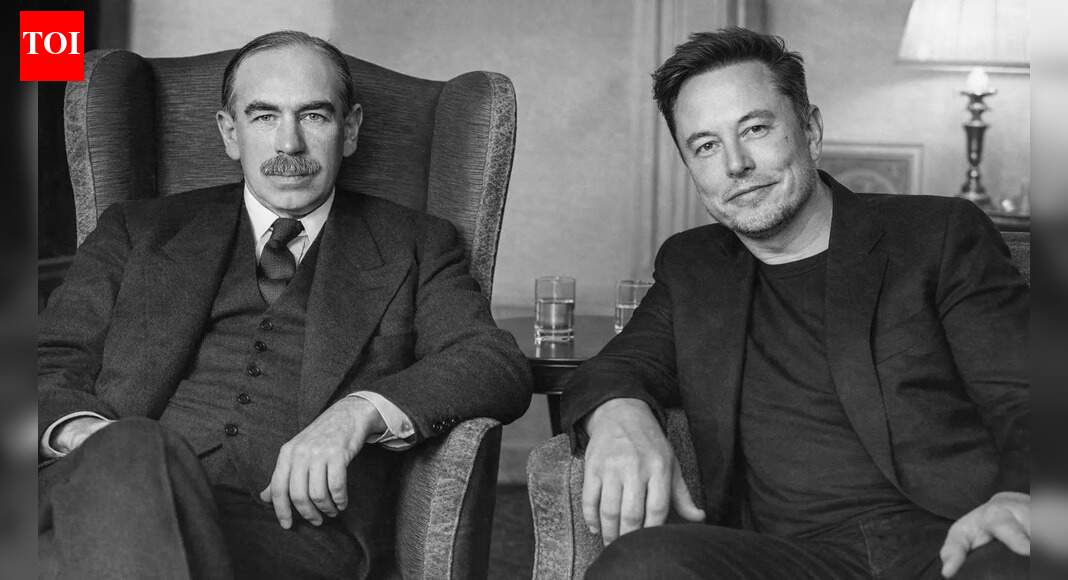
Three hours ago, Elon Musk posted five blunt words: “Keynes was a demon.” He was responding to Balaji Srinivasan’s line that the end of Western Keynesianism would be bigger than the collapse of Soviet communism. It was not a viral moment or a market-moving event. It was something more revealing: a small window into how some of the most powerful people in tech now think about money.This is not really about a dead British economist. It is about who gets to shape the modern financial system.
The man who taught governments to spend
John Maynard Keynes emerged from the wreckage of the 1930s with an idea that upended economic orthodoxy. When capitalism freezes, when people stop spending and businesses stop hiring, governments should not stand back. They should step in, borrow, and spend until the engine restarts.Before Keynes, recessions were treated as painful but necessary corrections. After Keynes, they became problems to be managed.His ideas shaped the post-war West. From highways and welfare states to stimulus packages and bank rescues, the logic was the same: when private demand falters, public money fills the gap.For decades, this approach helped stabilise economies and expand middle classes. It became the quiet operating system of Western capitalism.
Why Silicon Valley is pushing back
That system came under strain after the 2008 financial crisis and again during Covid. Trillions of dollars were created to stop economic collapse. Interest rates stayed low. Debt surged. Asset prices rose far faster than wages. Inflation returned.For figures like Musk and Balaji, this is not a temporary imbalance. It is the end state of Keynesian thinking.They argue that once governments accept permanent deficits and central banks accept unlimited money creation, discipline disappears. Bad bets get rescued. Risk is softened. Political promises are paid for by gradually eroding the value of money rather than by raising taxes.From this perspective, Keynesianism stops looking like crisis management and starts looking like a system that quietly transfers cost to the future.
Why Musk uses the word ‘demon’
Musk’s phrasing is dramatic, but the idea behind it is simple. Keynes did not just change how governments respond to recessions. He gave intellectual legitimacy to a world where money can be created and debts can grow without obvious limits.To critics, that world rewards insiders, inflates asset bubbles and leaves ordinary people dealing with higher prices and weaker purchasing power.So when Musk calls Keynes a “demon,” he is not talking about the man. He is talking about what his ideas unleashed: a monetary system that no longer feels anchored to anything solid.
Why Balaji says it is ending
Balaji’s claim reflects a belief that the Western financial model is running into hard constraints. Public debt is high. Central banks are stuck between fighting inflation and keeping governments solvent. Younger generations feel locked out of housing and wealth.To critics of Keynesianism, this is what happens when you run an economy on borrowing and money creation for too long.They believe a new phase is coming, whether through cryptocurrencies, fiscal hard limits or political pushback against inflation and debt.
The bottom line
Keynesianism was designed to make capitalism more stable. For much of the 20th century, it did exactly that.But to today’s tech elites, it has become a symbol of a system that props up inefficiency, inflates asset prices and shifts the cost of governance onto the future.That is why Musk’s three-hour-old tweet matters. It is not a scandal. It is a signal of how the people building the next economy see the one we are living in now.
About the Author