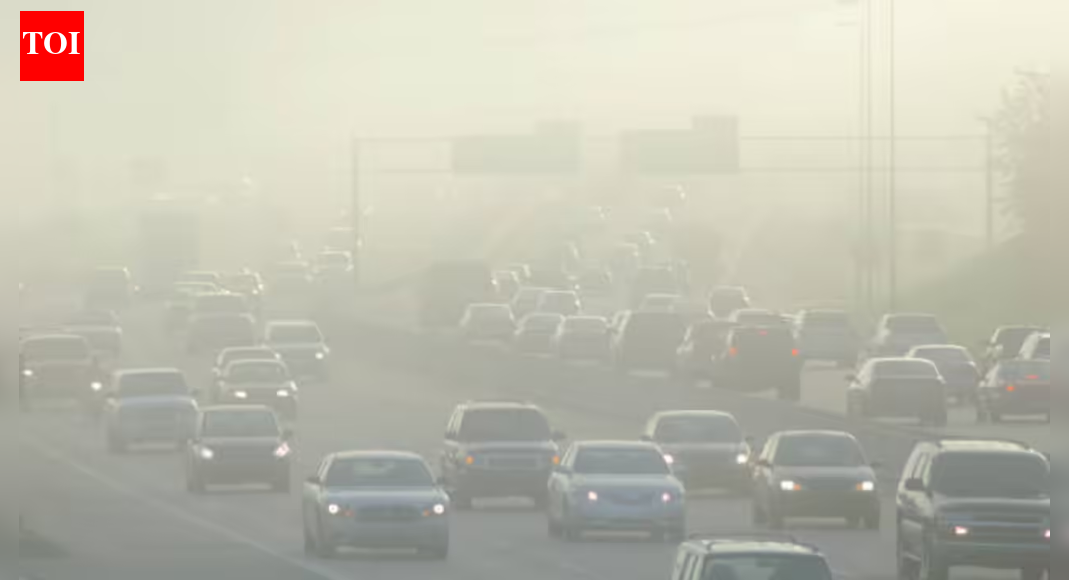
DEHRADUN: Winter fog has long been a disruptive force in northern India, grounding flights, delaying trains and bringing daily life to a crawl across the Indo-Gangetic plain. Now, new research published in Science Advances journal reveals that air pollution is not just accompanying these fog events – it is actively making them thicker, longer-lasting and harder to disperse, reports Gaurav Talwar. The peer-reviewed study, led by researchers from IIT Madras, shows that high concentrations of aerosols – tiny particles released from vehicles, industries, biomass burning and other human activities – are “invigorating” fog layers over parts of northern India. Using 15 years of satellite data and high-resolution weather-chemistry simulations, the researchers uncovered a clear physical mechanism linking pollution to intensified fog. They found that during polluted conditions, fog layers over the Indo-Gangetic plain grew about 15-20% thicker, often reaching heights of 400-600 m. Crucially, this thickening happens mainly at the top of the fog layer, not at the surface. The reason lies in how aerosols interact with fog droplets – more aerosols lead to more droplets, stronger cooling, increased vertical mixing and ultimately a thicker fog layer. As per the study, satellite observations revealed that fog in polluted conditions contains larger droplets near its top – a finding that may initially seem counterintuitive. In many clouds, pollution leads to smaller droplets. But in fog, where moisture is abundant and the atmosphere is nearly saturated, the enhanced condensation and cooling at the fog top allow droplets to grow larger despite high aerosol concentrations. The study stresses controlling aerosol emissions is not only essential for cleaner air, but may also be critical for reducing the intensity and duration of winter fog in northern India.
About the Author