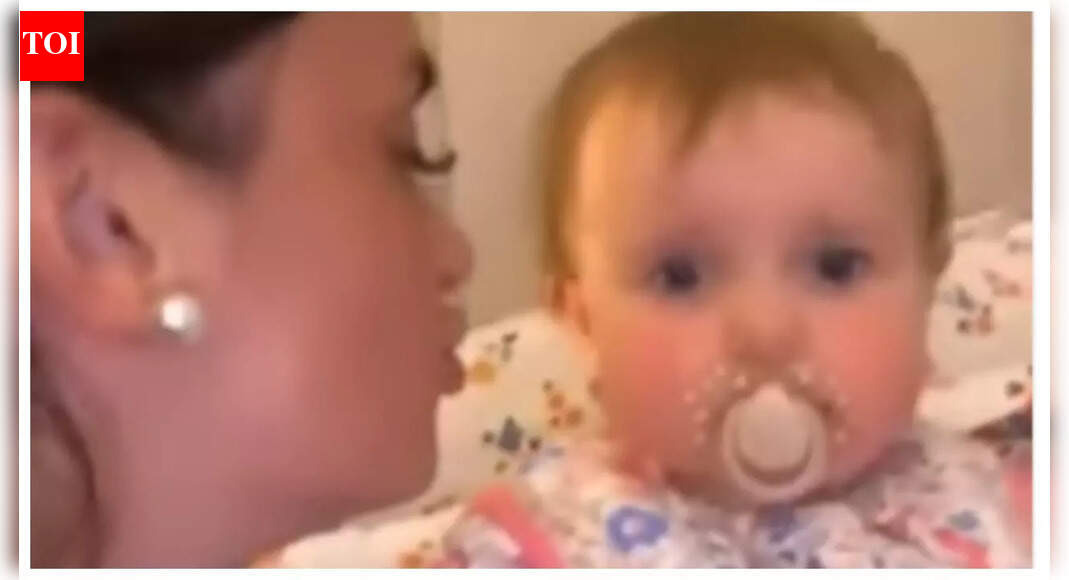
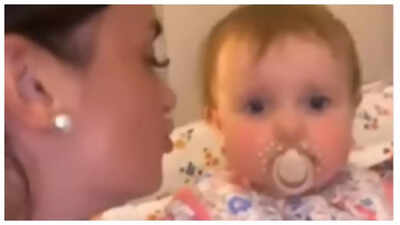
Babies often come up with the silliest expressions, even if that is not a reflection of their actual feelings at that point. A woman shared a video on social media where she is leaning to give a kiss to a baby girl, who simply ‘rolls’ her eyes in attitude, leaving the woman both confused and shocked! It seems like the adorable baby, with a pacifier in her mouth, has no time for any kisses! Take a look... (credit: unilad)Babies possess a unique ability to create the most ridiculous and humorous facial expressions, which is heartwarming. The tiny experiences in life function as important learning opportunities, which enable babies to build their communication abilities, while they learn to relate with their surroundings.The science behind baby facesThe brain and muscle development in babies results in their facial expressions becoming unpredictable. The muscles which control smiling, and crying in babies do not function exactly the way they do in adults. These muscles create unusual facial expressions, which include crossed eyes, lopsided grins and sudden “shocked” looks.These expressions are completely normal and actually a sign of healthy growth. Babies develop their facial muscle control through practice, which enables them to achieve better control of their facial expressions. The initial random facial expression will develop into actual smiling, proper crying and playful grinning throughout time.Common funny baby expressionsEvery infant develops their own distinct set of comical facial expressions. Some of the most common ones include:The “What was that? Look-The kid looks with wide eyes and an open mouth while their head tilts to the side, as if they just heard an unusual sound. The tongue‑out face-Sticking the tongue out while concentrating or playing, often with a serious expression.The “angry baby” face-Frowning, squinting, and scrunching up the nose, even when they are not actually upset.The “surprise scream”-A sudden, loud “Aaah!”Children display this behavior by opening their mouths wide, and lifting their eyes when they are playing.The “cross‑eyed stare”-Eyes crossing while trying to look at their own nose or a toy close to their face.Babies show their emotions through their comical facial expressions because they do not hide their feelings. Babies express their emotions in a way that differs from adults, because they show their feelings openly instead of concealing them. Their entire face lights up when they experience happiness.Scientists believe that humans automatically respond to baby faces, because these faces display large eyes, rounded cheeks and small noses. The “baby schema” activates protective and playful instincts in adults, which leads them to want to defend and engage with these children.A reminder to slow downPeople tend to overlook the small humorous situations which occur throughout their daily activities. A baby’s silly facial expressions which include their happy smile, crossed eyes, and their unexpected shocked expressions, have the power to make difficult times into pleasant moments. These expressions exist only for a brief time, because infants develop facial control which leads to adult-like facial expressions.
About the Author