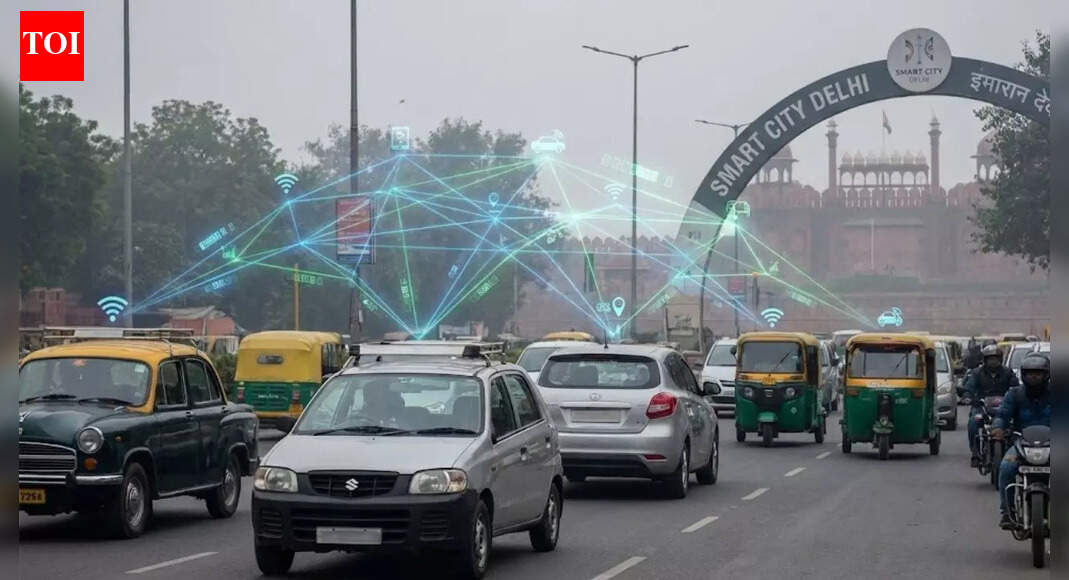
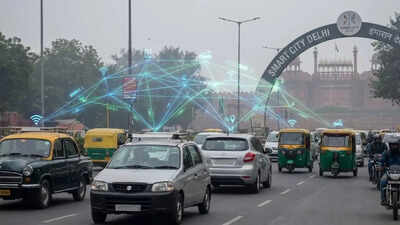
The central government is working on introducing vehicle-to-vehicle (V2V) communication technology in India as part of its push to improve road safety and reduce accidents. The system is expected to be rolled out by the end of 2026, according to Union Minister for Road Transport and Highways, Nitin Gadkari.V2V technology allows vehicles on the road to communicate directly with each other using short-range wireless signals. Unlike connected car features that rely on mobile networks or internet connectivity, this system works independently of network coverage. This means vehicles can exchange information even in areas where mobile signals are weak or unavailable.Under the framework being developed by the Ministry of Road Transport and Highways, vehicles will be equipped with a dedicated hardware module that enables this direct communication. When cars, trucks or other vehicles come within a certain range, they can share real-time data such as their location, direction of travel, speed and braking activity. This information is processed instantly to identify possible risk situations on the road.
If the system detects a potential hazard, such as a vehicle ahead braking suddenly or traffic slowing down unexpectedly, it can alert the driver early. The V2V technology is particularly useful in situations where reaction time is limited. These include sudden braking on highways, stopped vehicles on fast-moving roads and scenarios where it is difficult to accurately judge distance or speed. The technology can also be effective in low-visibility conditions, such as fog, heavy rain or poor lighting, where drivers may not be able to clearly see surrounding traffic.
About the Author