
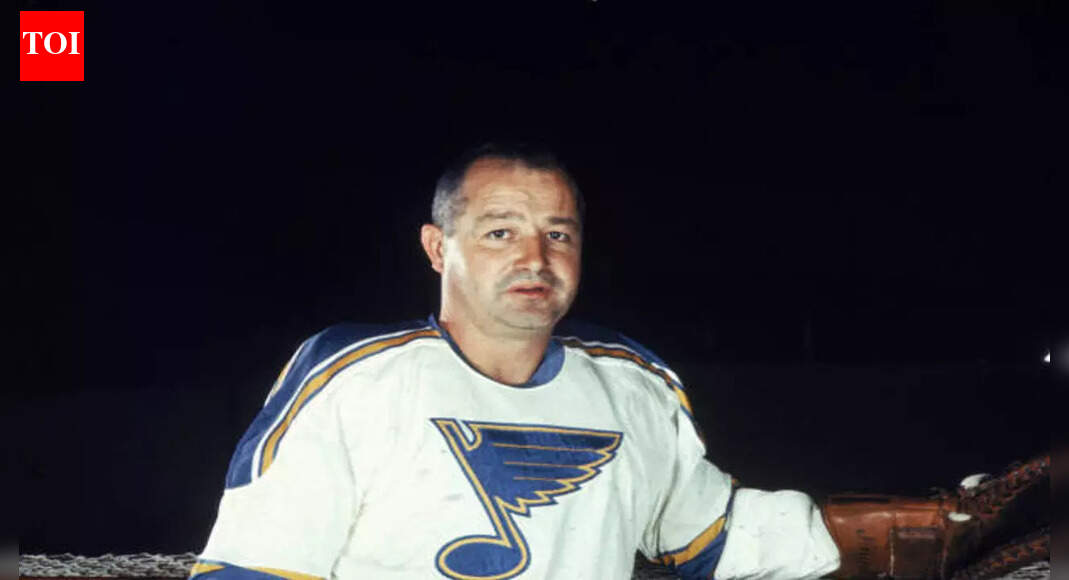
Glenn Hall, one of the most durable and influential goaltenders in NHL history, passed away on Wednesday at the age of 94 in Stony Plain, Alberta. A Hockey Hall of Fame inductee, Hall’s name is inseparable from toughness, consistency, and an ironman streak that still feels impossible decades later.Best remembered as “Mr. Goalie,” Hall set a standard between the pipes that few have even approached. His death closes the chapter on a career that reshaped how the position was played and measured in the National Hockey League.
Take a look at Glenn Hall’s ironman legacy and lasting impact on NHL goaltending
Hall’s streak of 502 consecutive regular-season starts, 552 including the Stanley Cup Playoffs, remains one of the most unbreakable records in professional sports. Achieved between the 1955-56 and 1962-63 seasons with the Detroit Red Wings and Chicago Black Hawks, the run was completed without the protection of a goalie mask, underscoring the physical and mental strain Hall endured nightly.Over 18 NHL seasons, Hall compiled a career record of 407-326-164, posted a 2.50 goals-against average, and recorded 84 shutouts, fourth-most in league history at the time of his retirement. Ten of those seasons came in Chicago, where he backstopped the Black Hawks to the 1961 Stanley Cup, ending Montreal’s five-year reign and cementing his reputation as the league’s most reliable goaltender.Hall’s path to greatness was not immediate. Born in Humboldt, Saskatchewan, he spent years in the minor leagues before seizing his opportunity with Detroit following Terry Sawchuk’s departure. His NHL debut in 1952 came under chaotic circumstances, arriving in Montreal without his equipment and borrowing gear just hours before puck drop. He still delivered a composed performance, a preview of the calm resilience that defined his career.Award recognition followed. Hall won the Calder Trophy as the NHL’s top rookie, earned seven First-Team All-Star selections, a record for goaltenders, and captured three Vezina Trophies. Later, with the expansion of the St. Louis Blues, he added another milestone by winning the Conn Smythe Trophy in 1968, becoming one of the few players honored as playoff MVP despite losing the Final.Beyond numbers, Hall’s influence endures through style. He was an early architect of the butterfly technique, dropping to his knees to seal the lower net, a method later refined by Tony Esposito and Patrick Roy. After retirement, Hall remained connected to the game as a consultant and mentor, while his legacy was preserved through Hall of Fame induction, league honors, and the documentary “Mr. Goalie.”
About the Author