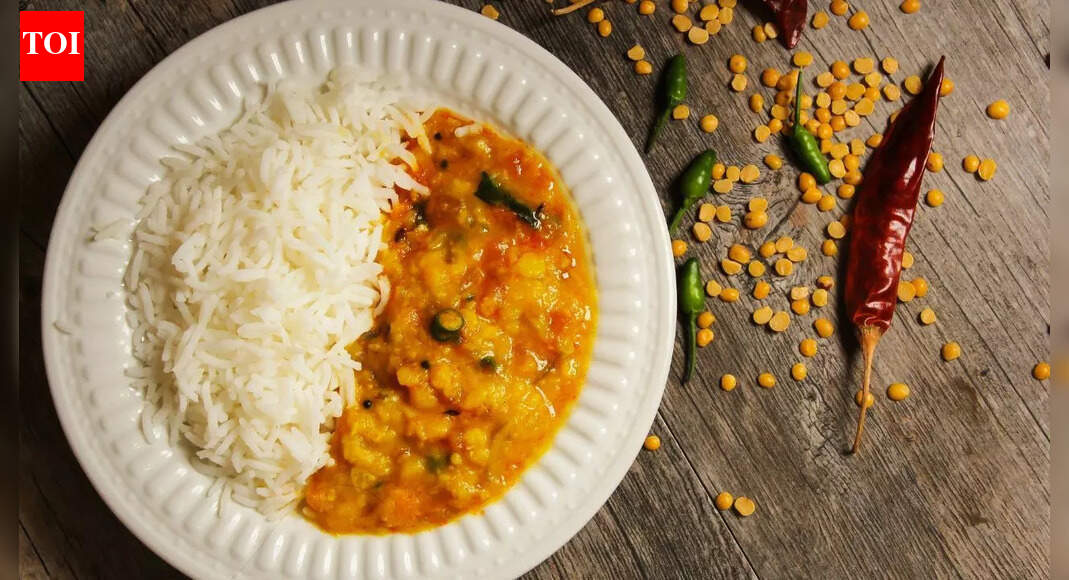
Dal Chawal, an Indian dish comprising lentils and rice, has traditionally occupied the important role of an easy, cheap, and satisfying one-food meal in many Indian households. However, the role of this one-food dish goes much beyond the bounds of an easy, cheap, and satisfying one-food meal.Current nutritional science, both in the developing and the developed world, points out the advantage of plant nutrients, proper nutrient digestion, and the quality of protein intake, reigniting public focus on the seemingly simple Dal Chawal.Modern science today recognises the nutritional advantage of the complementary properties of lentils and rice. While lentils are rich in amino acids, fibres, and nutrients, rice is rich in easy-to-digest calories and nutrients that improve the intake of nutrients from the food consumed.
How do different lentils change the nutritional value
What should be clarified is that dal is not a standard food, and its nutritional value varies based on the type of lentil and the manner of its preparation. Some types of lentils are more enriched with proteins and minerals and are better digested than the other types, and accordingly, certain types of lentils are preferred for certain types of health issues. According to a research paper published in Foods, lentils have an immense health value despite being cooked, and it is truly beneficial for human health, with multiple benefits.
- The moong dal is very light on the digestive system and is a good source of folate and magnesium.
- Masoor dal contains more iron and polyphenols, which contribute to the production of red blood cells and have antioxidant properties, respectively.
- Toor dal provides a good source of protein and potassium. The presence of potassium is crucial for the transmission of nerves and fluid maintenance.
- The chana dal is very dense with complex carbohydrates and fibres, which help in the prolonged release of energy.
Urad dal has a relatively high fat content, which gives it a density of energy, along with minerals such as calcium and iron.
Which rice is healthiest for your diet
Rice is known to be nutritionally rich. Rice is often highlighted only because of its value as a carbohydrate-rich food, but its nutrition facts and values go far beyond that. Varieties of rice differ from one another in the contents of micronutrients, starches, and fibres, and this greatly aids digestion and metabolism. Even when had with dal, this food is not only rich in balancing proteins but is easily digestible as well.
- White rice has a relatively high digestion rate and is not rich in fat. This rice works well as a source of instantly available energy.
- Brown rice does not have the bran removed. It therefore has a higher content of fibre, magnesium, and vitamins from the bran.
- Parboiled rice is partially steamed before it is milled. This process improves the retention of minerals and prevents losses of nutrients in meals.
- Semi-polished and hand-beaten rice is somewhat balanced between the nutritional and digestive qualities, and hence is recommended to be consumed.
How does combining rice and dal benefit your body
The complementary role of dal and rice forms a strong basis for its nutritional efficiency. A lentil has a high concentration of lysine, an amino acid that is always low in grains but requires a balance in a human diet; rice is rich in methionine and cysteine, an amino acid that is low in lentils but high in rice. The opposing roles lead to a balanced plant protein that can be efficiently used in human body functions like muscle growth, regulating enzyme synthesis, and overall metabolism. Other nutritional benefits include regulating blood sugar levels due to low glycemic indices.
- Provides sustained energy without spiking or falling concentrations of glucose, which assists in maintaining metabolic activity
- Offers protein for nutritional requirements without the need to rely on animal proteins. This is important for vegetarians
- Promotes intestinal health with a blend of soluble and insoluble fibre, ensuring healthy microbial growth and digestive function
- Can be enjoyed as an everyday food when taken in moderation and accompanied by vegetables, and/or with minimal addition of fat
- Highly adaptable to accommodate diverse cultural dietary needs while retaining nutritional quality
Simple ways to make dal chawal healthier
Despite the nutritious nature of the dal chawal, there are several factors that may result in the reduction of these nutritional advantages. These may range from the cooking practices, proportions, levels of usage of fats and salt, and types of lentils used when preparing this diet.
- Soaking the lentils before cooking also removes the anti-nutrients and reduces digestive difficulties
- Do not overcook dal, which helps retain texture and protein strength
- Ensure a balance between the portion of carbohydrates from the consumption of rice and dal
- Keep the addition of ghee, butter, or oil minimal, especially in the case of sedentary persons
- Occasionally, the dish can be served together with vegetables, both raw and cooked, in order to boost the level of antioxidant and nutrient compounds
Who may need to limit or modify dal chawal intake
Although it is suited for all, dal chawal may not be suited for everyone in its original form. Certain health issues, digestive abilities, and specific dietary restrictions may require adjustments in the quantity and preparation of the food.
- Patients with chronic kidney disease are advised to have protein and potassium-restricted diets.
- Patients with severe insulin resistance might need a modification of the amount of rice they should take.
- People who suffer from bloating or gas can opt for easier-to-digest lentil varieties like moong dal.
- Persons with iron overload disorders should reduce the intake of high-iron-containing foods such as masoor dal and toor dal.
- Anyone on a low-carbohydrate diet as directed by their physician may require substitutions for the specified grains or adjustments to the amounts to be taken.
Also Read | Sadhguru shares a simple warm drink to support the body during flu season
About the Author