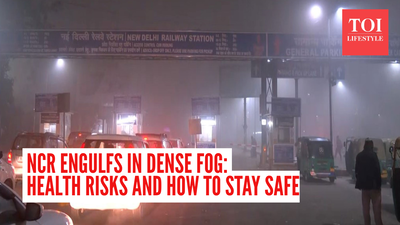
On the morning of 29 December, Delhi NCR woke up with a thick blanket of dense fog. The Indian Meteorological Department (IMD) has issued an orange alert of dense fog for Delhi. With inconveniences like reduced visibility or cancelled flights, dense fog in the region comes with a number of health risks, as the air quality remains in the severe category.
- While dense fog may look harmless, studies have shown that fog, especially when combined with pollutants, can affect human health. In Delhi-NCR, pollutants like PM2.5 and nitrogen oxides combine with fog, giving rise to a more harmful mixture- smog.
A study in the Journal of Thoracic Disease notes that smog fuels up respiratory illnesses as it traps more pollutants in the air. Such exposure can aggravate respiratory symptoms and even worsen symptoms in individuals already suffering from such issues. Another study conducted in China, published in the Journal of Thoracic Disease highlights that among the various air pollutants, PM2.5 are able to penetrate deep into the small airways, alveoli, and finally into the blood stream, where they can lead to subsequent inflammations, vasoconstrictions, even malignancies and premature deaths. Even with less number of pollutants, a study in Heliyon- a Cell Press Journal, have concluded that foggy atmospheric conditions are enriched by several pathogenic bacterial genera, with a few opportunistic pathogens that target respiratory, skin, and oral organs in humans. The study was conducted in a rural site located in the Vaishali District of Bihar.
How to stay safe
A study titled ‘Daily lifestyles in the fog and haze weather’ in the Journal of Thoracic disease shows that appropriate measures taken can minimize the adverse impact of fog on individuals on a daily basis. These include:-Vitamin intake: Include sufficient amounts of these vitamins in your diet
- Vitamin A- To improve immune function and resistance to infections.
- Vitamin D- To prevent infections from lack of sunlight
- Vitamin C- It is a highly effective antioxidant and can reduce oxidative stress.
-Drink adequate amount of water-Try to keep indoor air clean-Try to stay indoors as much as you can-Wear masks outdoor-Cleanse the body after exposure- Wash face, gargle, clean nasal cavity.Disclaimer: This article is for informational purposes only and should not be considered a substitute for professional medical advice.
About the Author