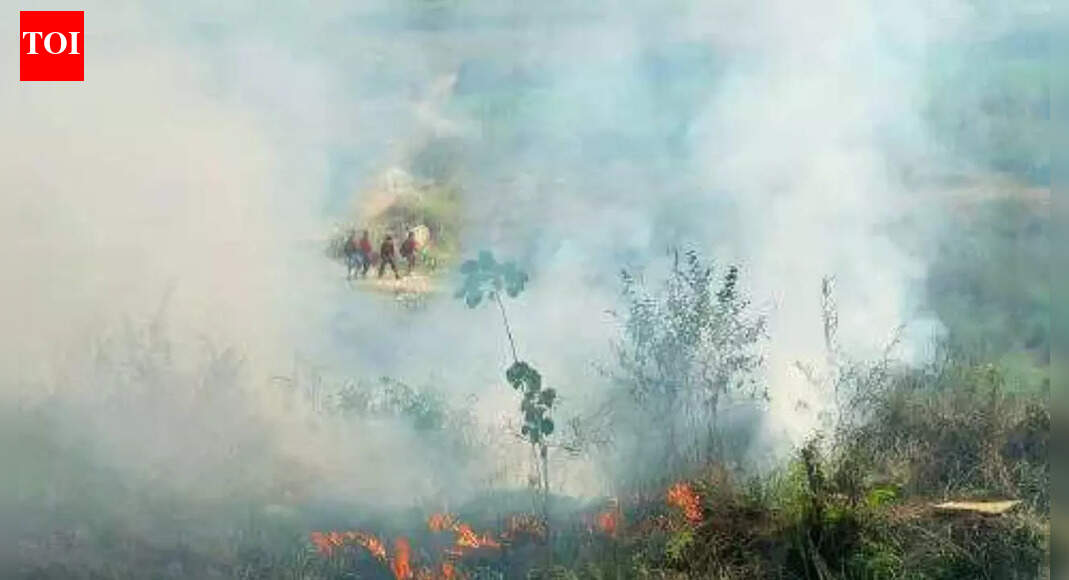
NEW DELHI: Delhi’s fire department is grappling with a steady stream of calls related to garbage burning—a problem that is contributing significantly to Delhi’s worsening air pollution. According to official data, the department received 3,598 complaints reporting garbage burning up to Nov 9 this year—an average of 11 calls daily. According to fire officials, many of these incidents are caused by residents carelessly discarding hot ashes or lit cigarette and bidi butts into piles of waste, which can ignite easily. In other cases, garbage is deliberately set on fire as a means of clearing surroundings. The presence of flammable materials in waste often allows fires to spread rapidly.
“The number of fire tenders dispatched depends on the intensity of the situation,” a fire department official said, adding, “Typically, two tenders are sent initially, and additional units are called in if needed.”
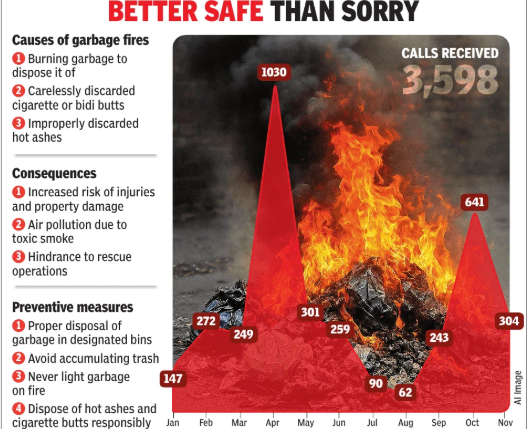
April reported the highest number of calls, with 1,030 cases registered related to garbage fires, followed by Oct with 641. Last month alone, up to Nov 9, 304 such calls were logged. “The thick smoke emitted from burning garbage is capable of disrupting rescue operations, making it challenging for emergency teams to navigate the site,” the fire official said. “Beyond this, the smoke contributes to air pollution and is highly dangerous for anyone inhaling it,” he added. Deputy chief fire officer AK Malik said the department regularly creates awareness among residents, urging them not to burn garbage in the open, as it leads to air pollution and fire hazards. People are advised to follow proper waste disposal practices to prevent health risks, environmental damage and accidental fires. Experts say garbage burning is a serious, though often underestimated. Sunil Dahiya, founder and lead analyst of the think tank EnviroCatalysts, noted, “Though waste burning looks like a small incident in isolation but cumulative number across the airshed makes it a significant contributor to air pollution. It should be tackled with seriousness along with other important pollution sources such as transport, power, industries and construction etc.“Another expert said burning of garbage, wood, garden waste and plastic waste is one of the major sources of pollution during winter. Many homeless people burn waste to keep themselves warm in the cold. Also, the use of non-clean fuels for cooking adds to rising pollution levels. The share of open burning is expected to rise as temperatures dip further.
About the Author