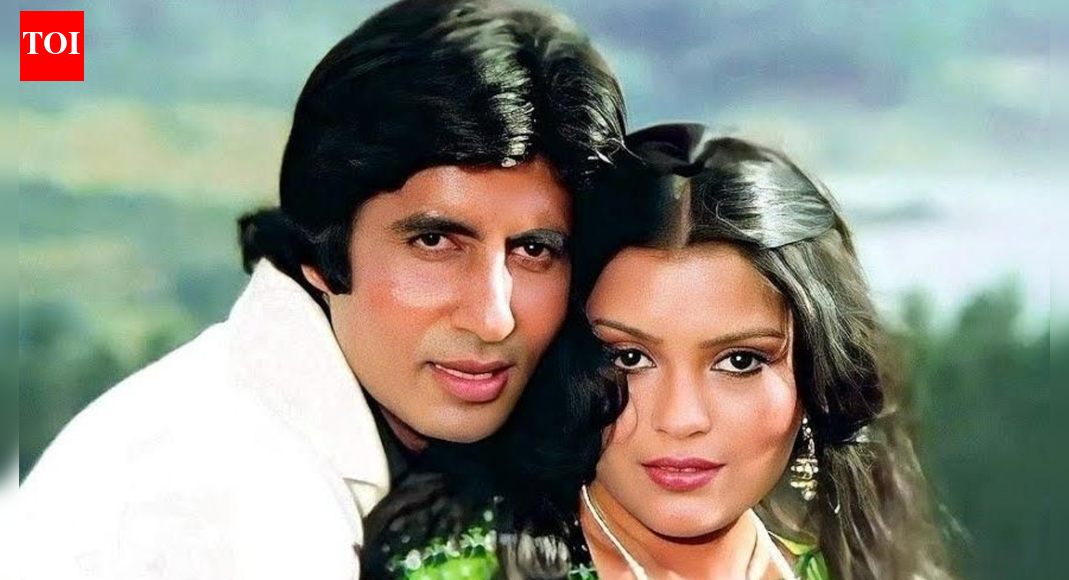
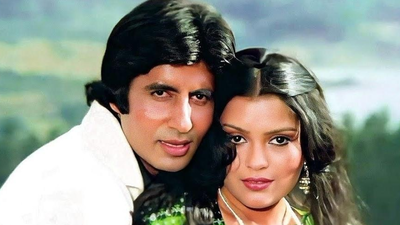
Veteran actor Zeenat Aman has once again pushed a meaningful cultural conversation to the forefront. By sharing a clip from her 1980 hit ‘Dostana’, she encouraged her audience to look closely at the patriarchal behaviour in the 70s and 80s. Her long Instagram caption, thoughtful and direct, has opened up a wider discussion about how much has changed, and how some old ideas still linger.
Zeenat Aman shares a ‘Dostana’ scene
The clip from ‘Dostana’ shows Zeenat’s character Sheetal walking on a beach in swimwear. When a man begins to harass her, she does not step back or shrink away. Instead, she grabs him by the collar and drags him to the police station.At the station, Inspector Vijay, played by Amitabh Bachchan, arrests the man. But immediately after, he turns to Sheetal and blames her for her clothes, implying that she invited the harassment. Sheetal pushes back, stating clearly that her outfit is her personal choice and that old moral codes should not control her freedom.
Zeenat Aman recalls browsing film moments
Introducing the clip, Zeenat explained how she sometimes revisits scenes from her past films. She wrote, “Every now and then I’ll find myself flipping through clips from my old movies, in search of something to share with you. Today I found one from Great Gambler, one from Don, and then the algorithm offered me this. A scene so ripe for social commentary that it sent me into a spin!”
The post revisits strict old codes
Zeenat then reflected on how firm and unquestionable moral rules once appeared. She wrote, “When one is young one thinks the moralities of the time are set in granite. Absolute and unyielding; at best to be chipped at by one’s own impotent acts of rebellion. Then the years turn, and one day you look up from your screen and think ‘wow, everything changed.’ Okay, perhaps not everything. The moral police is no doubt as vigilant as ever today, but the narrative has certainly progressed.”Zeenat then imagined how women today might react to the clip. She wrote, “If you’re a woman who watched this clip, let me make a few guesses – You were infuriated by the eve-teasing and resonated with Sheetal’s discomfort and anger, having probably experienced such a thing firsthand. You loved that she dragged her harasser to the police station, a triumph you probably never felt… And then you were incensed by our hero, Inspector Vijay’s, condescending opinion and tone! Am I right?”She went on to explain how common such attitudes were back then, “Well that opinion and tone were par for the course back in the day. The patronising attitude to women who defied convention, the barely veiled ‘you’re asking for it’ gaze and that superior air!”
Zeenat Aman reveals a young woman called Big B’s character a ‘loser’
Zeenat also pointed out the contrast in reactions between older and younger viewers. She wrote, “Oh, I am glad you’re annoyed. That’s what’s changed. Back in the day your average woman would think Vijay to be a mighty upstanding gentleman because Sheetal deserved a reprimand just as much as her harasser. But the young woman I showed it to earlier today? She sneered at the poor Inspector and said ‘What a loser.’ I had a good laugh at that.
Zeenat Aman reflects on her changing views
Towards the end of her post, Zeenat shared her own evolving perspective. She wrote, “Now I myself have graduated to being more of a realist. I absolutely support the right of women (all people actually) to wear what they please, while also understanding that the world doesn’t operate on my ideals, and that some outfits are more suitable for one place than another. Is that archaic of me? Perhaps, but be patient. My every hair has turned silver, and the truth is that the new social codes and lingo are as confusing to me as those ones were stifling. I would love your comments on this. Especially if you’re better informed than me!”
About ‘Dostana’
‘Dostana’, directed by Raj Khosla and released in 1980, featured Amitabh Bachchan, Shatrughan Sinha and Zeenat Aman in leading roles. While the film was known for its drama and star cast, this one scene now stands out for the conversation it has inspired many years later.
About the Author