
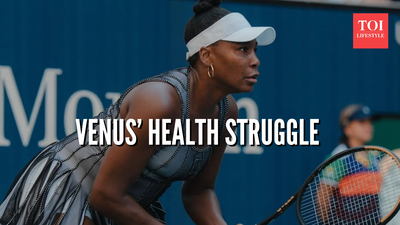
Tennis legend Venus Williams has long been admired for her resilient spirit on the court. Yet behind her extraordinary athletic achievements, Venus has faced a private health battle that spanned decades. In 2025, Venus Williams revealed that she has been contending with uterine fibroids and adenomyosis for nearly 30 years. These non-cancerous growths in the uterus can cause heavy bleeding, severe cramps, fatigue, and other debilitating symptoms. Venus’ personal struggle “No one should have to go through this,” Venus Williams stated, reflecting on her decades-long battle with uterine fibroids and adenomyosis. In 2025, Venus revealed that she had been struggling with these conditions for nearly 30 years, with symptoms beginning in her teenage years. In an interview with NBC News Now, the seven-time Grand Slam champion described how her fibroid symptoms, ranging from intense cramps to heavy bleeding, nausea, and persistent anemia, became a monthly battle. “I was hugging the toilet, waiting for it to pass,” she shared.What are fibroids and adenomyosisFibroids are benign (non‑cancerous) tumors that arise from the smooth muscle tissue of the uterus. Depending on their size, number, and location , fibroids can distort the shape of the uterine cavity, press on nearby organs (bladder, bowel), or alter normal uterine function.As per Mayo Clinic, adenomyosis is a condition in which the tissue that normally lines the inside of the uterus (the endometrium), instead of staying inside, grows into the muscular wall of the uterus.The combination of fibroids and adenomyosis can significantly impact a woman’s quality of life, as Venus’s experience shows. Medical impact and challengesVenus Williams’ experience highlights how even elite athletes with access to top medical care can face severe, long-term symptoms from fibroids and adenomyosis. For decades, she endured painful cramps, heavy bleeding, and fatigue, often without proper diagnosis or support. Fibroids and adenomyosis are common yet often underdiagnosed conditions. According to Healthline, by age 50, up to 70% of women may have fibroids, with women of African descent being more likely to develop them and often experiencing more severe symptoms.Adenomyosis, on the other hand, tends to affect women in their late reproductive years (35–50), but it can occur in younger women as well, as per Mayo Clinic.

Treatment and management Venus Williams ultimately sought specialized care to address her uterine fibroids and adenomyosis, choosing treatment options that preserved her uterus. She underwent procedures to remove fibroids and adenomyotic tissue, which significantly improved her quality of lifeTreatment of fibroids or adenomyosis depends on the severity of symptoms, size and location of fibroids, and reproductive goals. Common options include:
- Medications and hormonal therapy
- Minimally invasive procedures such as uterine artery embolization or MRI-guided focused ultrasound
- Surgical options include: Myomectomy and Hysterectomy
Venus’ decision highlights an important point: with the right care and treatment plan, women can manage symptoms effectively while preserving fertility and overall health. Disclaimer: This article is for informational purposes only and is not a substitute for professional medical advice. Symptoms experienced by Venus Williams are personal to her and may differ from those of other individuals. Always consult a qualified healthcare provider regarding any personal health concerns or symptoms.
About the Author