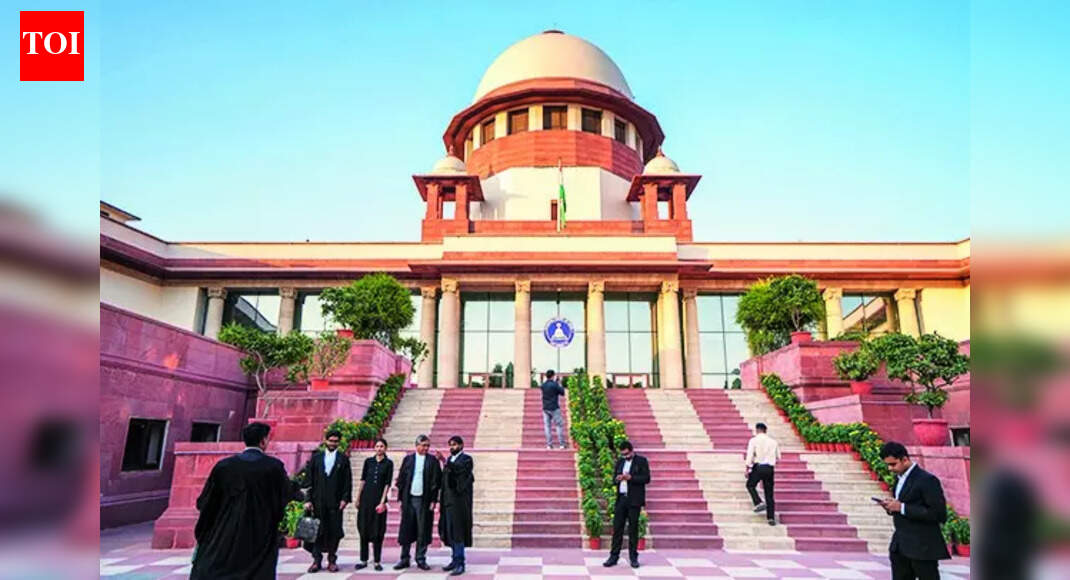
NEW DELHI: Disapproving the tendency of filing chargesheets and framing of charges in criminal cases where prima facie no case is made out, Supreme Court has said this has resulted in clogging of the judicial system, and has asked police and trial courts to act as filters, ensuring that only cases with a strong suspicion proceed to the trial stage.A bench of Justices N K Singh and Manmohan said the State should not prosecute citizens without a reasonable prospect of conviction and quashed a criminal case which arose out of a civil dispute over property in Kolkata. Police and the trial court should have been cognisant that there was a pending civil dispute with regard to the property and the complainant had also refused to make any judicial statement, it said. The bench said strong suspicion founded on legally tenable material/evidence was absent in the case to allow prosecution in the case.“…this court would like to emphasise that where there is a pending civil dispute between parties, police and criminal courts must be circumspect in filing a chargesheet and framing charges respectively. In a society governed by rule of law, the decision to file a chargesheet should be based on the investigating officer’s determination of whether the evidence collected provides a reasonable prospect of conviction. Police at the stage of filing of chargesheet and the criminal court at the stage of framing of charge must act as initial filters ensuring that only cases with a strong suspicion should proceed to the formal trial stage to maintain the efficiency and integrity of the judicial system,” it said.“The tendency of filing chargesheets in matters where no strong suspicion is made out clogs the judicial system. It forces judges, court staff, and prosecutors to spend time on trials that are likely to result in an acquittal. This diverts limited judicial resources from handling stronger, more serious cases, contributing to massive case backlogs,” the bench said. “Undoubtedly, there can be no analysis at the charge framing stage as to whether the case would end in conviction or acquittal, but the fundamental principle is that the state should not prosecute citizens without a reasonable prospect of conviction, as it compromises the right to a fair process,” it said.
About the Author