
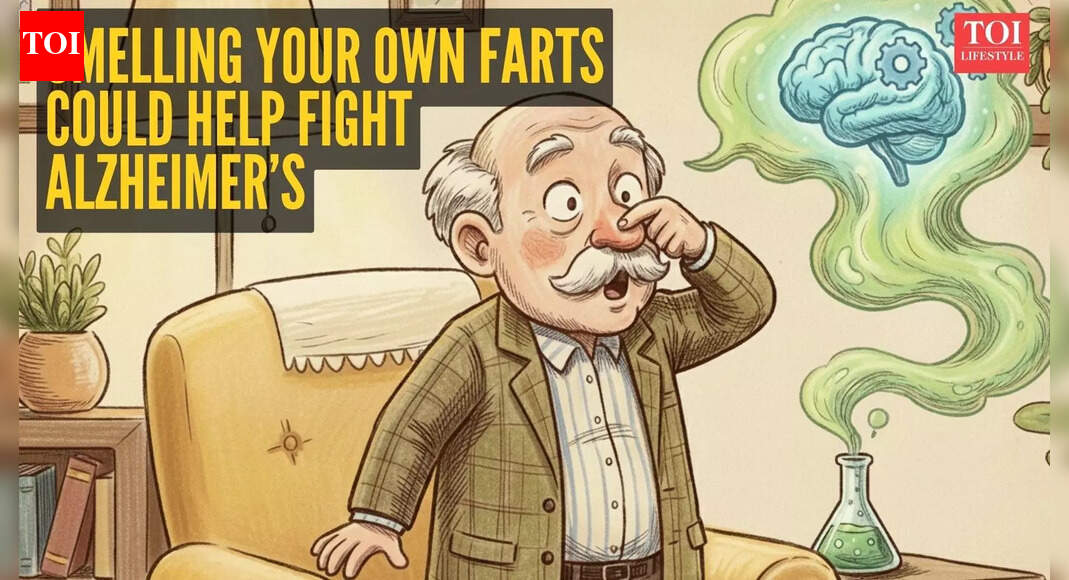

For most people, the smell of a fart is something to escape, not examine. It is the universal punchline of family jokes, awkward elevator moments and schoolyard humour. The rotten-egg scent that fills the air is rarely associated with anything remotely beneficial. Yet science has a habit of turning the unexpected into the intriguing, and a new study suggests that the very gas behind that notorious smell may hold clues to protecting the ageing brain.Researchers atJohns Hopkins Medicinehave found that hydrogen sulfide, the pungent gas responsible for the stench of flatulence, could play a surprising role in slowing the progression of Alzheimer’s disease. The finding may sound like the setup to a comedy sketch, but the science behind it is anything but.
The surprising science behind farts
Hydrogen sulfide is produced naturally in the body in extremely small amounts and helps regulate essential cellular functions. According to the researchers, these levels decline with age and drop even further in people with Alzheimer’s. Their study, published in the Proceedings of the National Academy of Sciences, suggests that restoring this gas to healthy levels may help the brain function more effectively.To test this theory, scientists experimented on mice genetically engineered to mimic Alzheimer’s disease. Over 12 weeks, the animals received a slow-release compound called NaGYY, designed to deliver controlled doses of hydrogen sulfide throughout the body.The results exceeded expectations. Mice given the compound performed up to 50 percent better in memory and motor tests compared with those that received no treatment. They were more active, more alert and better able to retain information.
Why this stinky gas matters for the brain
The team discovered that when hydrogen sulfide levels fall too low, a crucial process in the brain begins to break down. An enzyme known as GSK3β becomes overly attracted to the protein Tau. When they bind improperly, Tau starts forming clumps inside nerve cells. These tangled proteins block communication between neurons, eventually killing them and leading to the cognitive decline associated with Alzheimer’s.Hydrogen sulfide helps prevent this harmful chain reaction. By restoring the gas to normal levels, researchers saw improved signalling between brain cells and a reduction in toxic protein buildup.
What this could mean for future treatments
The compound used in the study allowed researchers to mimic the body’s natural production of hydrogen sulfide for the first time with precision. While the findings are promising, scientists stress that this does not mean smelling flatulence is beneficial or advisable. Hydrogen sulfide is toxic at high concentrations, and the health effects observed in the study came only from carefully measured, microscopic doses.Still, the research opens an unexpected path in the search for Alzheimer’s treatments. A gas known primarily for embarrassment and jokes may one day help scientists better understand, and potentially slow, one of the world’s most devastating neurological diseases.Sometimes the most unlikely smells carry the most surprising science.
About the Author