
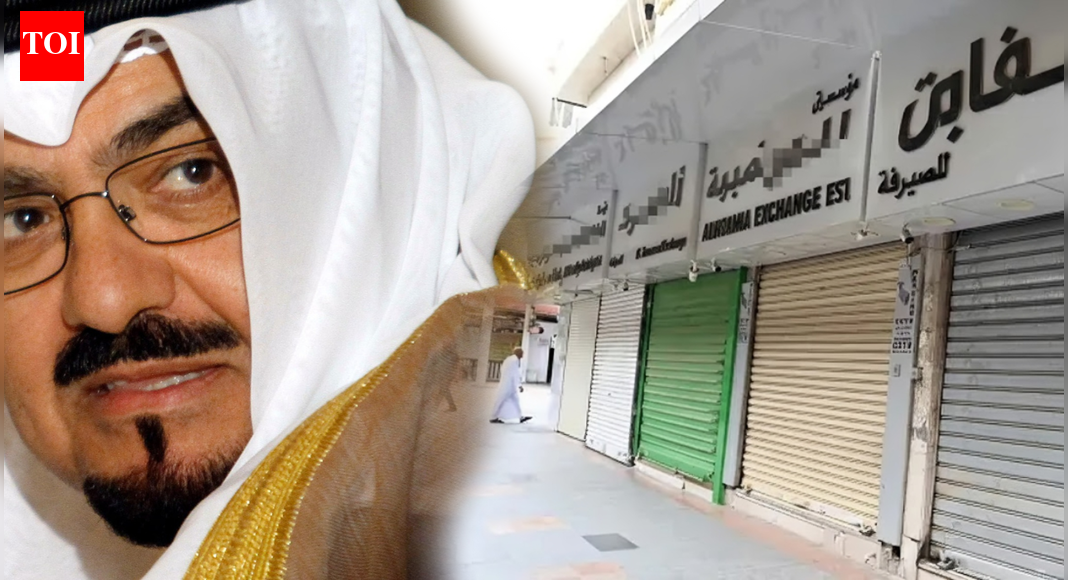
Kuwait’s Cabinet has approved a draft decree-law that criminalises unlicensed currency exchange activity and tightens penalties to curb informal trading and hawala-style operations. The move targets anyone who buys, sells, exchanges or transfers local or foreign currency for the public without a valid licence, whether they operate from shops, online or via informal networks.Officials say the change is designed to strengthen financial oversight, reduce money-laundering risks and protect consumers from fraud. The Cabinet endorsed the bill during a session chaired by the Prime Minister at Bayan Palace; the measure now moves toward further legal steps before becoming law.
Kuwait’s tougher penalties explained
Under the new Article (12-bis) proposed to the Law Regulating Commercial Establishment Licenses (Law No. 111 of 2013), offenders face criminal penalties that include up to six months’ imprisonment and fines of up to KD 3,000, or both, for carrying out currency exchange services without a licence. In addition, unlicensed shops or branches may be forcibly closed.Beyond jail and fines, other punitive measures being discussed and enforced in parallel include confiscation of equipment and seized funds, publication of court rulings, and administrative sanctions. Prosecutors and regulatory bodies will have expanded authority to investigate and pursue cases tied to informal exchange and hawala operations.
Penalties for individuals and businesses
The new legislation clearly defines two distinct tiers of penalties, ensuring that both private citizens and formal establishments face serious consequences for operating without a license. This clear structure ensures that everyone who buys, sells, exchanges, or transfers currency for the public without proper authorization will be held accountable.
| Offender Type | Core Penalty | Fine Range |
| General Public (Any unlicensed person) | Imprisonment for up to six months. | A fine of up to 3,000 Kuwaiti Dinars. |
| Shops / Companies (Private legal entities) | Possible closure of the establishment or its branches involved in the offense. | A fine between 5,000 and 20,000 Kuwaiti Dinars. |
What authorities have reported so far?
While Kuwait has introduced tough new penalties for unlicensed currency exchange, official data on exact case numbers or the total money involved in illegal trading has not been fully disclosed. However, related enforcement figures offer a sense of the problem’s scale.According to recent reporting on financial-crime monitoring, Kuwait’s Financial Intelligence Unit received 2,241 money-laundering suspicion notifications in the past cycle, and about 29 per cent of these, roughly 640 cases, were linked to exchange companies. These were not all illegal exchange cases, but they show the size of the sector under scrutiny.In parallel, the Ministry of Interior recently dismantled three criminal networks tied to forged visas, underground remittance channels and hawala-style money transfers, resulting in the arrest of over 20 individuals. These investigations often overlap with unlicensed currency transactions, although authorities did not publish the exact financial sums handled by the networks. Regulatory pressure has also forced changes in the legal exchange sector. Reports indicate that over 130 exchange shops were either closed or temporarily suspended during Central Bank compliance inspections, with several firms penalised for violating anti-money-laundering requirements.Despite these data points, Kuwait has not released consolidated figures showing how many unlicensed currency-exchange cases were formally prosecuted, nor the combined amount of money moved through underground channels. Officials have acknowledged that the informal nature of hawala networks makes total volumes difficult to quantify.
About the Author