
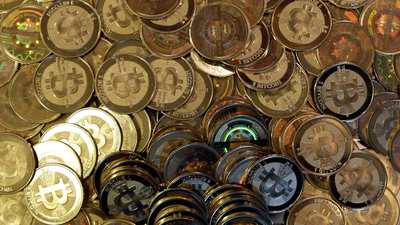
Malaysian authorities are stepping up their crackdown on illegal Bitcoin mining after uncovering nearly 14,000 illicit sites over the past five years and reporting about $1.1 billion in power-theft losses for state utility Tenaga Nasional (TNB).With cases rising sharply, including around 3,000 power-theft incidents linked to mining recorded by early October, the government last month launched a cross-agency taskforce involving the finance ministry, Bank Negara Malaysia, and TNB to coordinate action against rogue operators.Bitcoin mining in Malaysia is legal, provided operators obtain electricity legitimately and pay the required taxes. However, illegal miners use racks of high-powered “rigs” that perform trillions of calculations to validate transactions and earn coins, often tapping stolen electricity to keep their operations running.“Even if you run it properly, the challenge is that the market itself is very volatile,” Akmal Nasrullah Mohd Nasir, the deputy minister of energy transition and water transformation, quoted as saying by Bloomberg. “I don’t see any well-run mining that can be considered as successful legally.”Authorities are using a range of tactics to track illegal Bitcoin mining operations. Drones sweep over rows of shops and abandoned buildings, detecting unexpected heat signatures from machines that shouldn’t be running.On the ground, police deploy handheld sensors to identify irregular electricity use. At times, investigations rely on residents reporting unusual sounds, which have revealed miners masking the roar of their machinery with natural noises.Illegal operators are increasingly cautious, frequently moving between empty storefronts and deserted houses. They use heat shields to conceal the glow of their rigs and secure entrances with CCTV, heavy-duty locks, and broken-glass deterrents to prevent unauthorised access. Together, these measures illustrate the lengths both authorities and miners go to in the ongoing effort to enforce the law.“The risk of allowing such activities to happen is no longer about stealing,” said Akmal. “You can actually even break our facilities. It becomes a challenge to our system.”Globally, Bitcoin mining consumes more electricity than the entire countries of South Africa or Thailand. According to a report by the Cambridge Centre for Alternative Finance, over 75 per cent of mining activity now occurs in the United States. Malaysia’s share of the industry is less clear. In January 2022, the country accounted for 2.5 per cent of the global hashrate, a measure of computational power, but Cambridge has not published updated figures in its latest survey.Around 80 per cent of the country’s domestic electricity is generated from coal or natural gas. Across the region, fossil fuels continue to make up roughly three-quarters of the power mix, according to the International Energy Agency, as cited by DW. Last week, Malaysia’s Ministry of Energy Transition and Water announced the formation of a multi-agency committee to tackle the rising problem of electricity theft linked to cryptocurrency mining.
About the Author