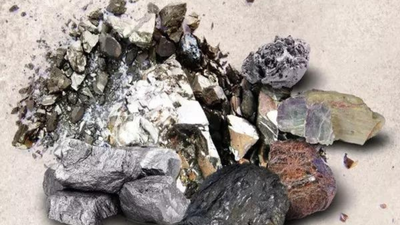
The European Union on Wednesday rolled out a multi-billion-euro strategy to reduce its dependence on China for rare earths, unveiling measures to boost domestic mining, refining and recycling capacity amid rising geopolitical pressure on critical supply chains.The plan comes after months of turbulence triggered by Beijing’s export controls, according to AFP, which have disrupted manufacturers in autos, electronics and defence and exposed the bloc’s vulnerability to raw-materials shocks.EU industry chief Stephane Sejourne said the bloc was “responding to the new global geopolitical reality” as the European Commission announced nearly €3 billion to support strategic projects both within the EU and in partner countries. He has previously likened China’s dominance to a rare-earths “racket”.A central feature of the new push is a European Centre for Critical Raw Materials, designed as a supply-hub modelled on Japan’s state-run JOGMEC. The centre will monitor demand, coordinate joint procurement for member states, and manage stockpiles and emergency deliveries to companies.Brussels also proposed curbing exports of scrap and waste from permanent magnets starting next year, to stimulate domestic recycling. Targeted restrictions on aluminium waste will follow, and copper could be added later.Squeezed between China and USDespite adopting a critical raw-materials law two years ago, the bloc finds itself caught between Beijing’s tightening export regime and intensified US efforts under President Donald Trump to secure mineral access through bilateral deals.A new survey by the EU Chamber of Commerce in China found that 60% of European firms expect supply-chain disruptions due to Chinese government restrictions, while 13% fear they may need to halt or slow production.Updating its “economic security” doctrine the same day, the Commission said global trade tensions had made existing vulnerabilities sharper. “Trade is being weaponised. Supply chains are under pressure,” EU trade chief Maros Sefcovic said while presenting the plan.“Strategic choke points are turning economic dependency into political pressure, and this hits our companies every single day,” he added.The revised doctrine calls for more assertive use of tools such as foreign-investment screening, export controls and supplier diversification — and for developing new mechanisms where gaps persist.“Europe will continue to champion open trade,” Sefcovic said, “but our openness must be backed by security.”
About the Author