
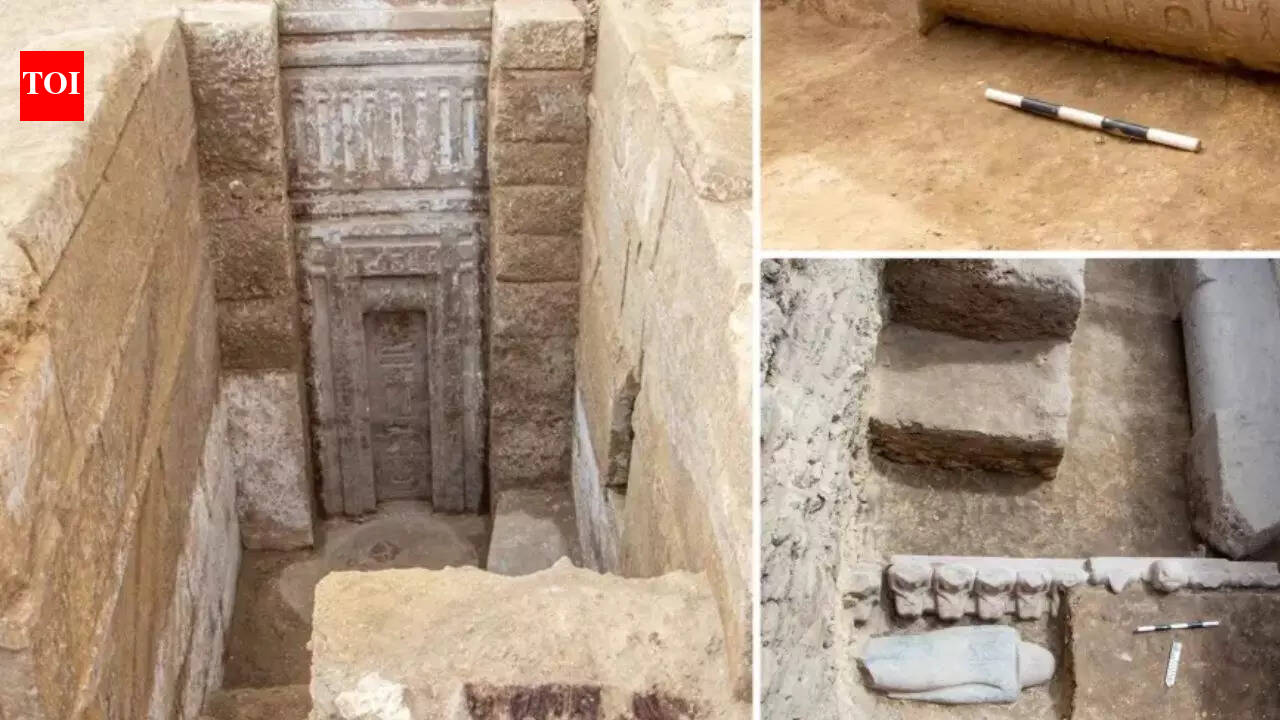
Archaeologists came across an astonishing yet perplexing discovery while excavating the site of the historic tomb area in the region called Saqqara, which is situated 25 kilometers south of the capital city of Egypt, Cairo. This tomb has been identified and recognised to be 4,000 years old and belonged to an important figure known as the “Prince Waser-If-Re” belonging to the Old Kingdom era of Egypt. Among the various astonishing discoveries that the site has offered regarding the history of the area under excavation is the discovery of an enormous door belonging to the site that is almost 14 feet in height and constructed using pink granite. Therefore, the door has been identified as astonishing since the door did not open to nothing at all.The discovery has sparked new interest in the symbolism of the ancient Egyptians’ tombs and has raised questions regarding the Fifth Dynasty’s rituals, beliefs, and status.
Saqqara burial grounds reveal new insights into Old Kingdom Egypt
Saqqara has long been acknowledged as one of the most important burial sites in Egypt and has served as a vast necropolis for the ancient Egyptian capital of Memphis. The newly unearthed tomb is believed to be that of Prince Waser-if-Re, the son of the king who established Egypt’s Fifth Dynasty.It was excavated through a collaborative effort by both the Supreme Council of Antiquities and the Zahi Hawass Foundation for Archaeological and Heritage. According to the official statements from the Egyptian Ministry of Tourism and Antiquities, it may be established that this dates back to the Old Kingdom period and may, therefore, represent one of the oldest of this kind of monumental tombs. Among the significant features of this particular tomb was the size of the false door that was carved from pink granite. It measured over 14 feet in height and more than three feet in width.Nevertheless, this large and intimidating door was not meant to operate in this mode. Rather, it was used in a symbolic role. In ancient Egyptian spirituality, false doors were seen to provide spiritual gates through which the movement of the deceased was allowed. It would seem that this large and luxurious door was used by individuals of great importance, such as Prince Waser-If-Re.Several hieroglyphs carved on its sides, on granite stone, recorded numerous titles held by the prince. They included titles of hereditary prince, royal scribe, vizier, judge, regional governors within crucial areas of jurisdiction, and chanting priest. This again supports the notion that it was not a door of access.
Statues, chairs, and headless figures
Beyond that, there were other pink granite furniture pieces, a collection not often seen in a single burial. Among those pieces was a collection of thirteen high-back chairs, each adorned with a seated statue. It was theorized that these statues were those of the prince’s wives. However, there were two pieces that were missing their head pieces.One aspect worthy of note in the tomb is the predominant practice of using pink granite. Pink granite is both costly to import as well as transport. It is mostly utilised in the 近dconstruction of palaces.
Additional royal connections within the tomb
Also, within the tomb, there was a second entry that had pink granite, topped with a cartouche of Fifth Dynasty King Neferirkare, a previous pharaoh. At other parts of the location, there were other finds thatincluded a black granite statue, which had toppled over, measuring over four feet, as well as a red granite offering table that had inscriptions showing details pertaining to ritual sacrifices.These details suggest that apart from being a tomb, this was a place of ritual, perhaps even where offerings were made long after the prince in question died.
Evidence of tomb reuse across centuries
Although originally constructed during the Old Kingdom, the tomb appears to have been reused centuries later. Archaeologists identified inscriptions and statues linked to the 26th Dynasty, indicating that the site remained significant well into Egypt’s later periods.One notable find was a black granite statue of a standing male figure, inscribed with names and titles associated with the 26th Dynasty. This reuse reflects a common practice in ancient Egypt, where older tombs were adapted or repurposed due to their prestige, location, or spiritual importance.
Statues moved from a royal pyramid
Among the most surprising discoveries were statues of King Djoser, his wife, and his ten daughters. Archaeologist Zahi Hawass believes these figures were originally housed in a chamber near Djoser’s step pyramid before being relocated to the tomb of Prince Waser-If-Re.Why these statues were moved remains unclear. Archaeologists plan to continue excavations in the surrounding area to determine whether political shifts, religious practices, or preservation efforts prompted the relocation.
About the Author