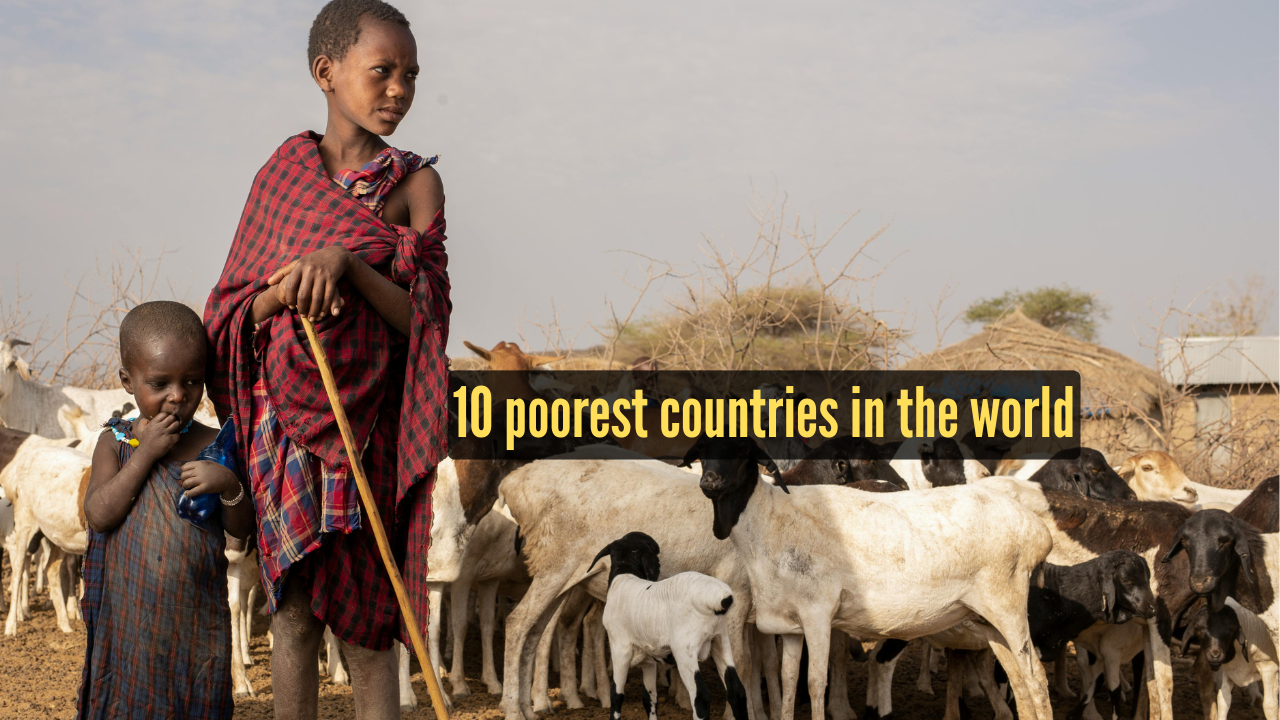
The world has never been richer. Technology is moving at an unprecedented pace, global trade uniting the most isolated corners of the world, and scientific advances offering longer, healthier lives. Yet for millions, what shapes their daily life is the grip of hunger and instability and uncertainty. Because the notion of “the poorest countries in the world” isn’t just numbers on a list; it’s about the kids growing up without access to schools, families living with no access to electricity, and more. According to Global Finance Magazine’s Economic Data ranking of the Poorest Countries in the World 2025, vast inequalities persist despite the world having enough resources to ensure a decent standard of living for all.
Measuring poverty is complicated. GDP per capita is one view, but by measuring purchasing power parity (PPP), you measure what people can actually afford. And even then, poverty seldom has a sole cause. Colonial legacies, corruption, frail institutions, conflict, climate shocks and debt that has reached the point of drowning tend to overlap, one wears down the strength of another year after year. The Covid-19 pandemic opened these fault lines with brutal force, throwing millions back into extreme poverty and reversing decades of progress. As the countries began to recover, inflation and war-driven supply shocks along with declining foreign aid exacerbated the strain.
In 2025, the contrast is stark: while people in the world’s richest countries enjoy average purchasing power above $118,000 a year, those in the poorest survive on roughly $1,600. These are the ten countries where that imbalance is felt most acutely.
About the Author